
Dual Shades: Two Layers, One Window—Worth the Extra Depth?
See when dual shades earn their extra headrail depth, how two fabrics, finished gaps and independent controls change the order, and when one shade is enough.
 targeter_site001
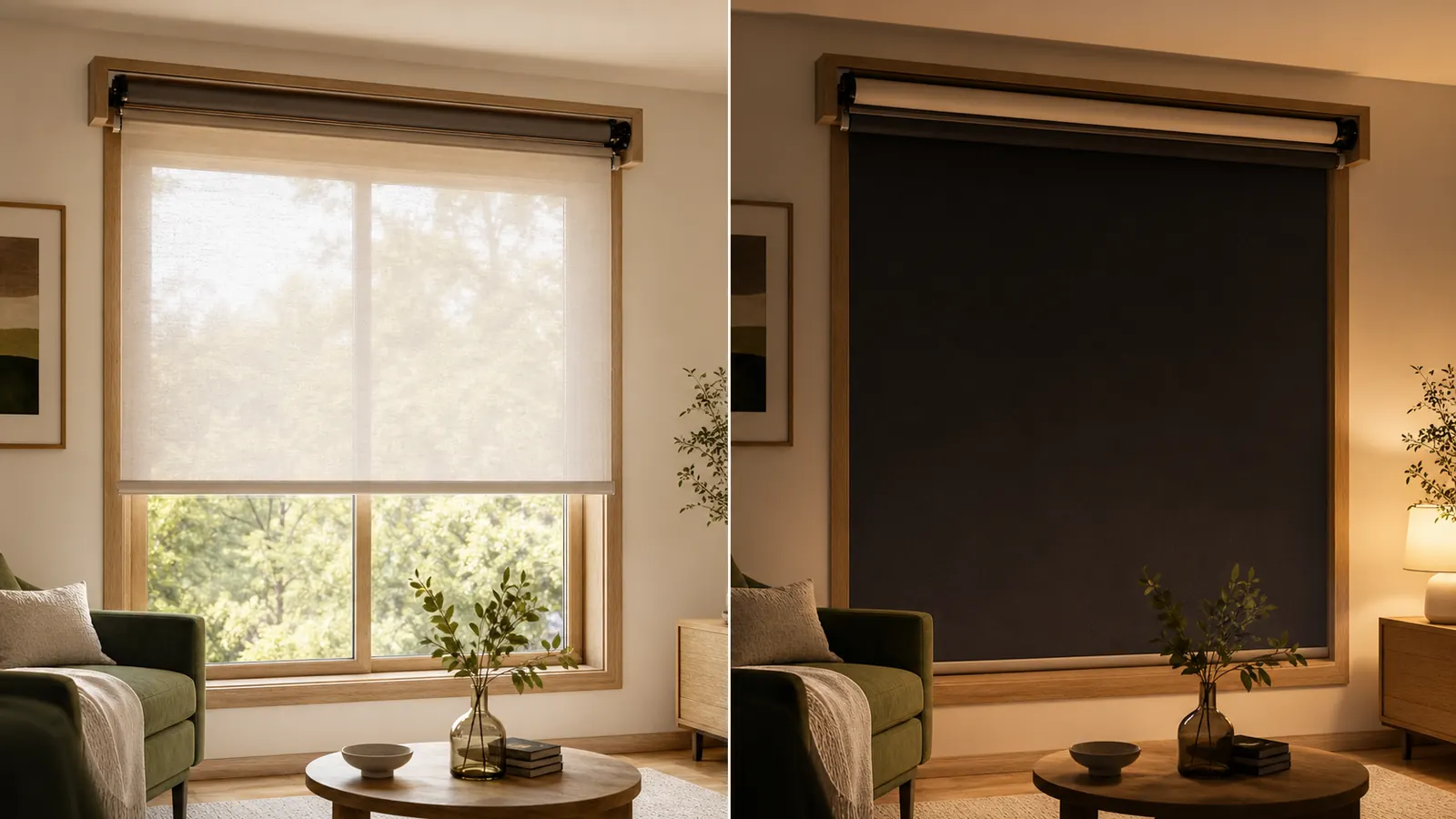
See when dual shades earn their extra headrail depth, how two fabrics, finished gaps and independent controls change the order, and when one shade is enough.
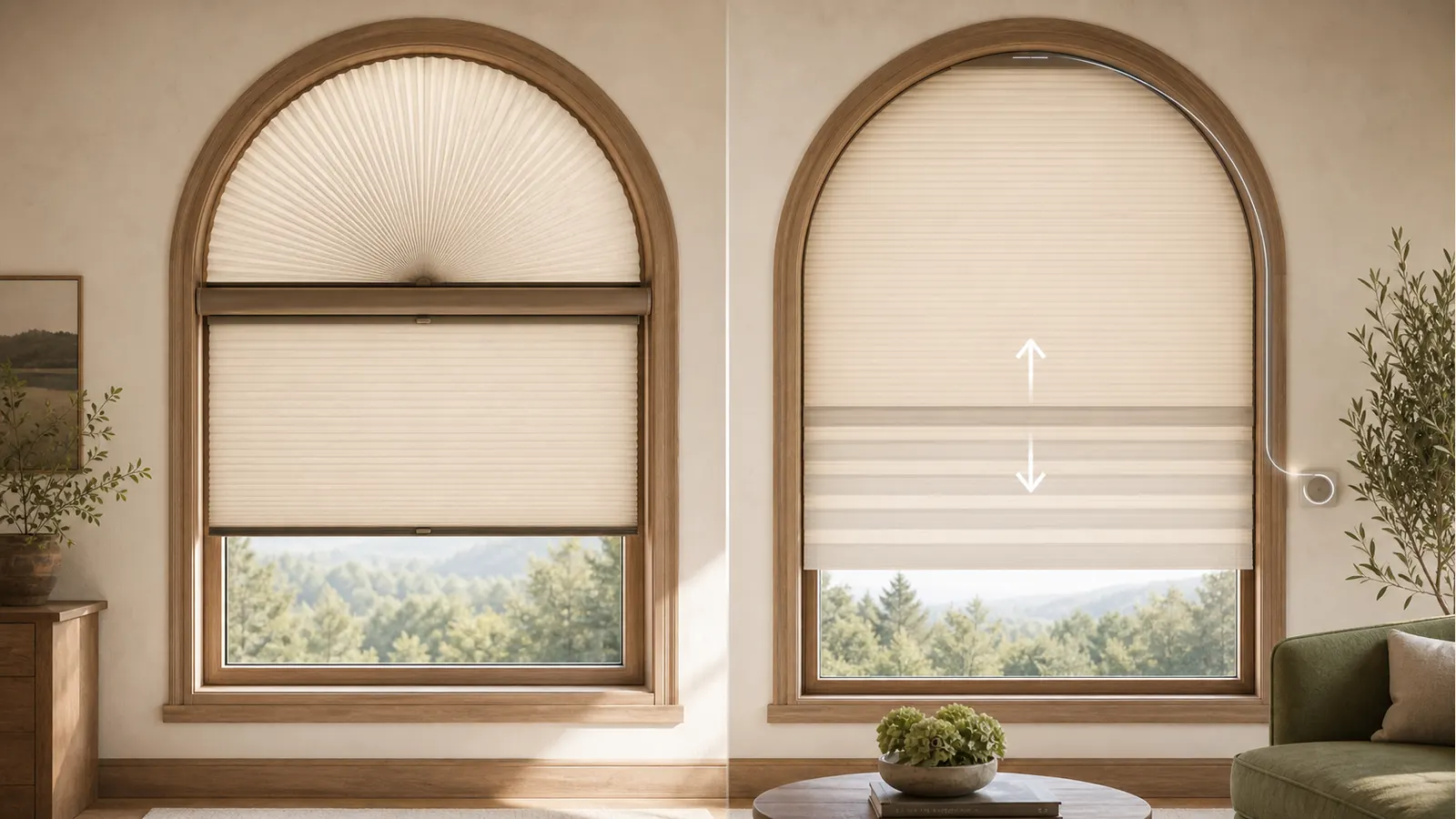
Learn how arch shape, fixed versus operable sections, templates, mounting depth and charging access change an arched-window order before custom sizing.
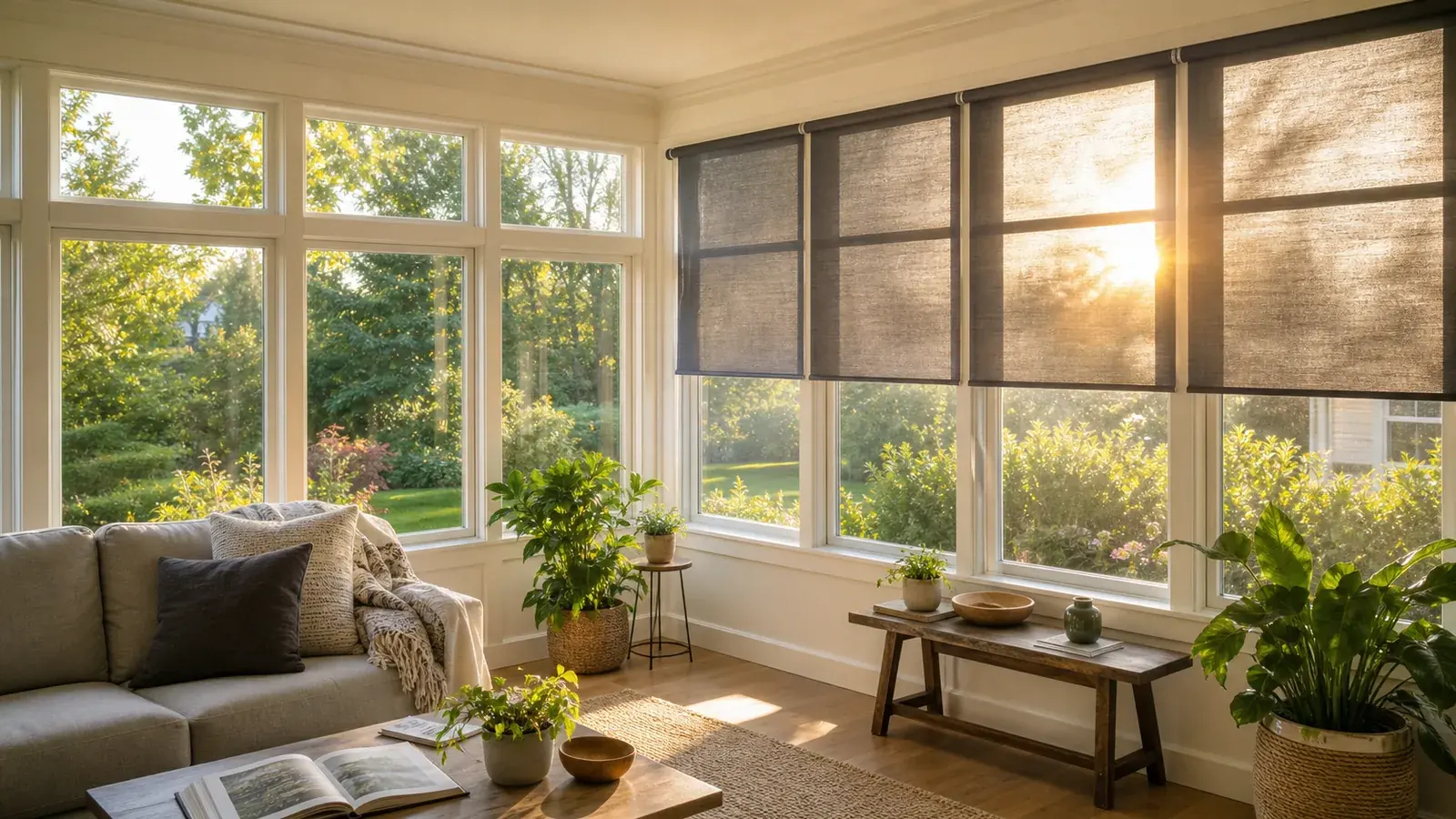
Map sunroom blinds by the hour and window group, then choose where solar, light-filtering or motorized shades solve glare without closing the view.
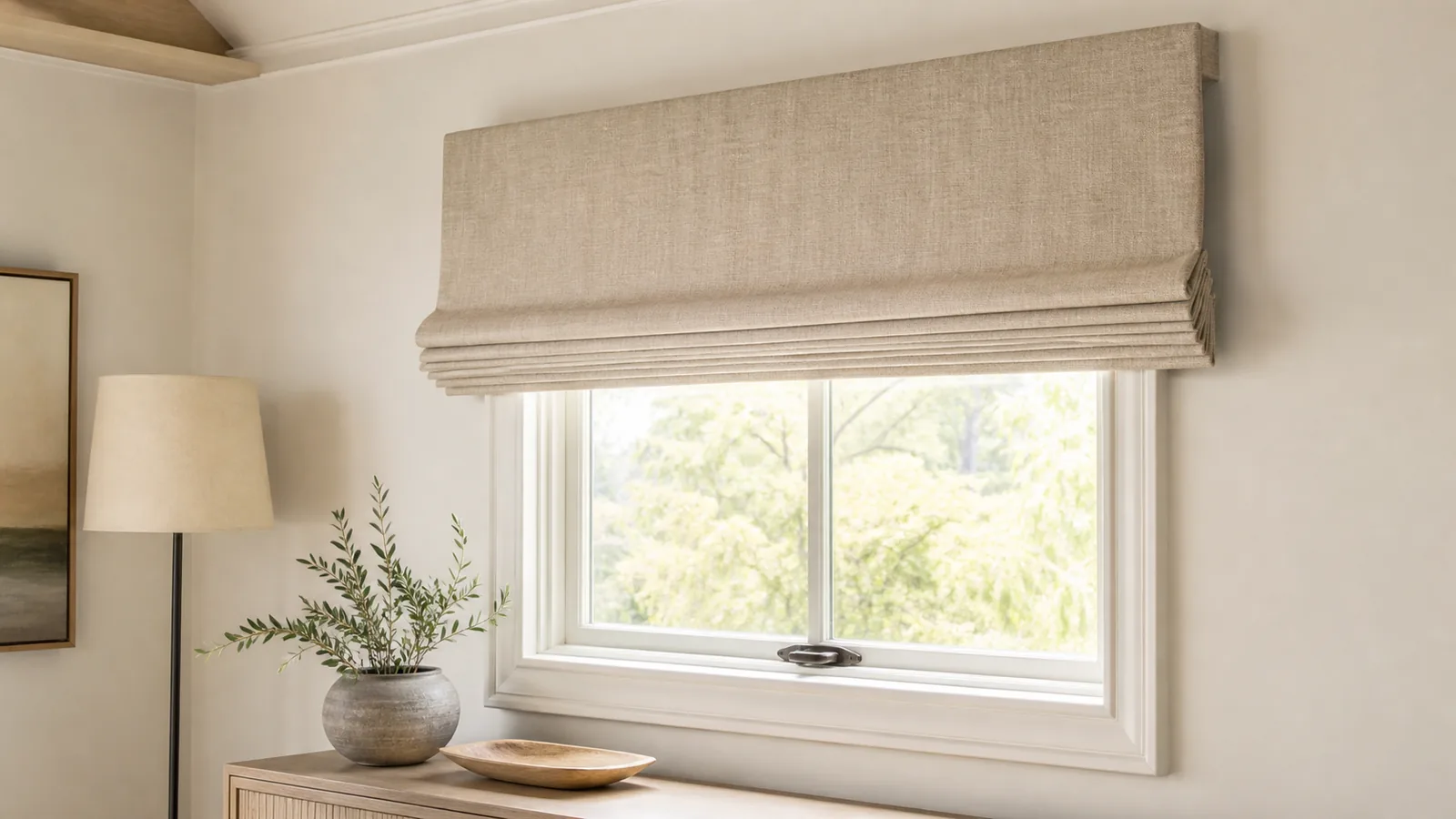
See how side overlap, flat mounting space, projection and raised stack change outside mount Roman shades before you submit custom dimensions.
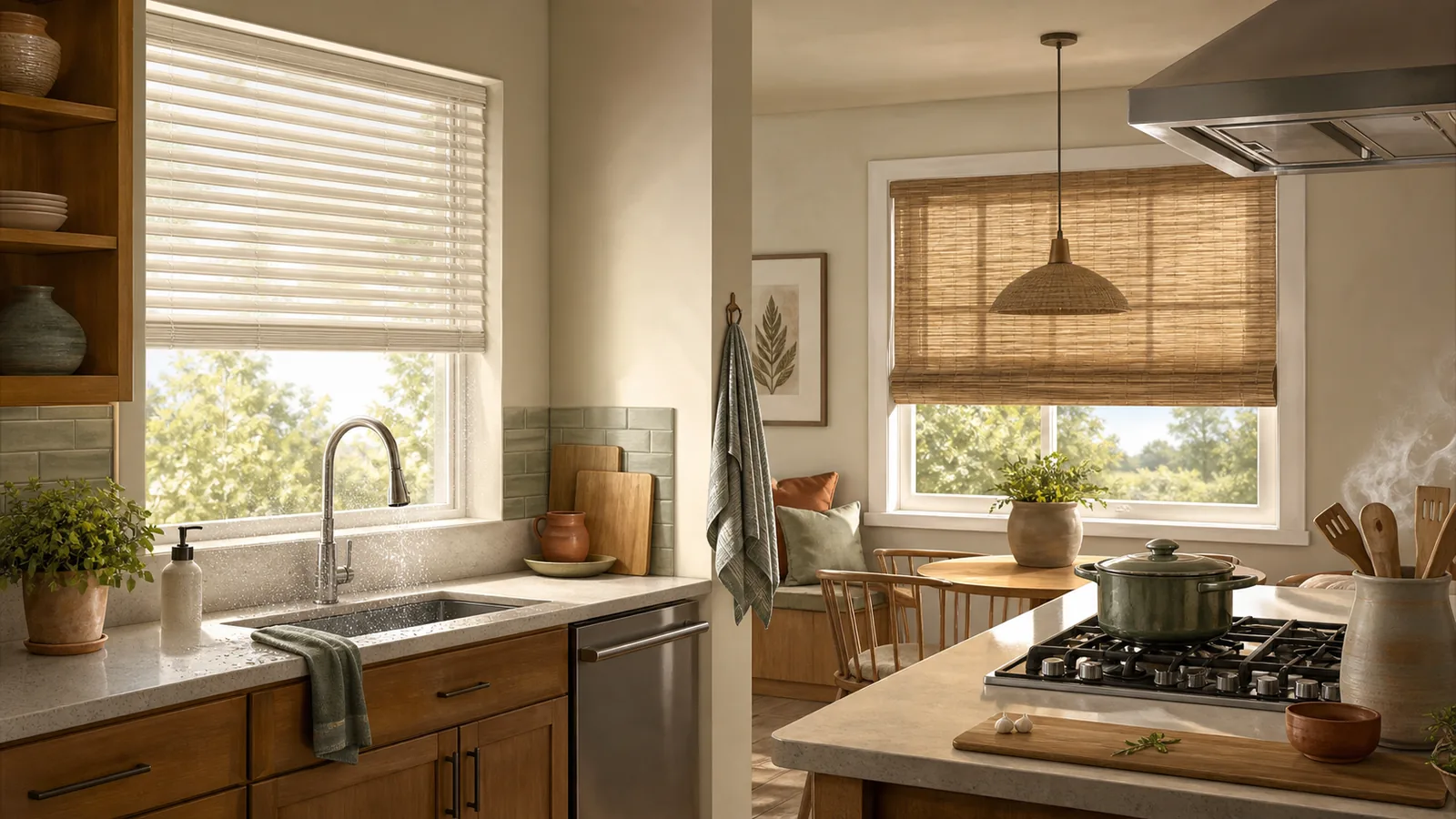
Match each kitchen window to splash, cooking residue, condensation and privacy, then verify the exact care method, fit, controls and service access.
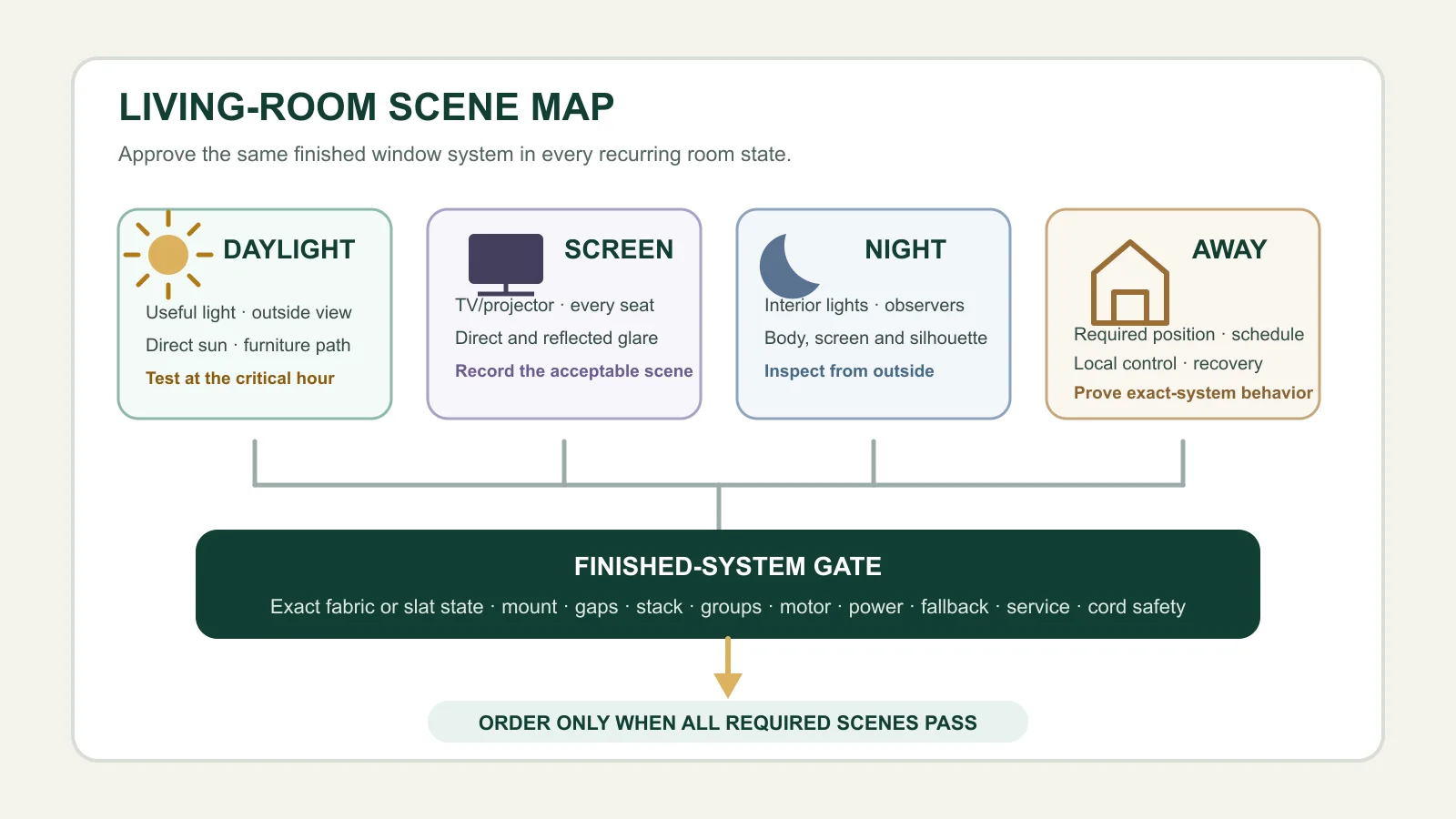
Plan living room blinds around daylight, TV glare, night privacy and away scenes, then resolve coverage, controls, groups and safety.
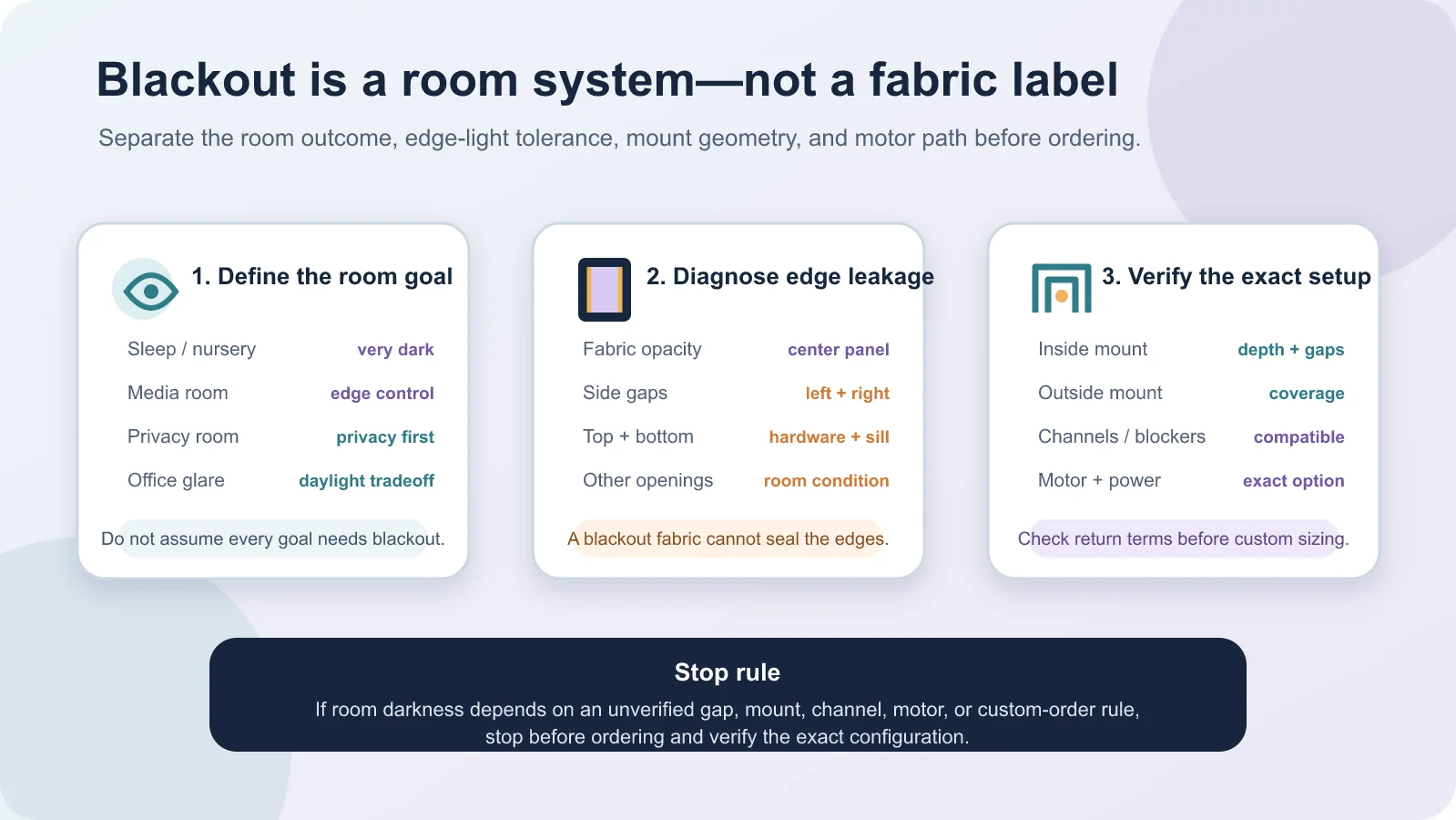
Choose motorized blackout shades by room outcome, edge-light tolerance, mount depth, side gaps, motor path, and custom-order risk—not fabric labels alone.
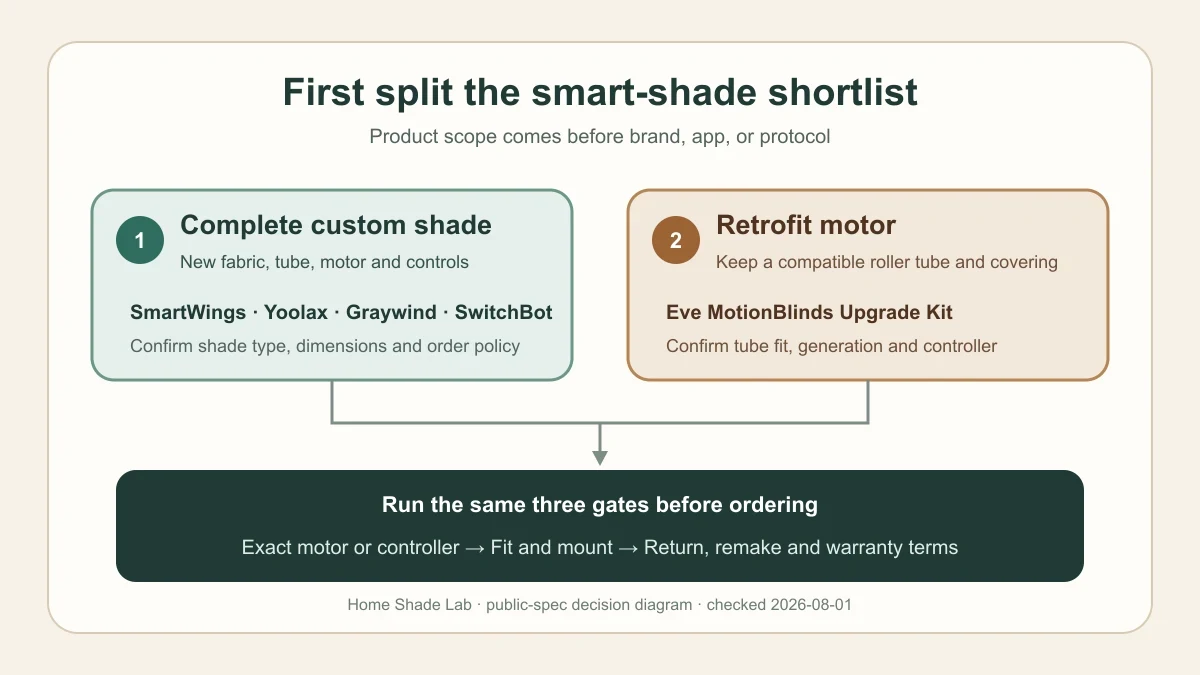
Compare complete shades and a retrofit motor by power, hub requirements, fit risk and warranty before narrowing your shortlist.
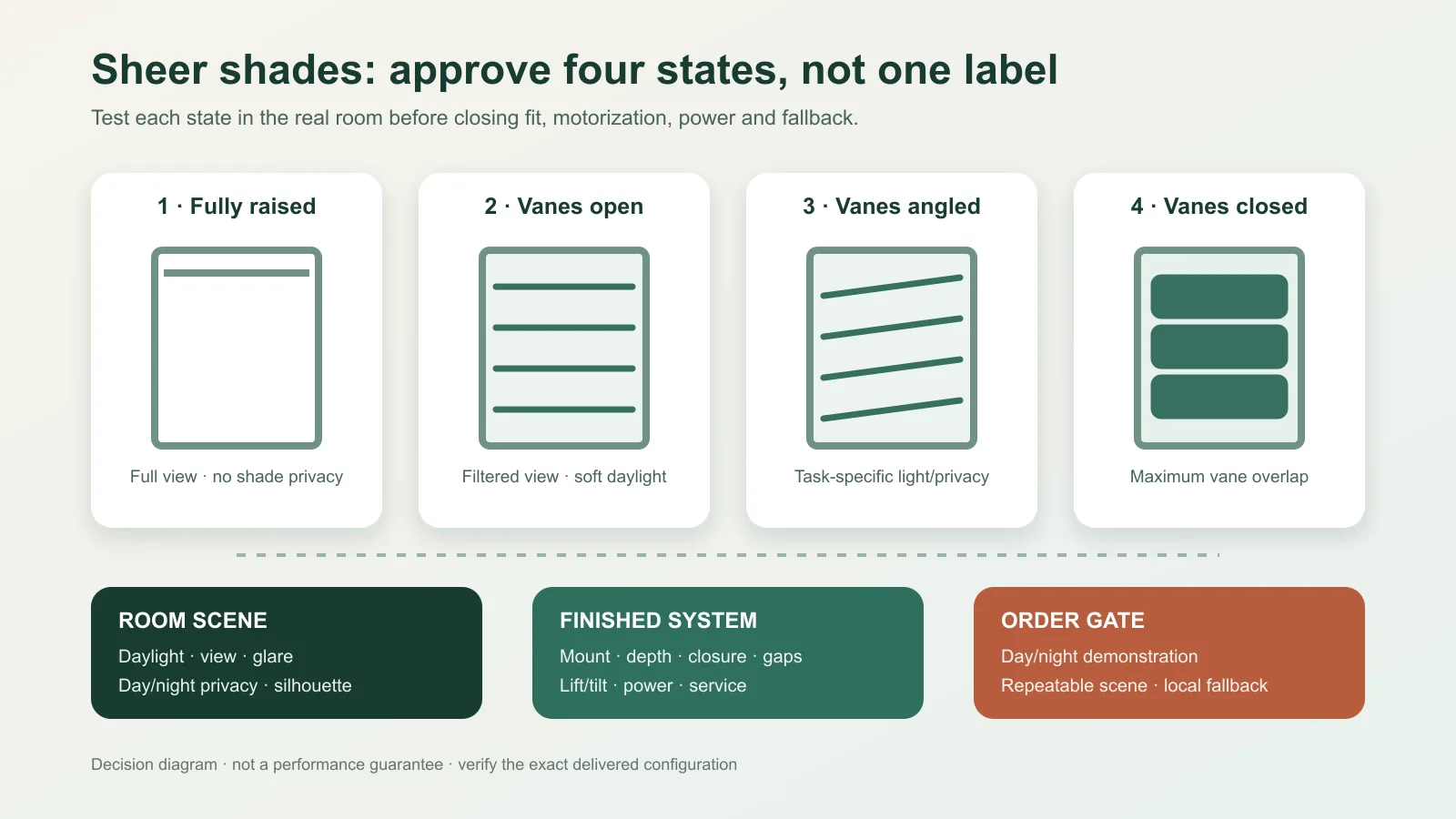
Compare sheer shade vane positions for daylight, view and privacy, then verify the right architecture, finished closure and motor controls.
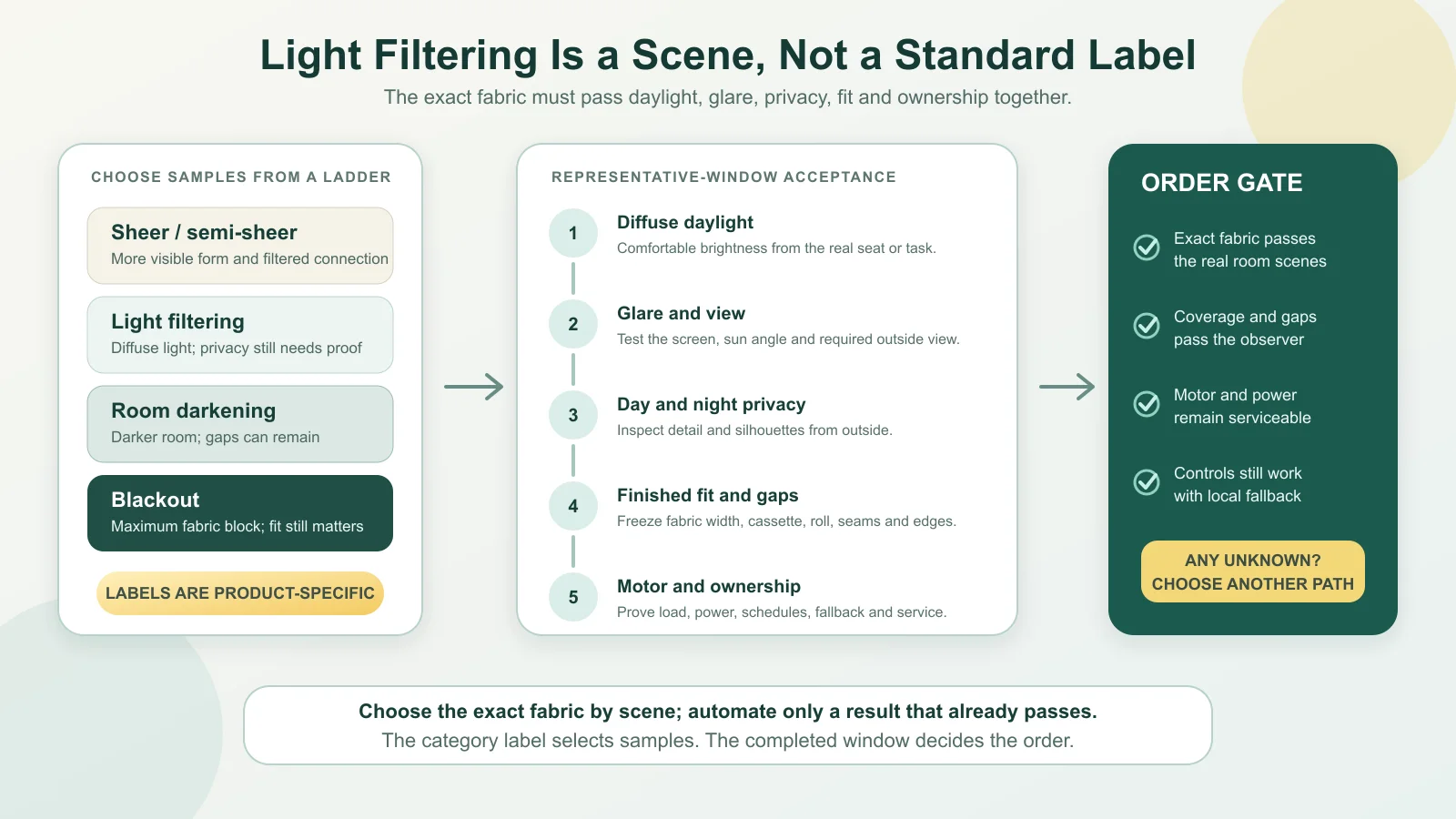
Test light-filtering roller shades for daylight, glare and night privacy, then choose the right fabric, mount and motorized control path.