
Use these guides to solve the decisions that come before brand or model selection. Start with fit, then confirm power and control, and only then narrow the product configuration.
- Measurement and mount
- Openings and rooms
- Power and controls
- Shade types
Choose the guide that matches your next decision
Each resource has one primary job. Open the one that matches the constraint you need to resolve now.
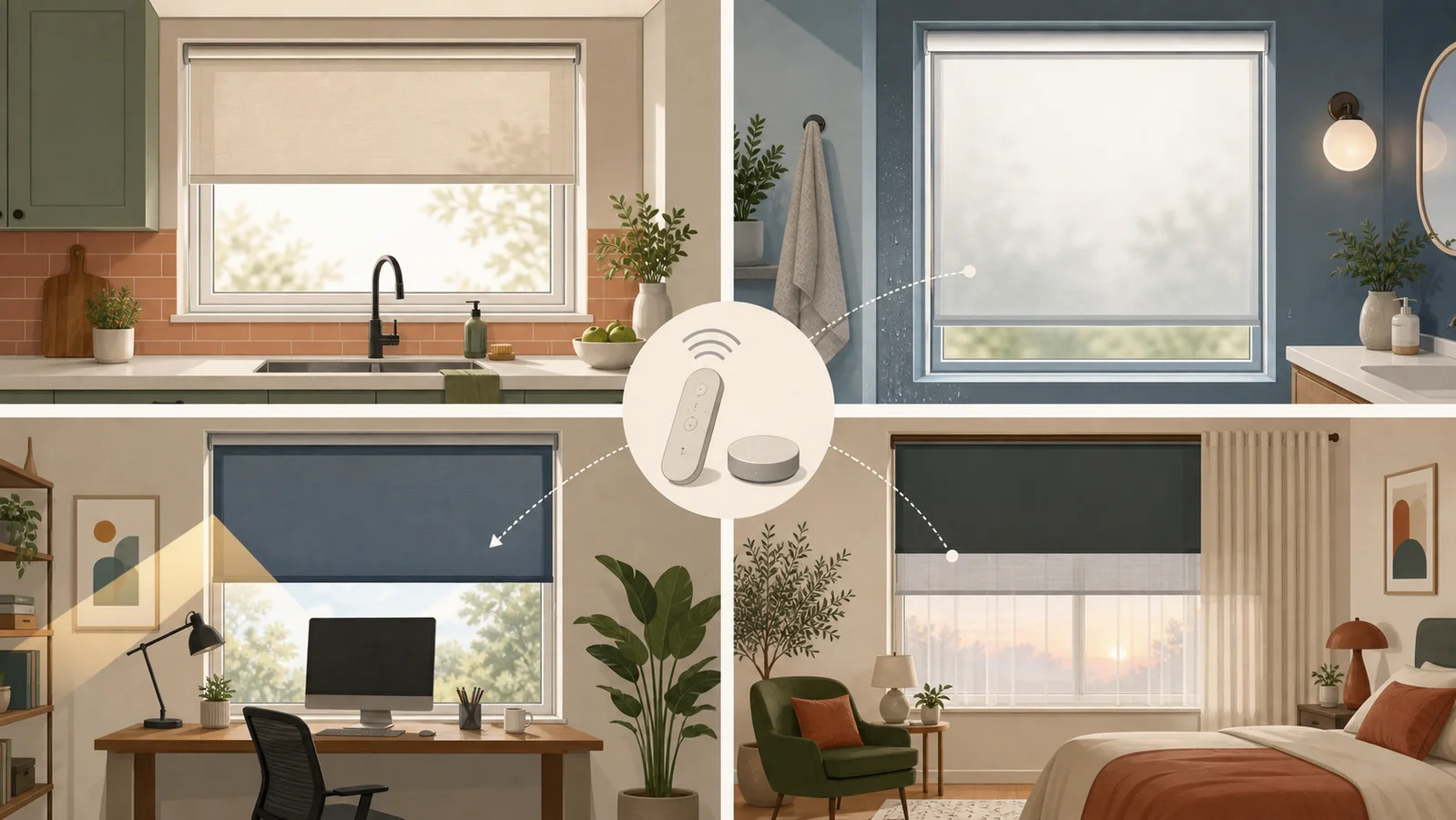
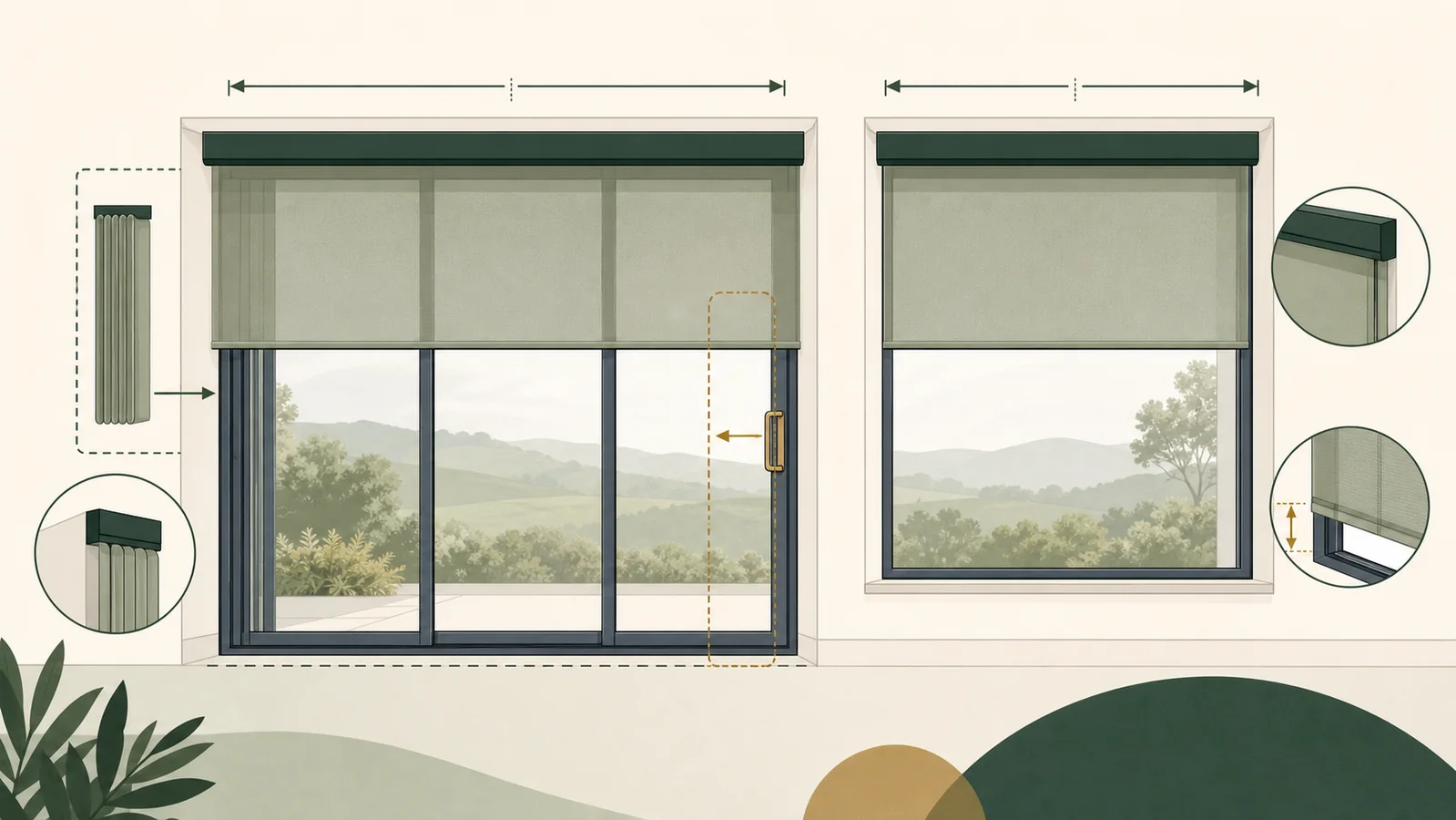
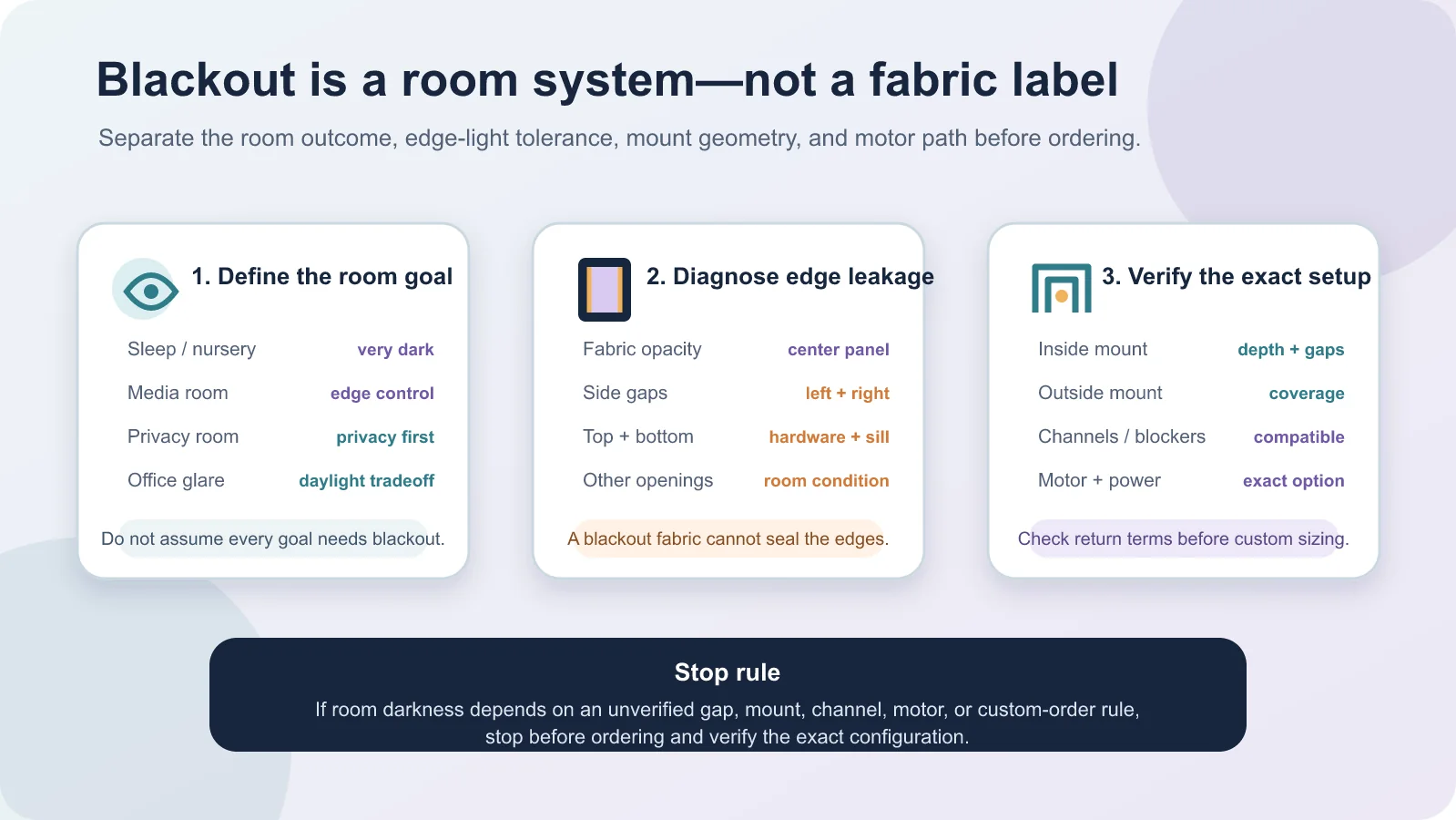
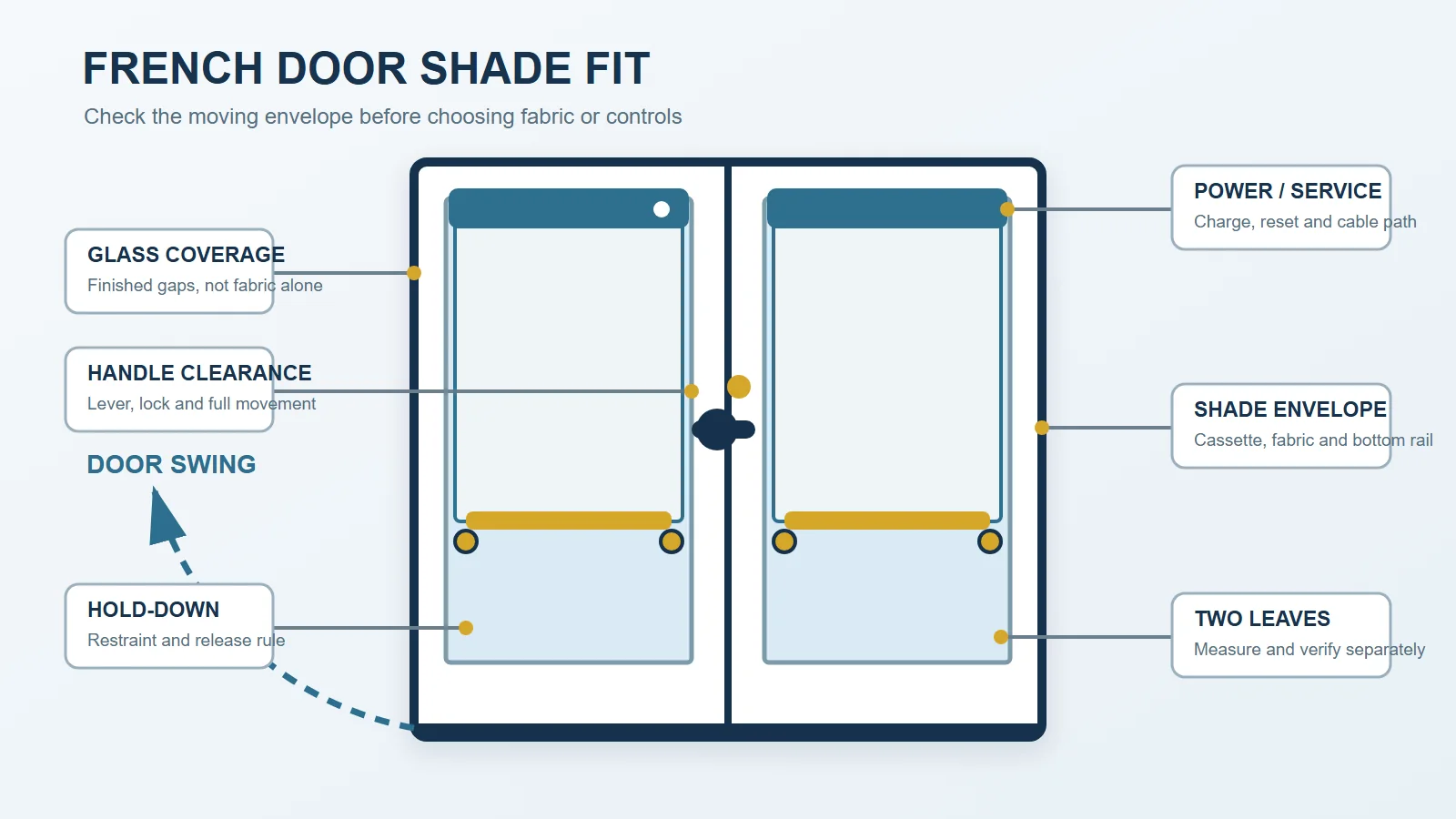
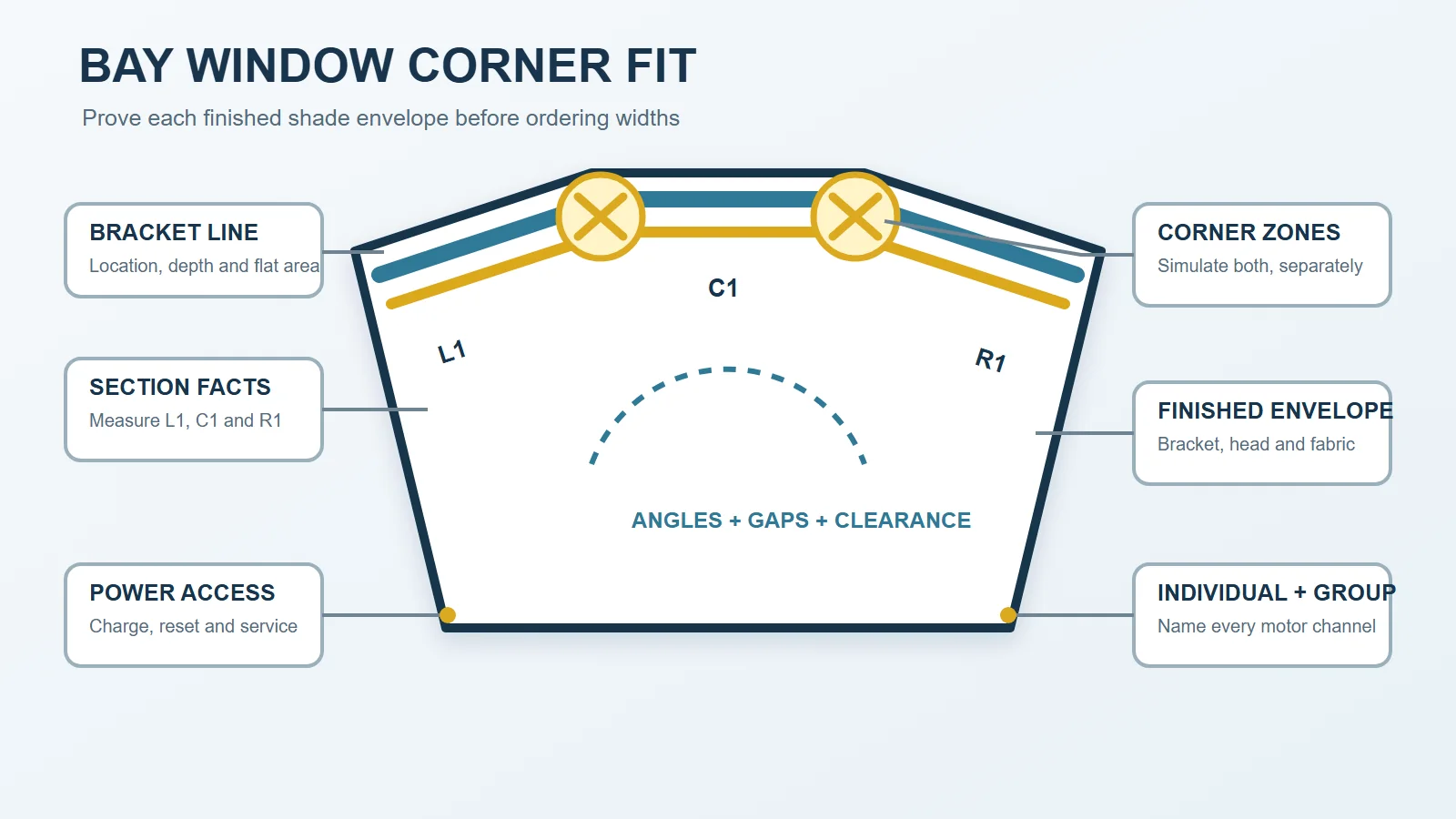
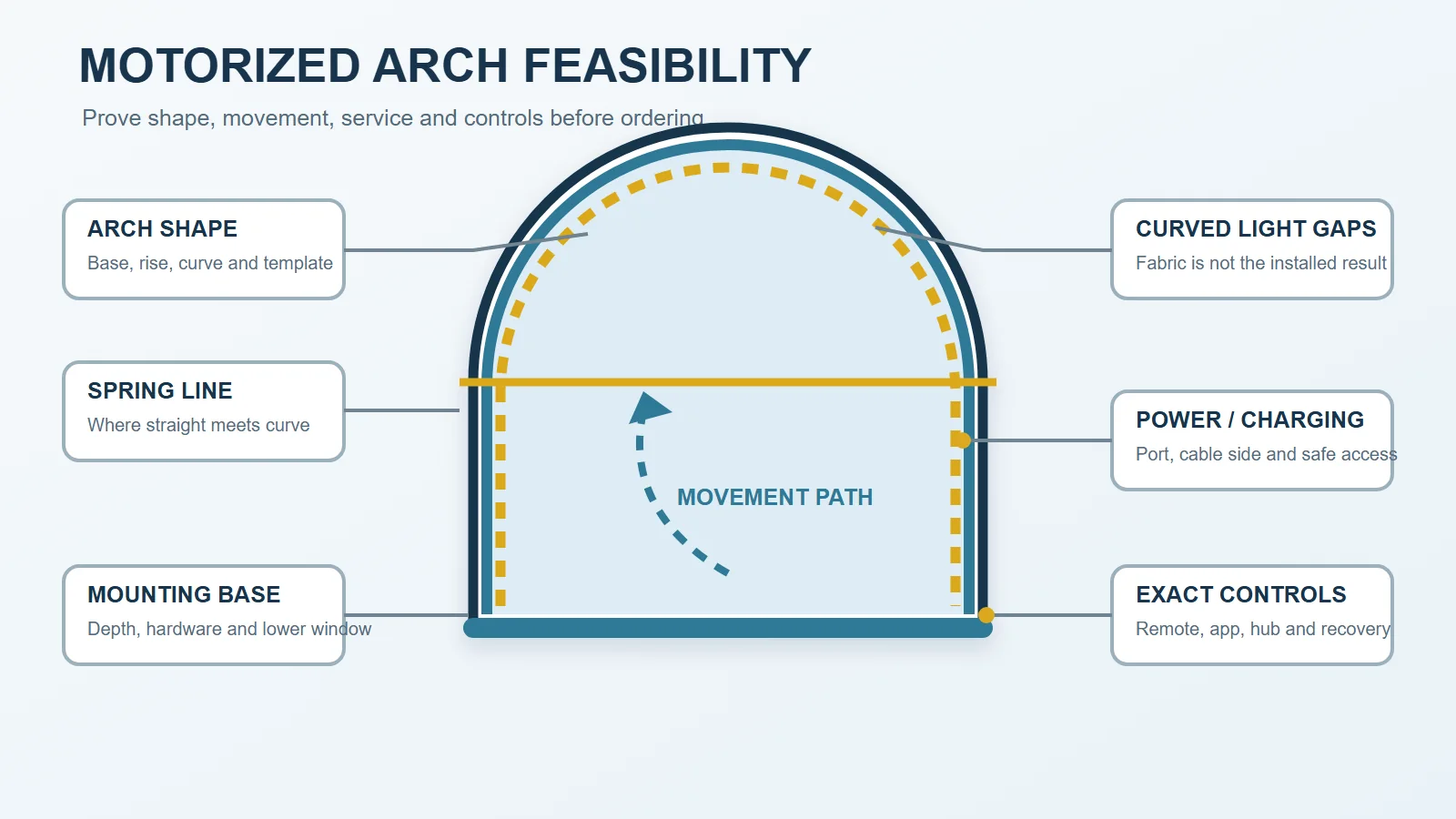
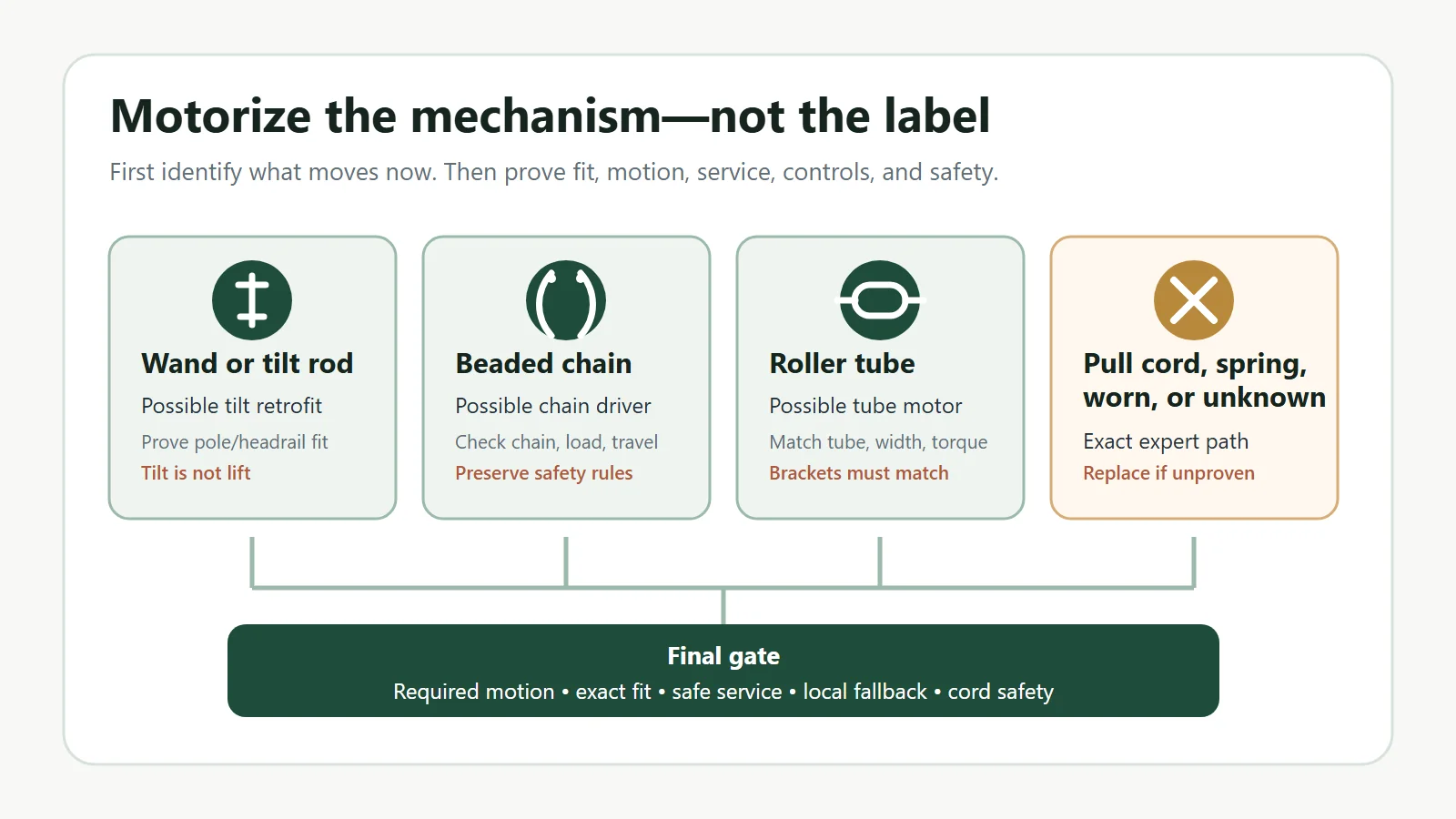
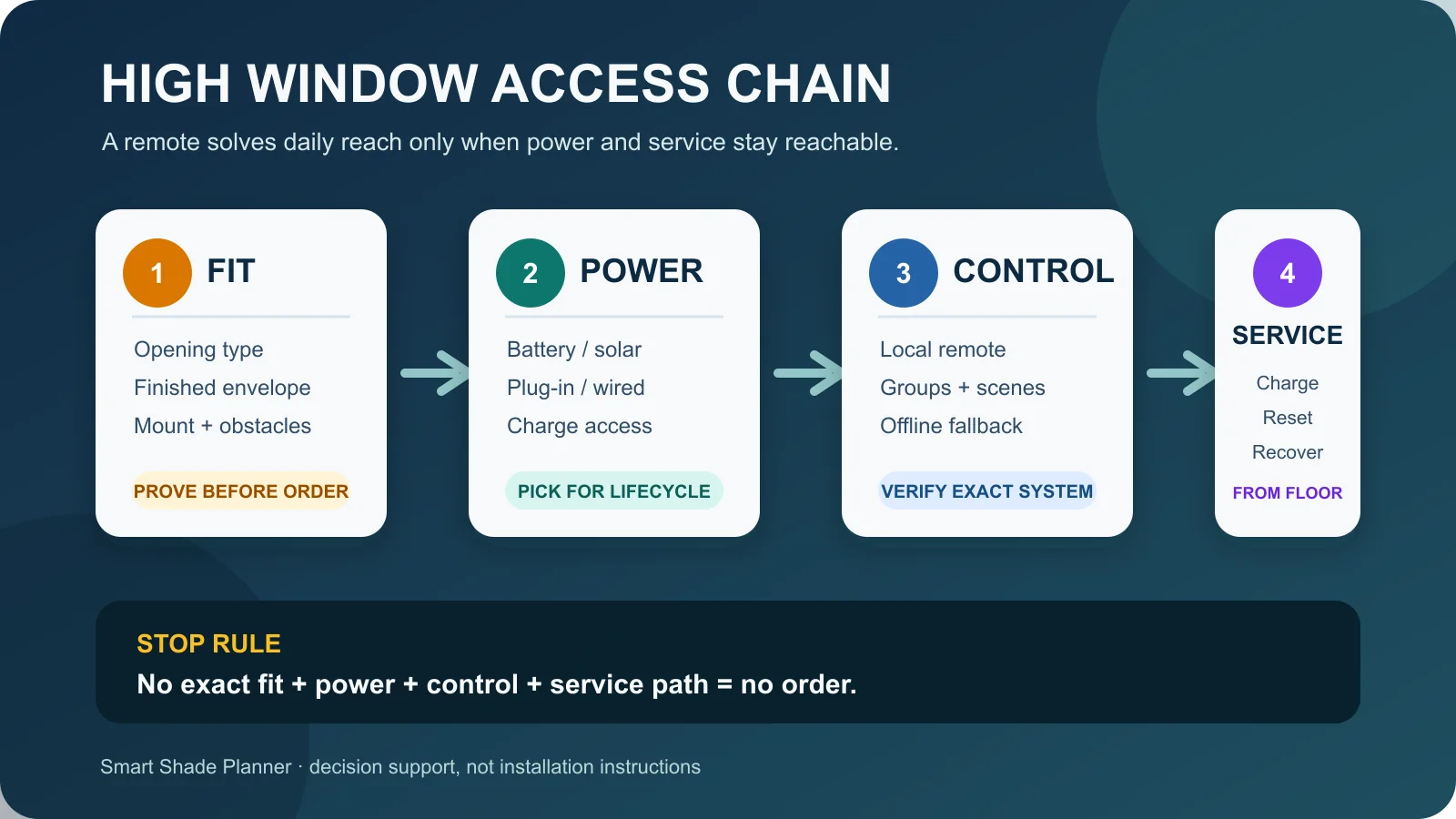
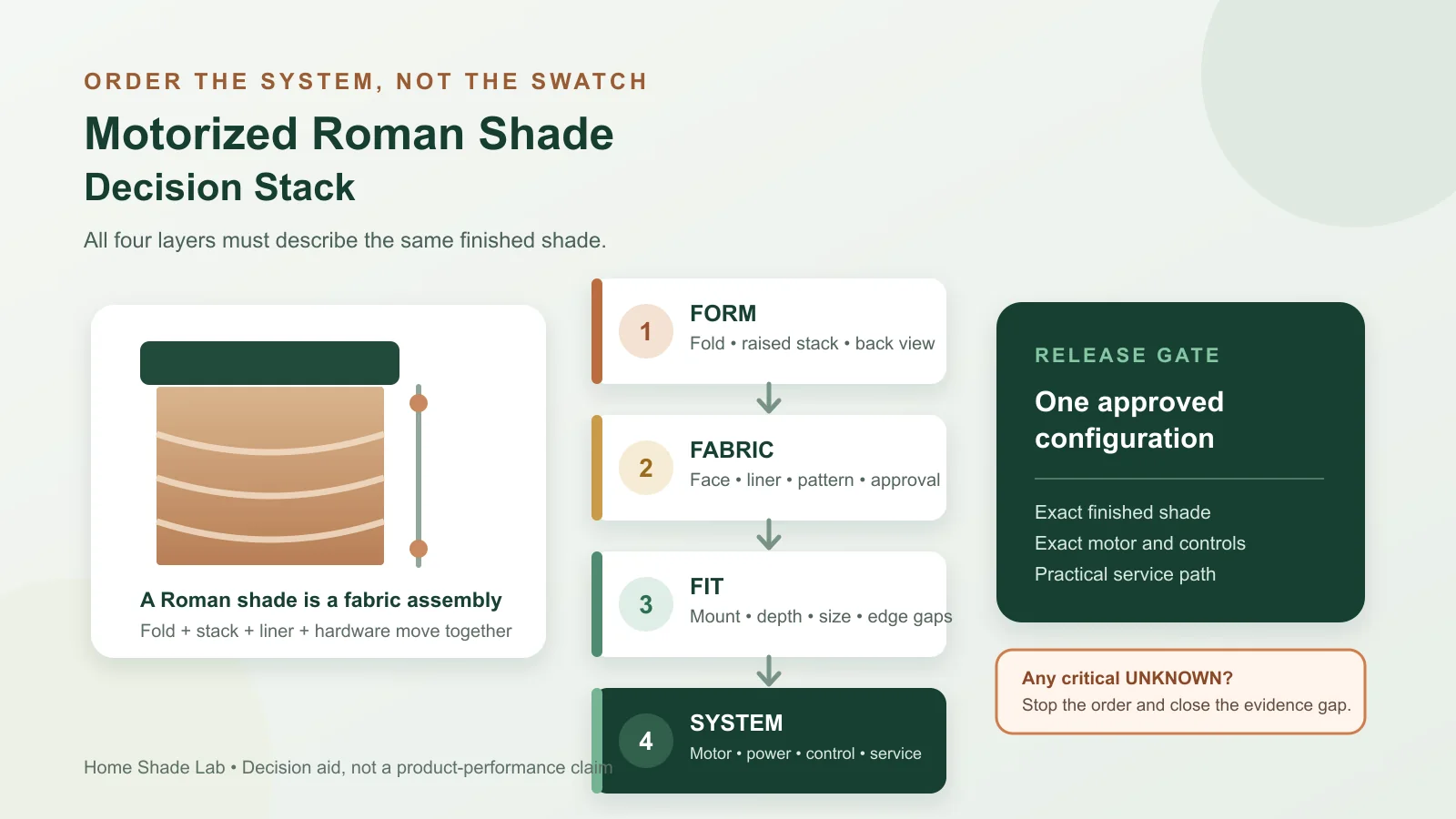
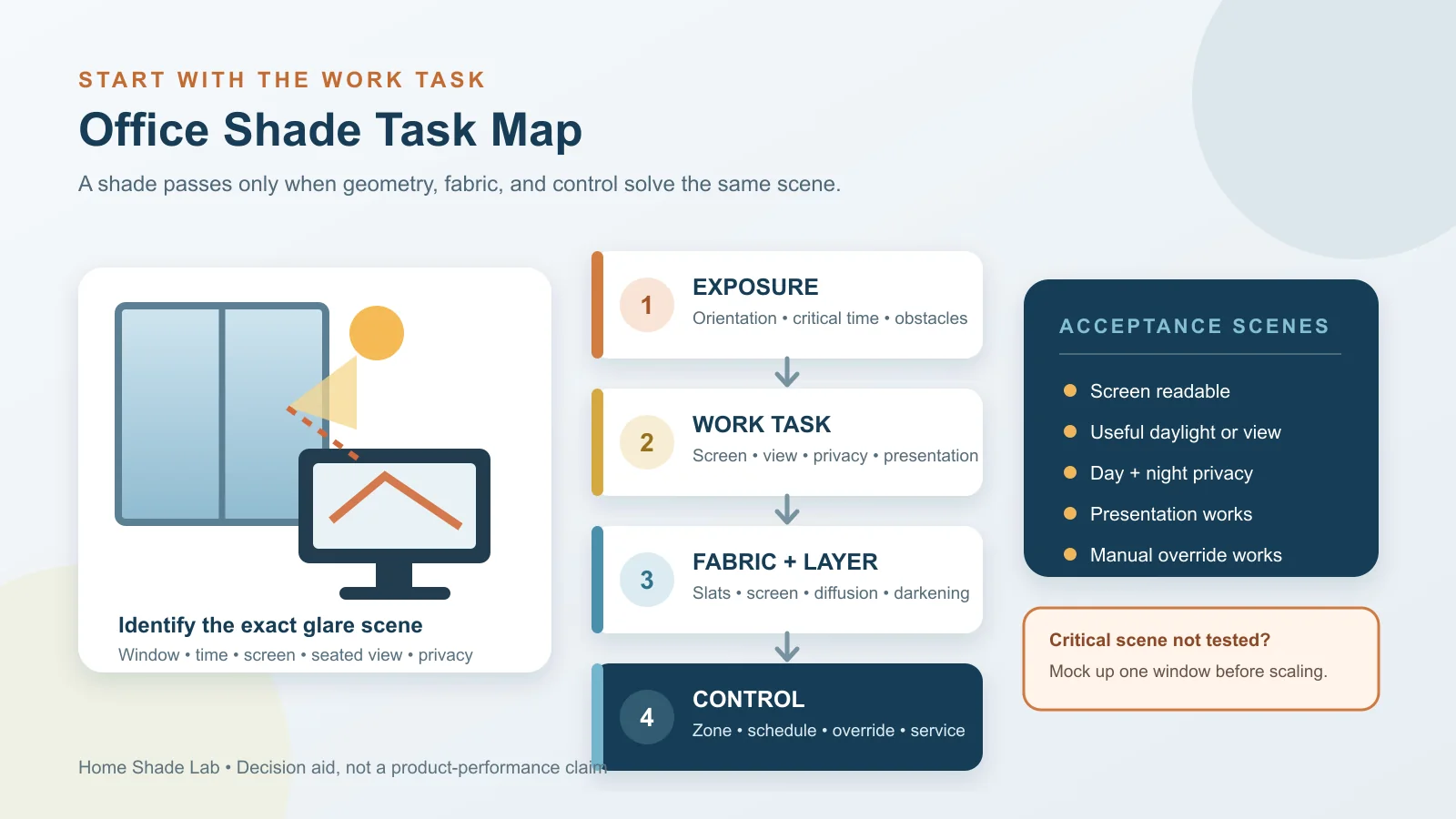
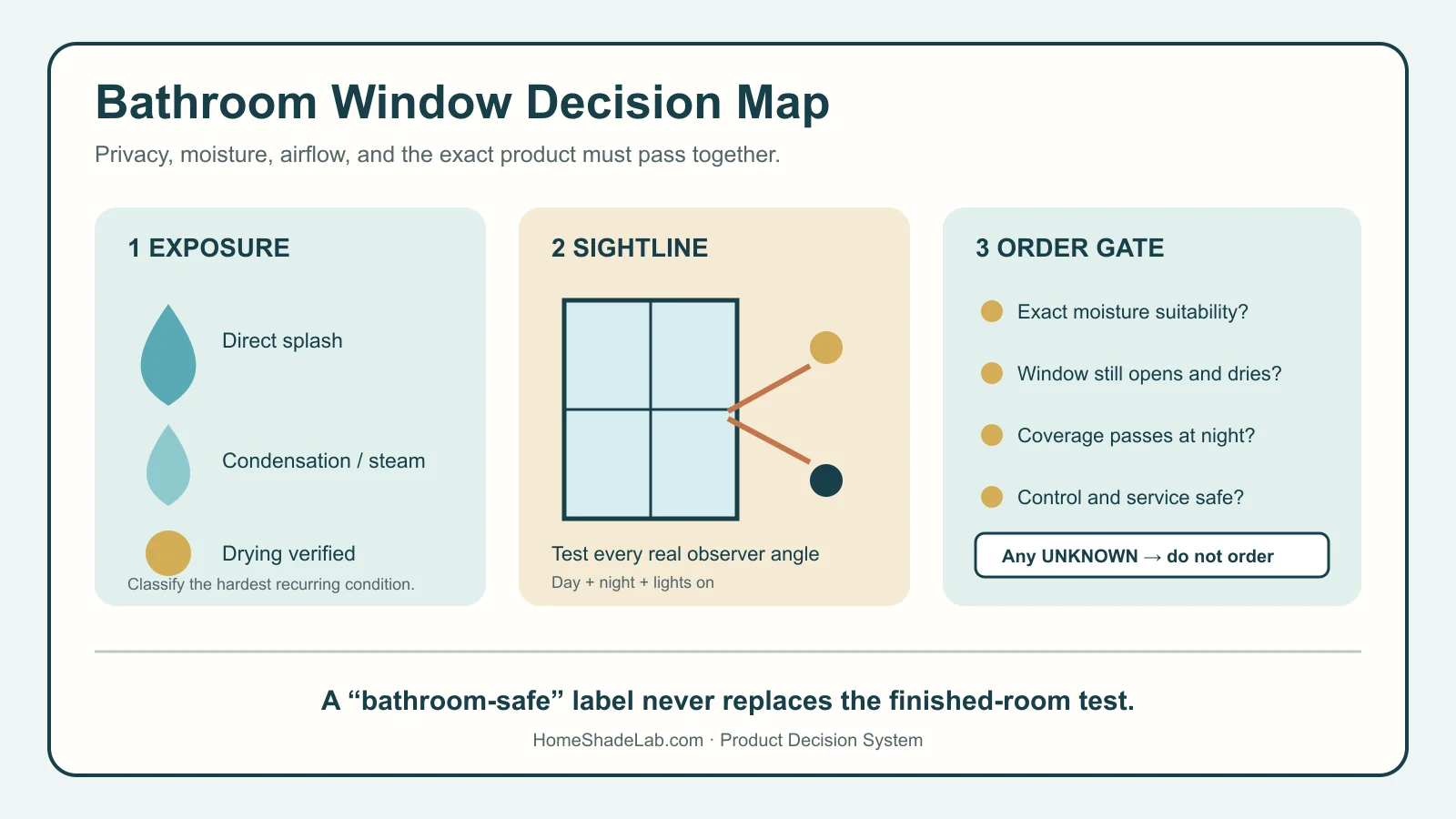
Compare what kitchens, bathrooms, bedrooms, offices, living spaces, and large openings need before you choose fabric, fit, power, or controls. Use a fit matrix and measurement worksheet to plan motorized shades for sliding doors and wide windows—without guessing stack, clearance, or splits. Choose motorized blackout shades by room outcome, edge-light tolerance, mount depth, side gaps, motor path, and custom-order risk—not fabric labels alone. Choose motorized skylight shades by proving unit fit, roof angle, finished light, serviceable power and exact controls before ordering. Plan motorized blinds for French doors by mapping door swing, handle clearance, hold-down behavior, mounting, power service and finished light gaps. Plan bay window blinds by solving both finished headrail corners, light gaps, mount lines, power access and individual or grouped controls. Verify whether motorized shades for arched windows truly move across the curve, then check shape, template, service access, controls and light gaps. Find out whether your existing blinds can be motorized by tracing the motion, mechanism, fit, controls and safety—and when replacement is smarter. Plan motorized blinds for high windows around power, floor-level control, charging, grouped operation and safe lifetime service—not just a remote. Choose motorized Roman shades by approving the fold, raised stack, fabric, lining, mount, finished size, motor, controls and rear-cord safety together. Choose office blinds by replaying screen glare, daylight, video calls, privacy and presentations—then verify fabric, zones, override and fit. Choose bathroom window treatments by mapping splash and condensation, real day/night sightlines, window ventilation, cleaning, fit and controls.Decision guides
Smart Shades by Room: What to Check Before You Buy
Motorized Shades for Sliding Glass Doors: How to Plan Fit, Stack, and Power
Motorized Blackout Shades: How to Control Light Gaps by Room
Motorized Skylight Shades: How to Plan Fit, Power, and Controls
Motorized Blinds for French Doors: Check Handles, Fit, and Power First
Bay Window Blinds: Solve Corner Gaps and Controls Before You Buy
Motorized Shades for Arched Windows: What Can Actually Move?
Can You Motorize Existing Blinds? Retrofit Limits That Decide the Answer
Motorized Blinds for High Windows: Plan Charging and Service Access
Motorized Roman Shades: Check Fold, Stack, and Motor Fit
Office Blinds for Screen Glare, Privacy, and Presentations
Bathroom Window Treatments: Privacy Without Trapping Moisture
Use the guides in this order
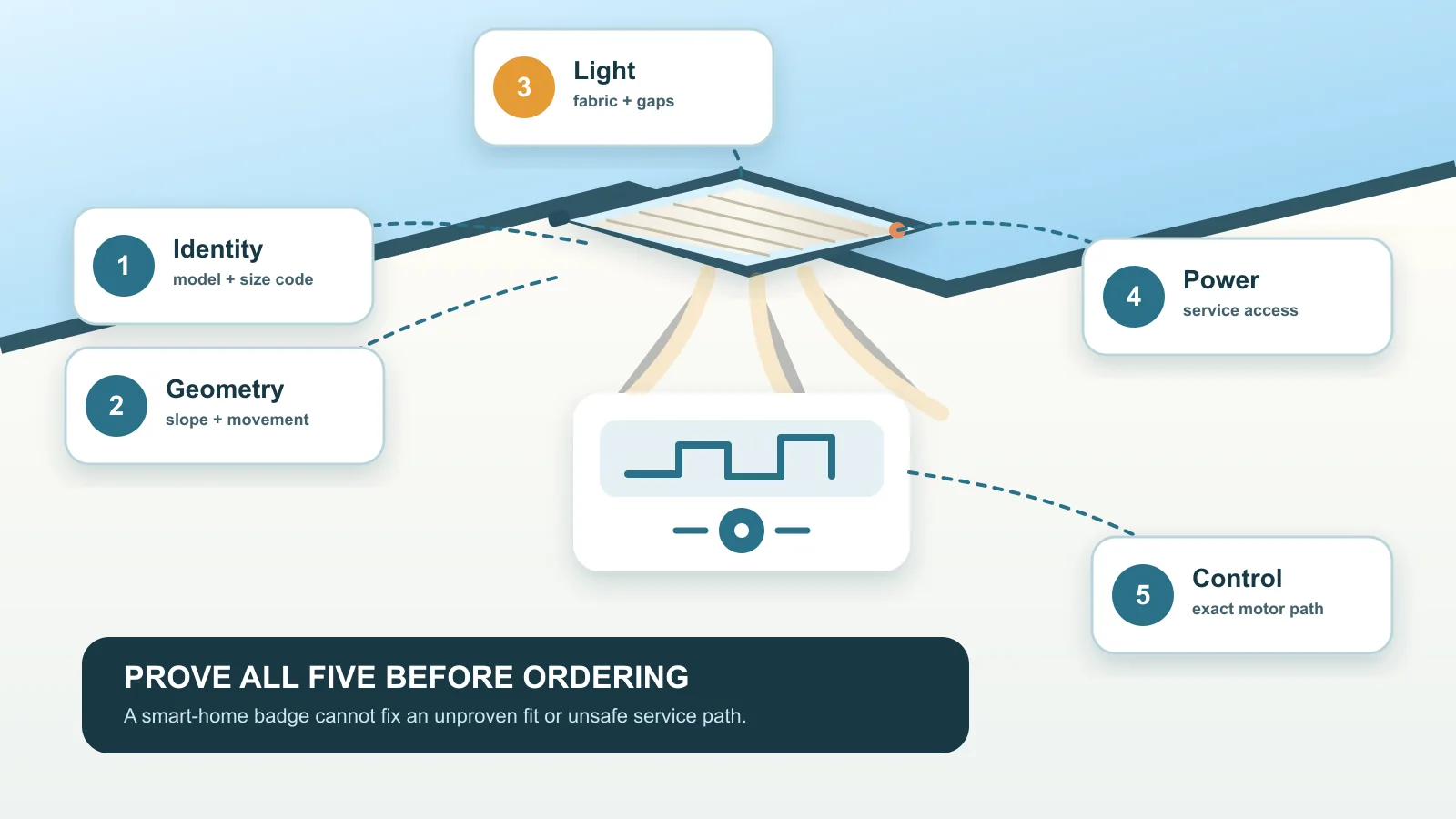
1. Prove the opening
Record the mounting plane, usable depth, obstructions, active door or window parts, and the finished coverage you need.
2. Prove daily operation
Check charging or service access, power availability, grouping, local control, and how the covering clears the opening.
3. Prove the exact configuration
Verify model-specific size limits, motor, hub or bridge, fabric, return terms, and final measuring rules before ordering.
A general brand claim is not enough for fit or compatibility. Use the exact product and motor documentation for the final order.