
Blinds for Privacy Need a Day View and a Lights-On Night View
Choose blinds for privacy by naming the observer, protected room zone and exact daylight, dusk and lights-on-night states the finished window must pass.
Room-by-room planning for blackout, privacy, glare, bedrooms, nurseries, media rooms, and practical smart shade use cases.
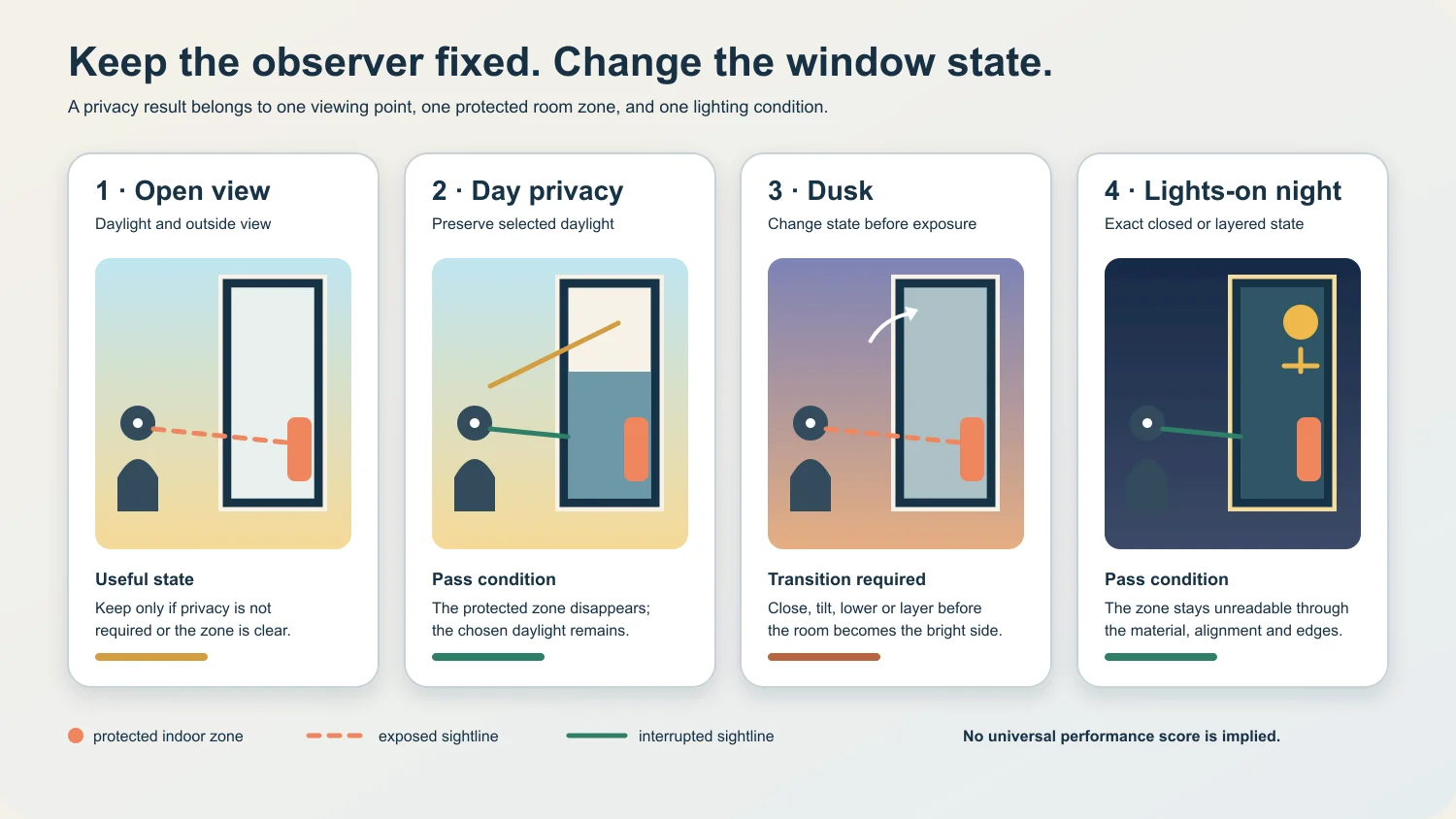
Choose blinds for privacy by naming the observer, protected room zone and exact daylight, dusk and lights-on-night states the finished window must pass.
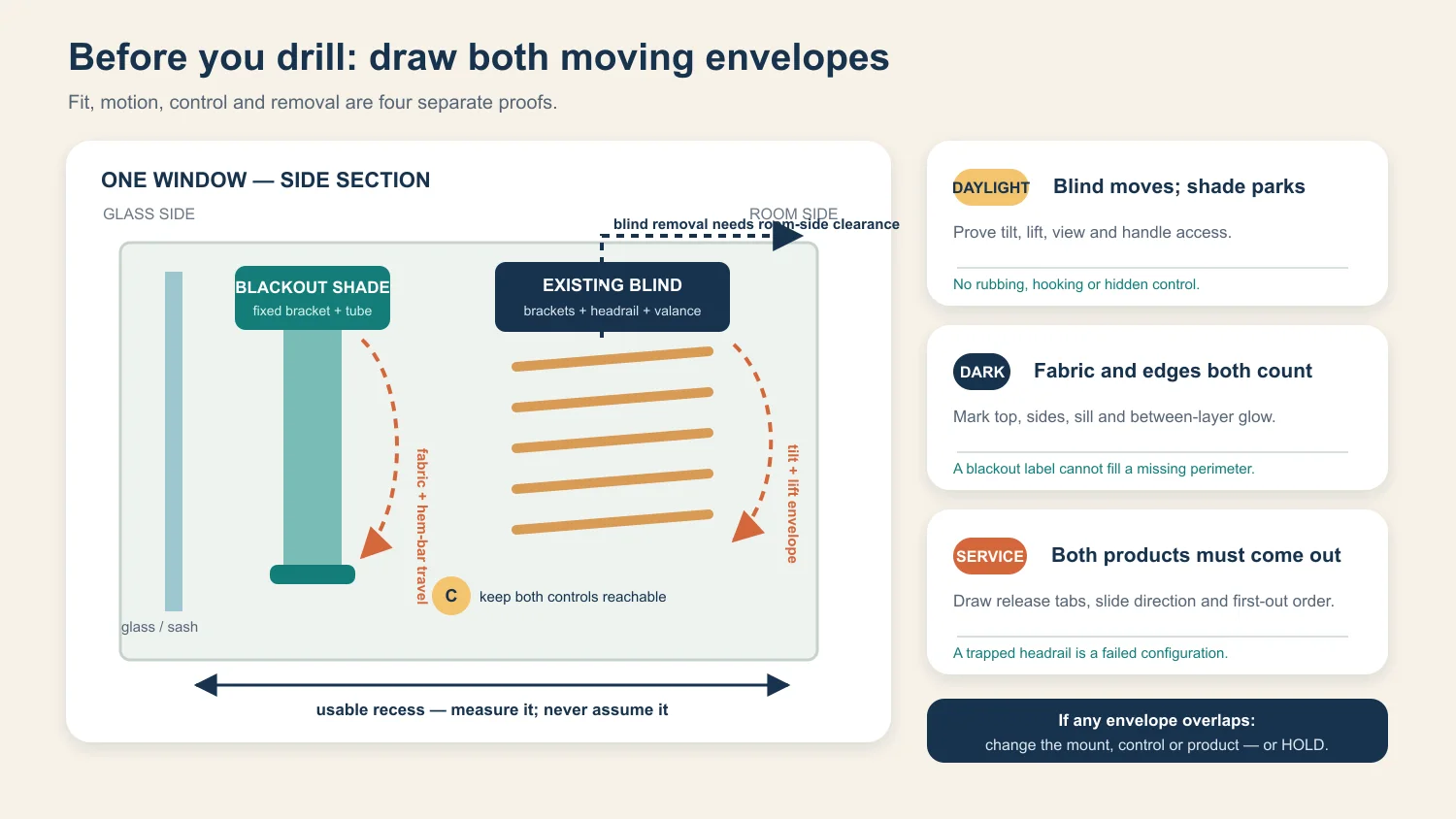
See if a blackout shade can fit behind existing blinds. Map both headrails, controls, moving clearance, light gaps and removal before drilling.
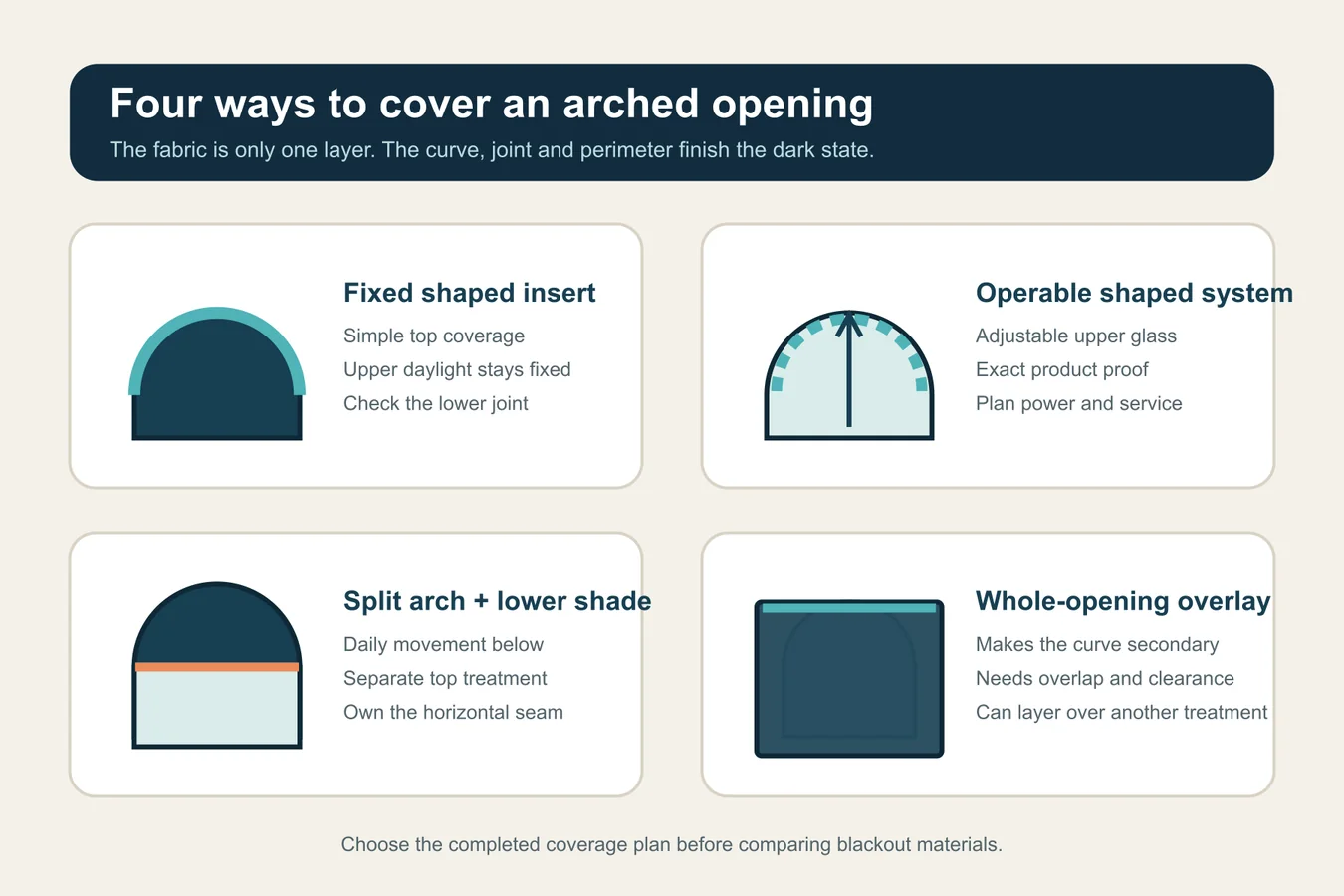
Compare fixed arch inserts, operable shades and whole-opening overlays, then verify the curve, seam and perimeter before ordering a blackout treatment.
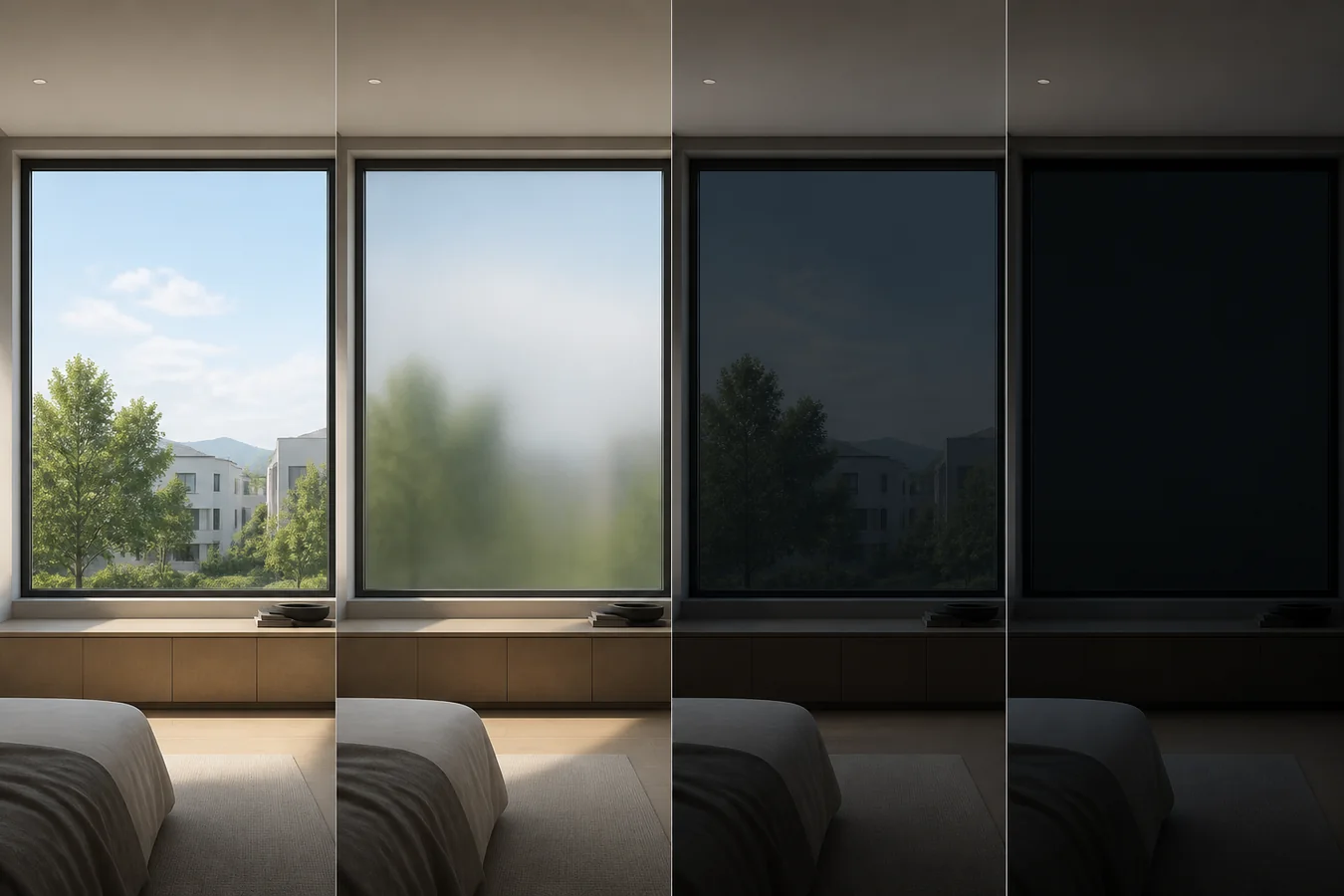
Check blackout smart glass by technology, darkest-state VLT, privacy, power-off behavior, retrofit limits and service before replacing a shade.
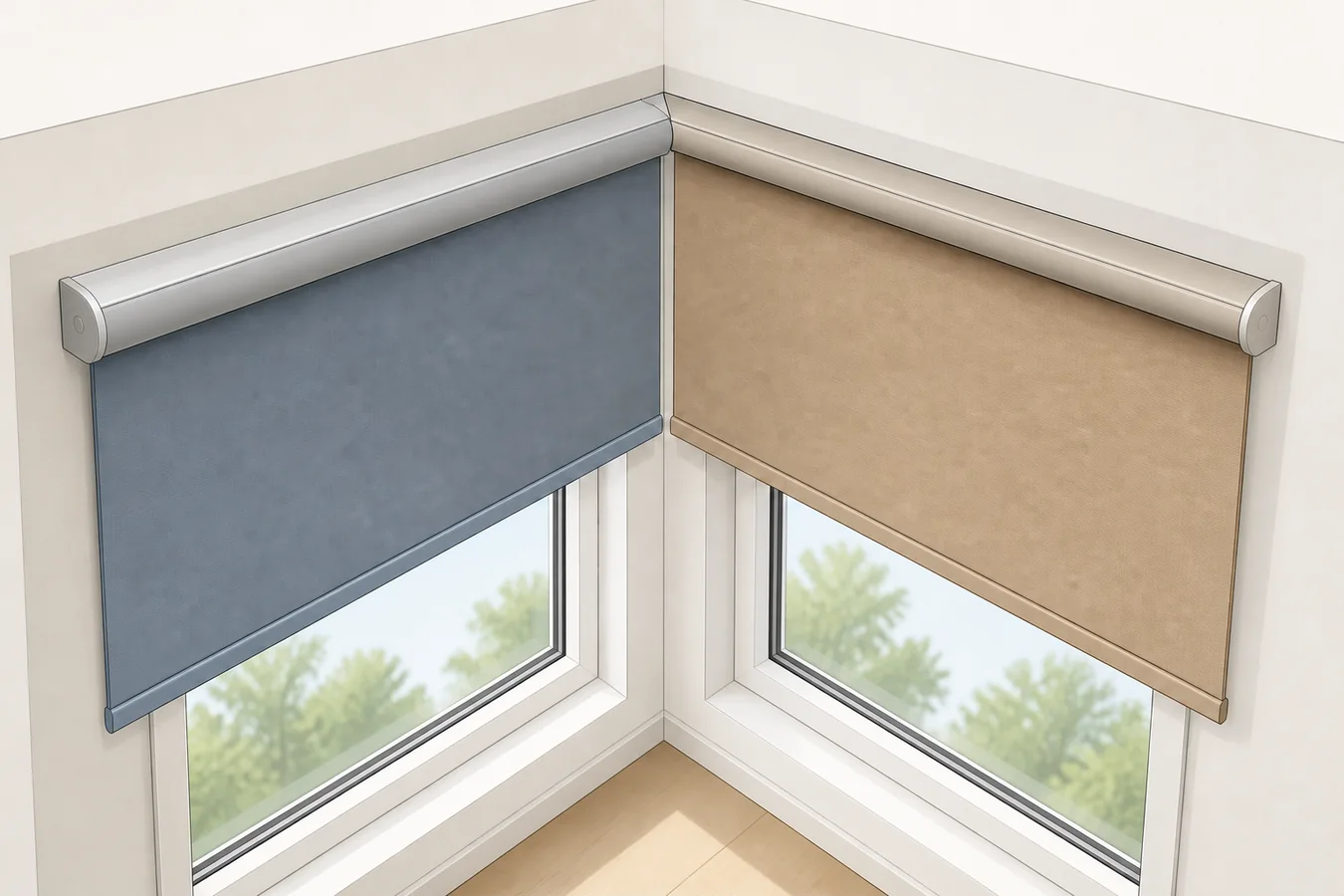
Map two complete corner window blinds in plan view, assign the through side, then verify the gap, roll direction, controls, window clearance and service.
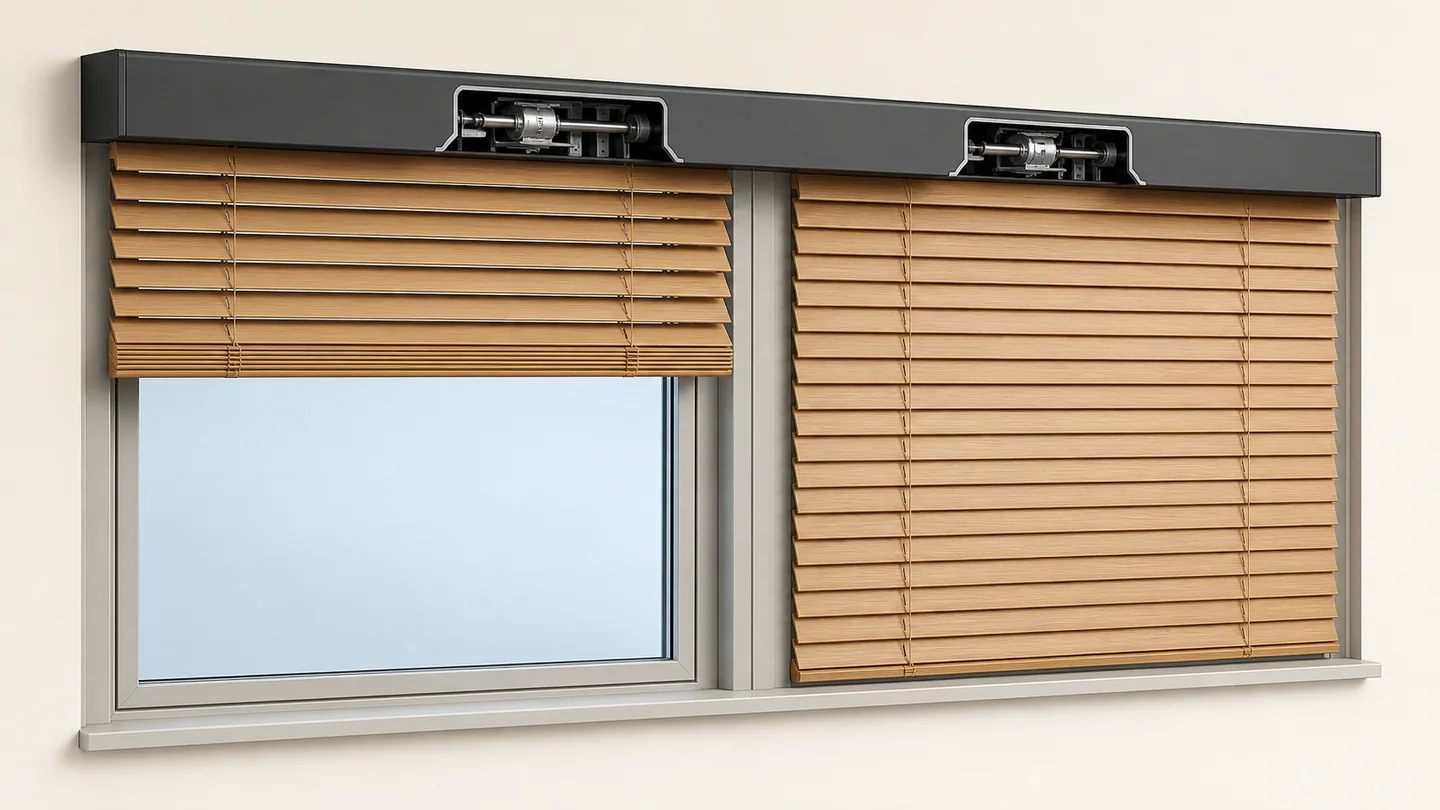
Keep the same panel split while comparing a shared headrail with separate rails. Check center gaps, controls, support, shipping and future service.
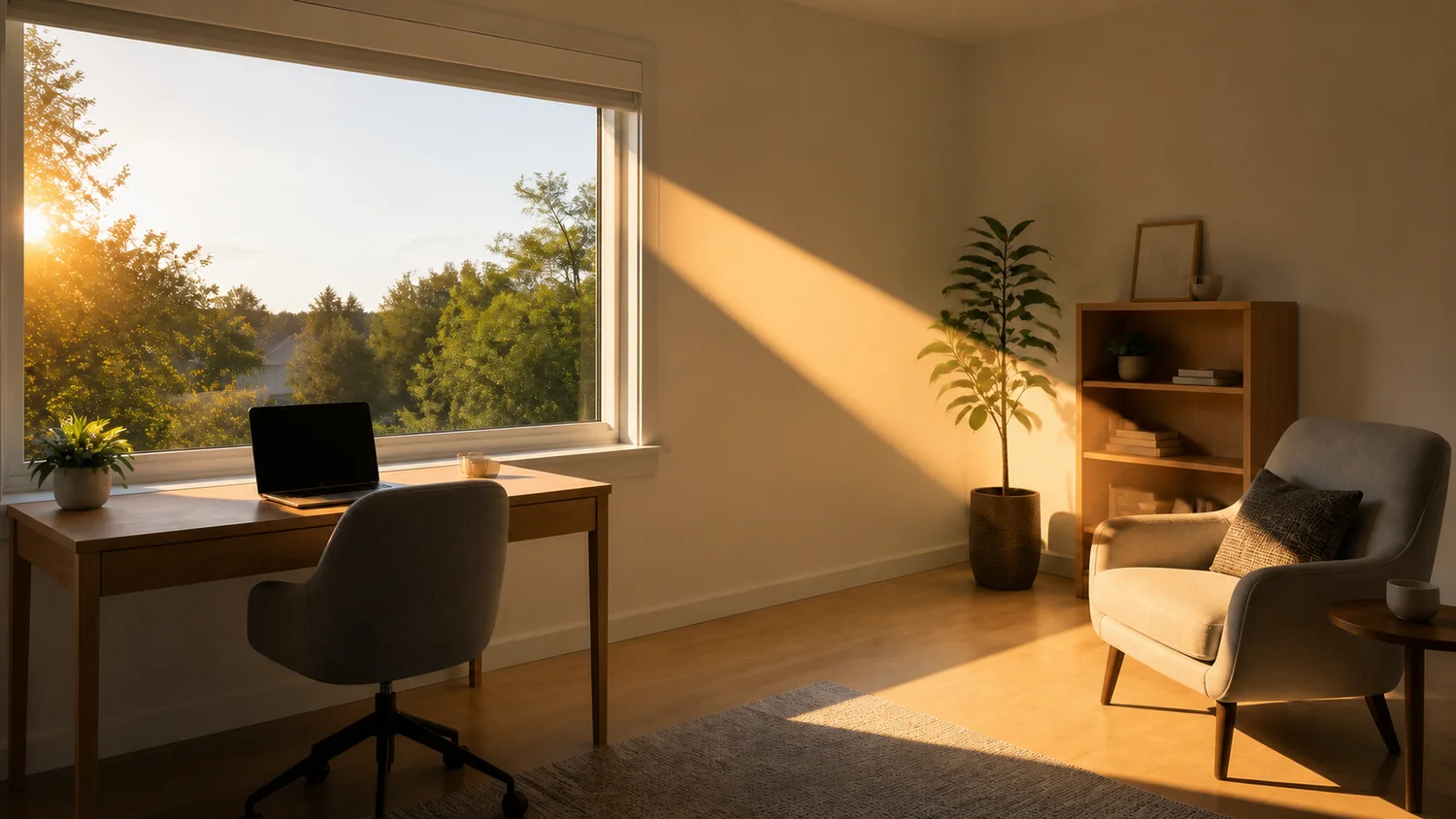
See where west-window sun reaches the room, then choose glare, heat, view or darkness as the first job before comparing shades, blinds or exterior screens.
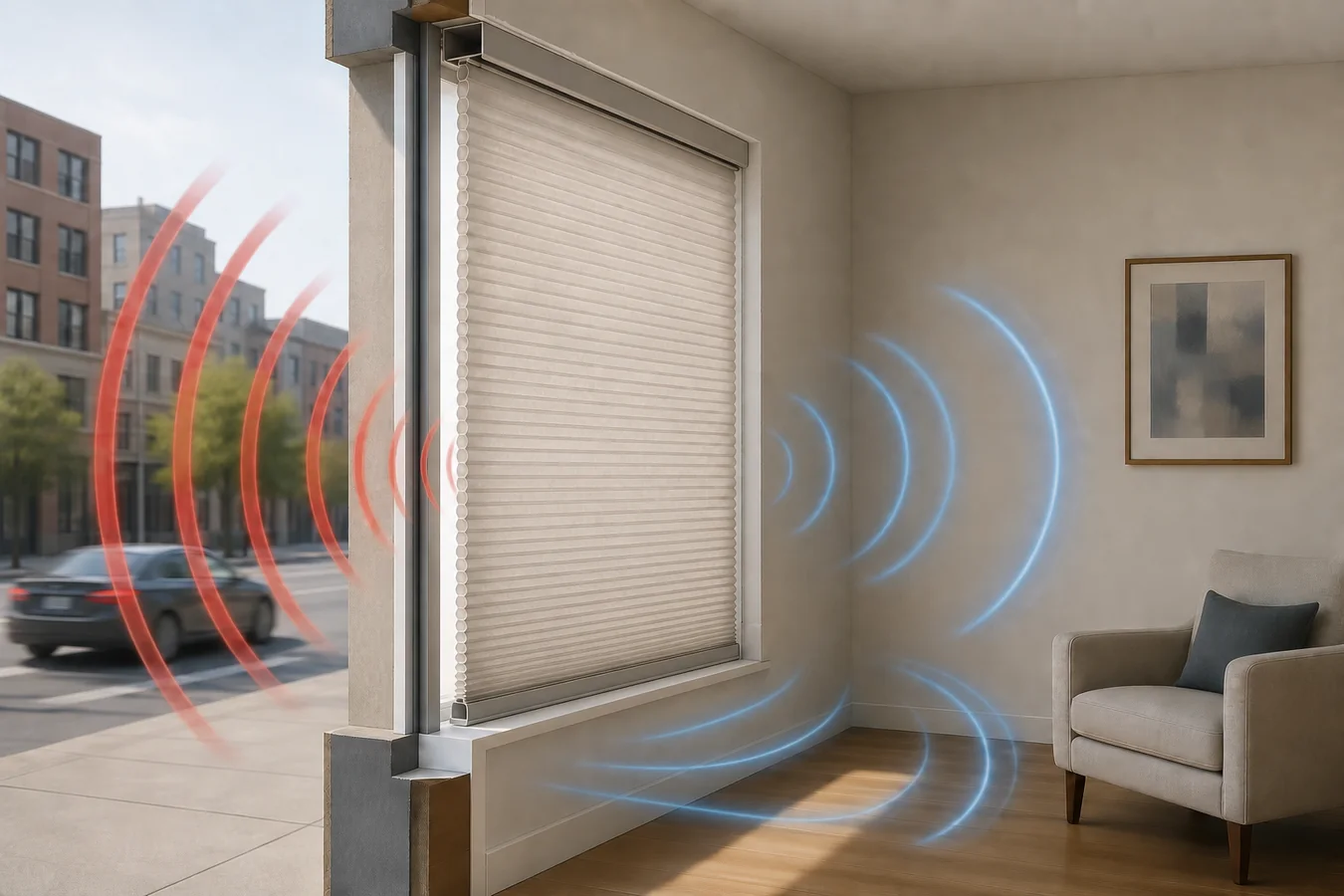
Tell room echo from sound entering at the window, inspect gaps, and demand exact acoustic test details before paying for cellular or layered shades.
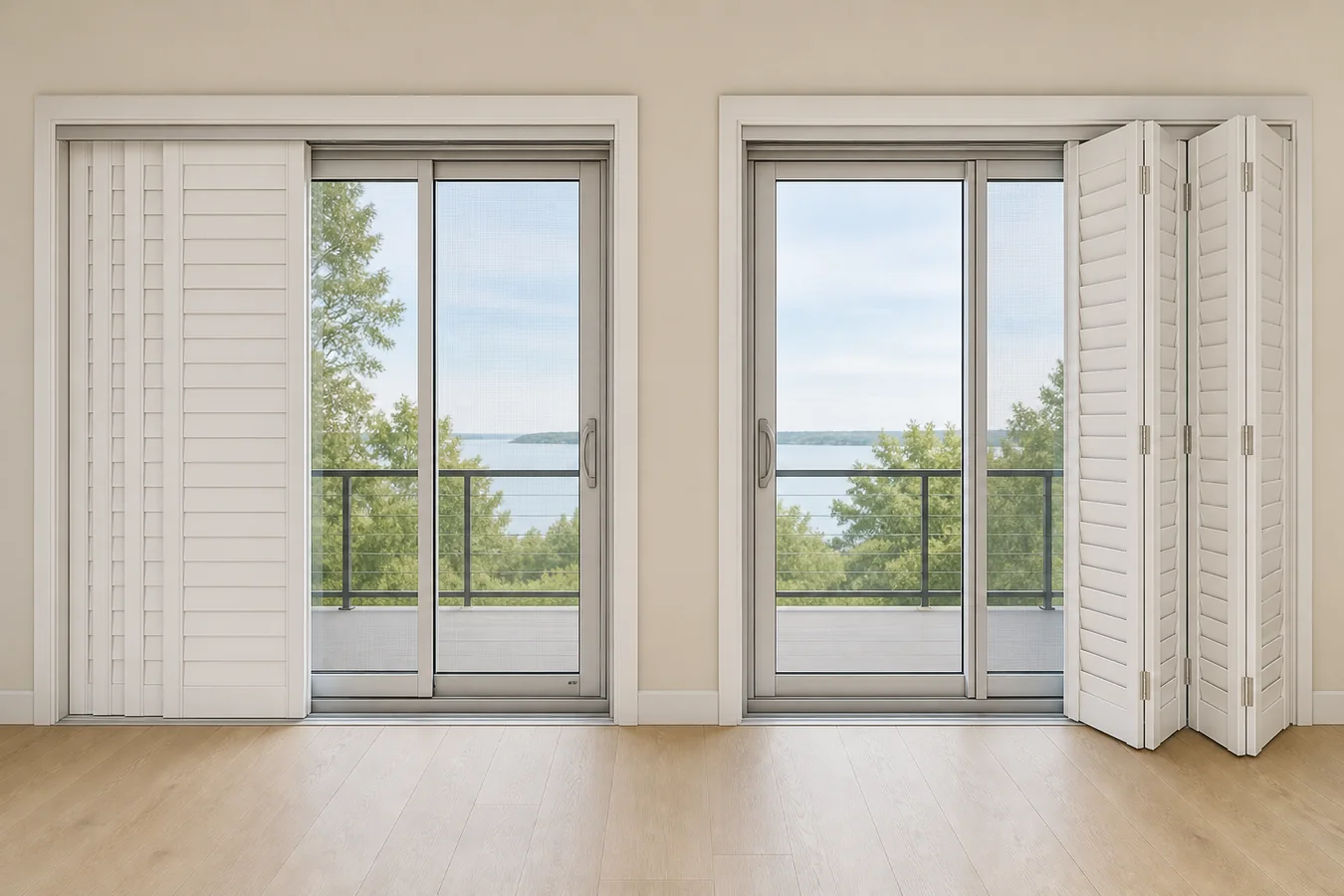
Overlay the active door, screen, handle and shutter panels, then compare bypass and bi-fold stack, passage, floor guides and service before ordering.
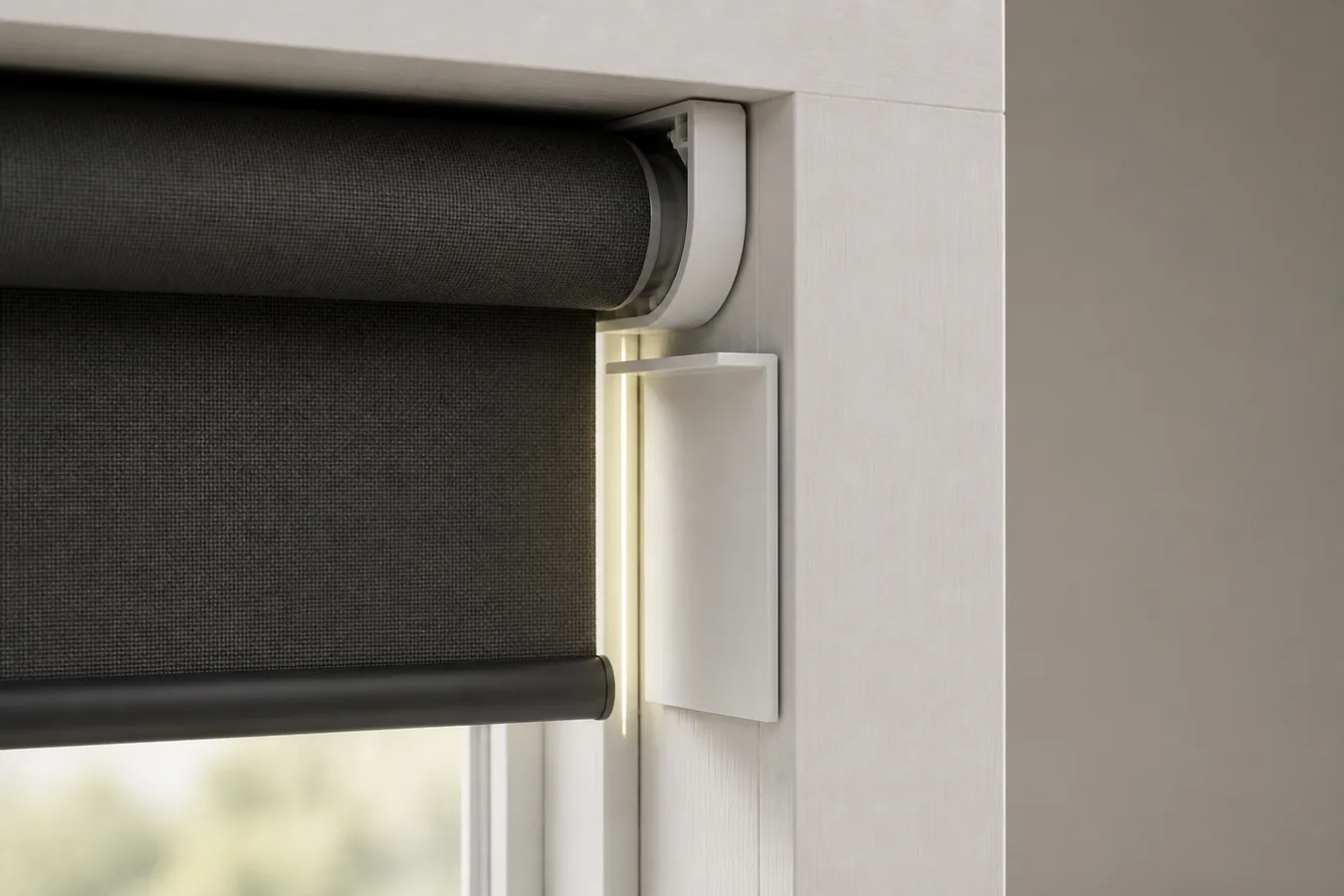
Find where side light enters, compare L-shaped blockers with U-shaped tracks, and verify fabric travel, corners, adhesive surface, and service access.