
Check Every Seat Before Choosing Dining Room Window Treatments
Map glare, evening privacy, views, doors, radiators and cleaning at every dining chair before choosing shades, blinds, curtains or layers.
Room-by-room planning for blackout, privacy, glare, bedrooms, nurseries, media rooms, and practical smart shade use cases.
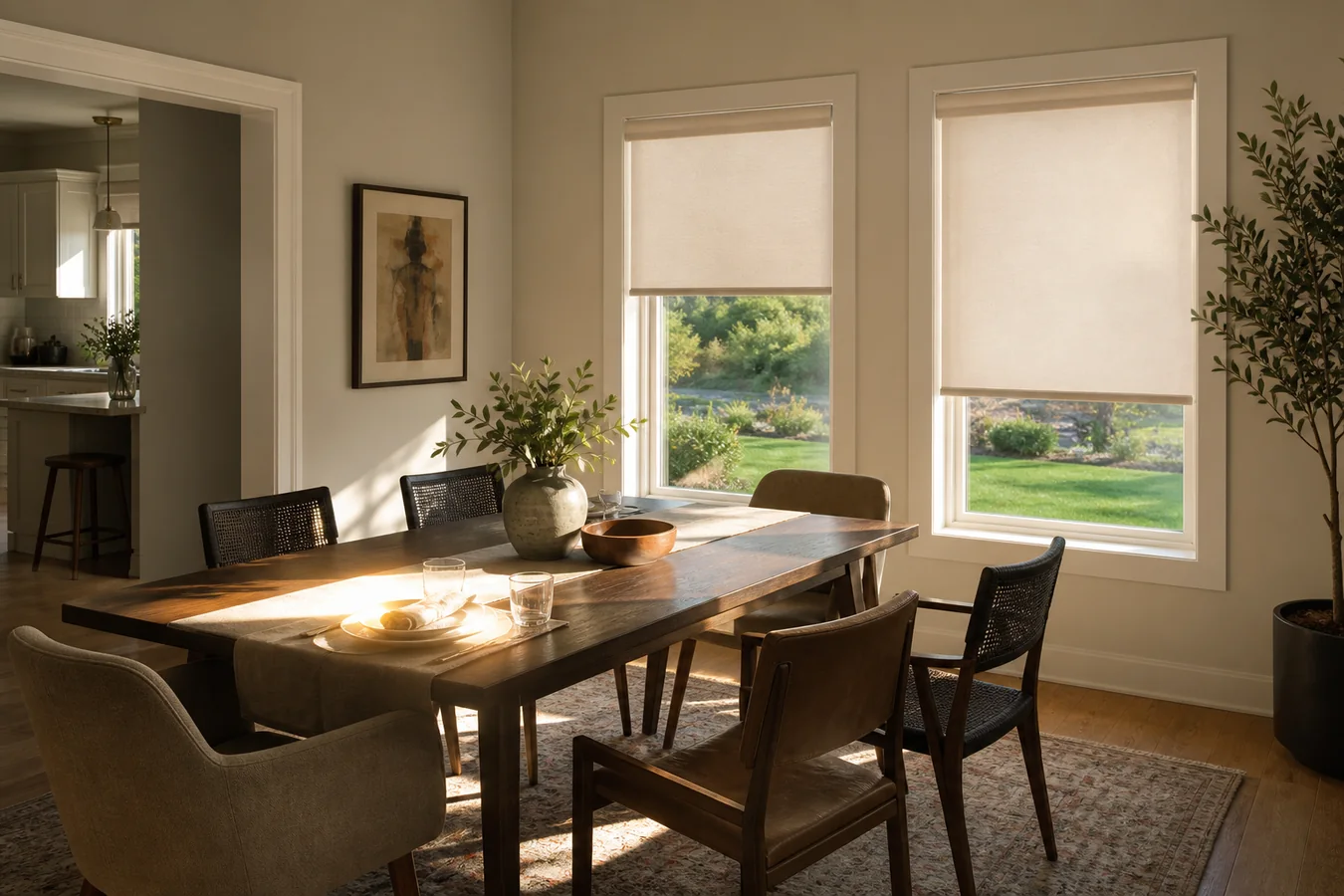
Map glare, evening privacy, views, doors, radiators and cleaning at every dining chair before choosing shades, blinds, curtains or layers.
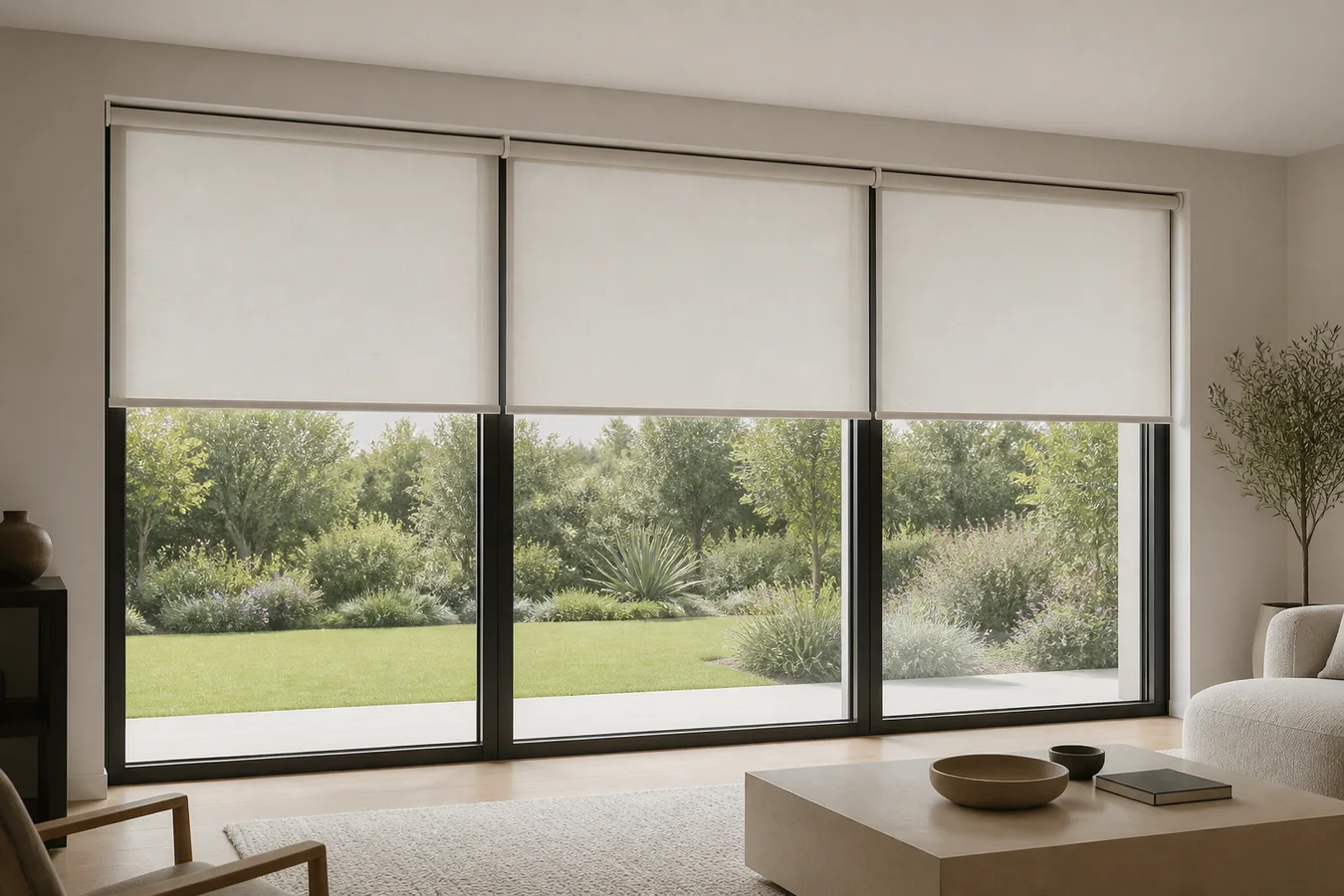
Map mullions, panel widths, fabric gaps, drives and power before choosing one oversized shade or several coordinated blinds for a wide opening.
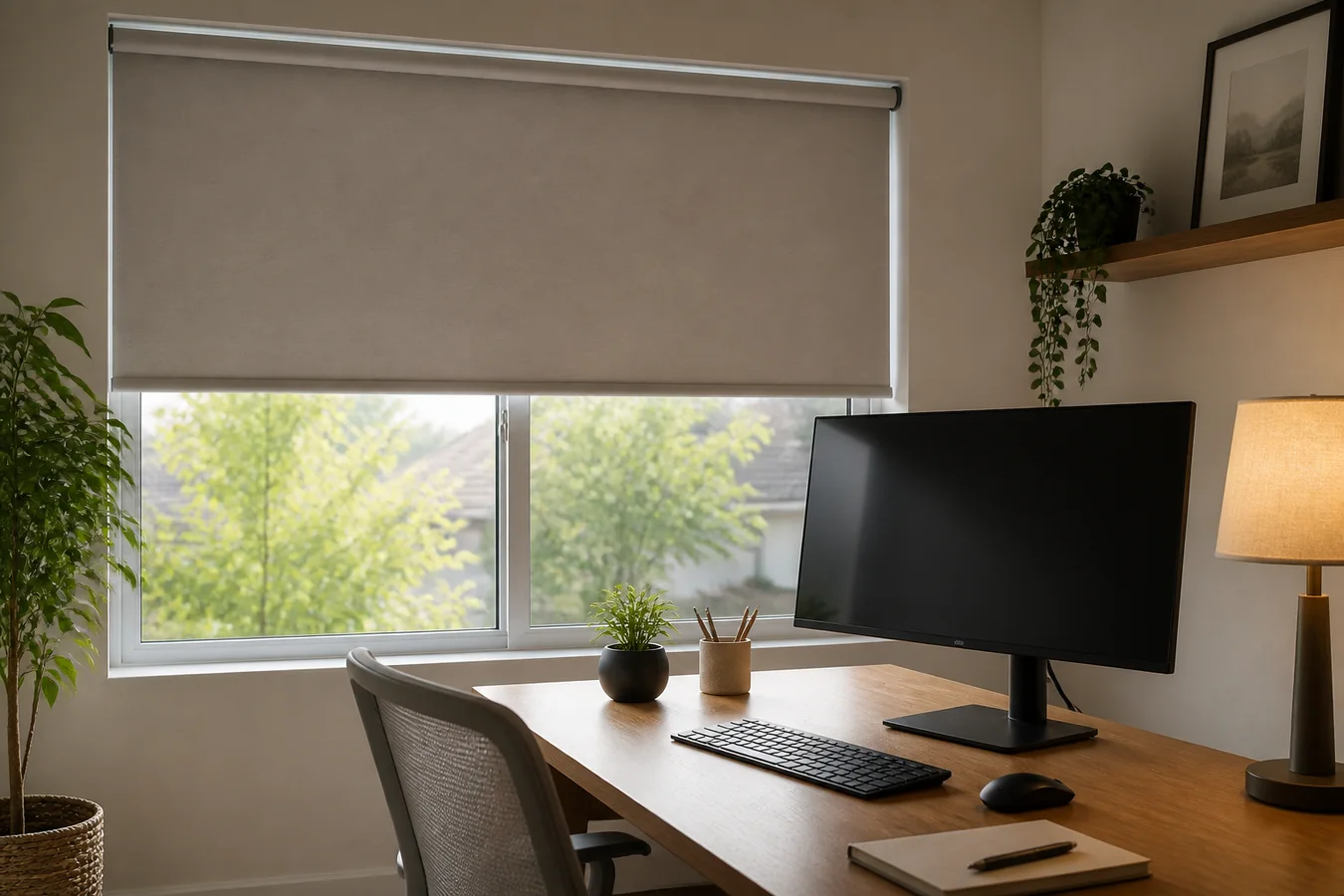
Use a one-variable glare test to decide whether to close a blackout blind, diffuse daylight, move the monitor or investigate a non-window cause.
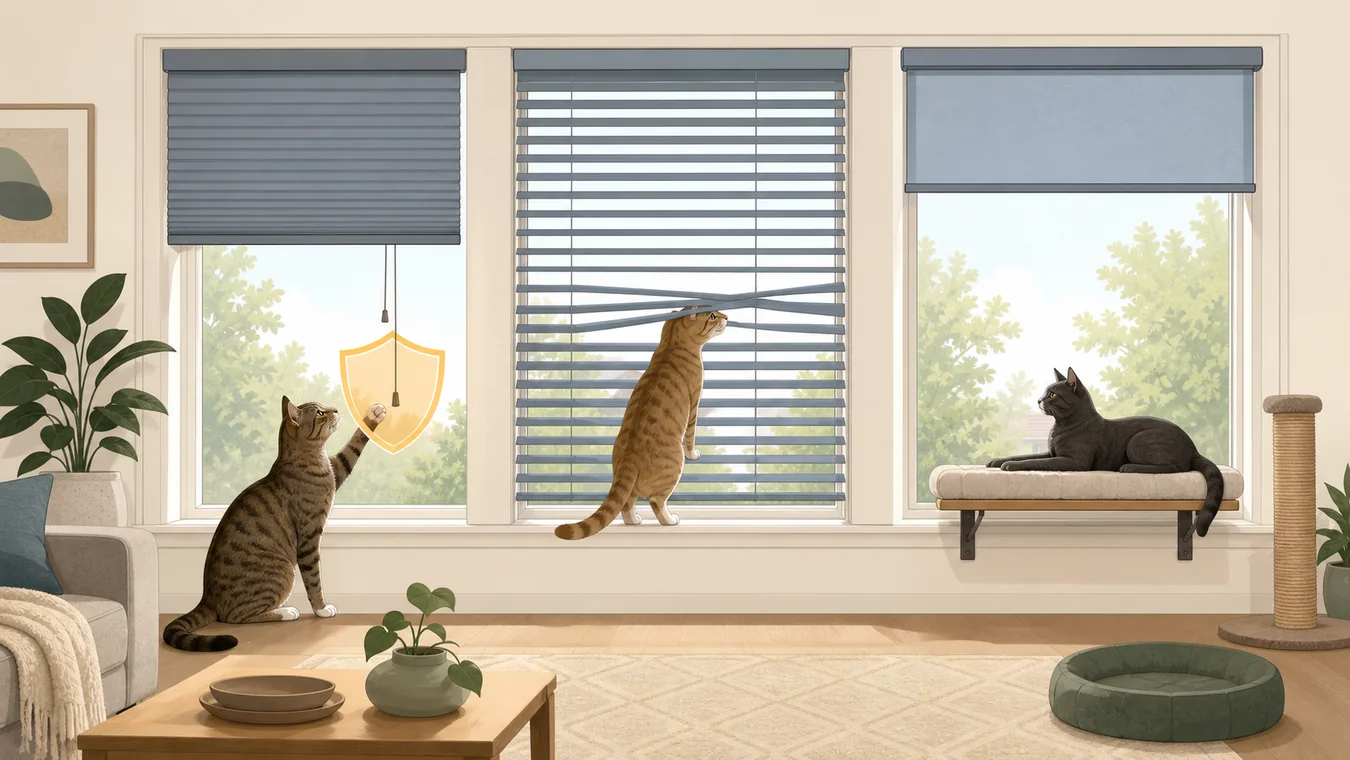
See how cord play, slat pushing, fabric scratching, chewing, and window-perch access change a cat-friendly blind or shade shortlist.
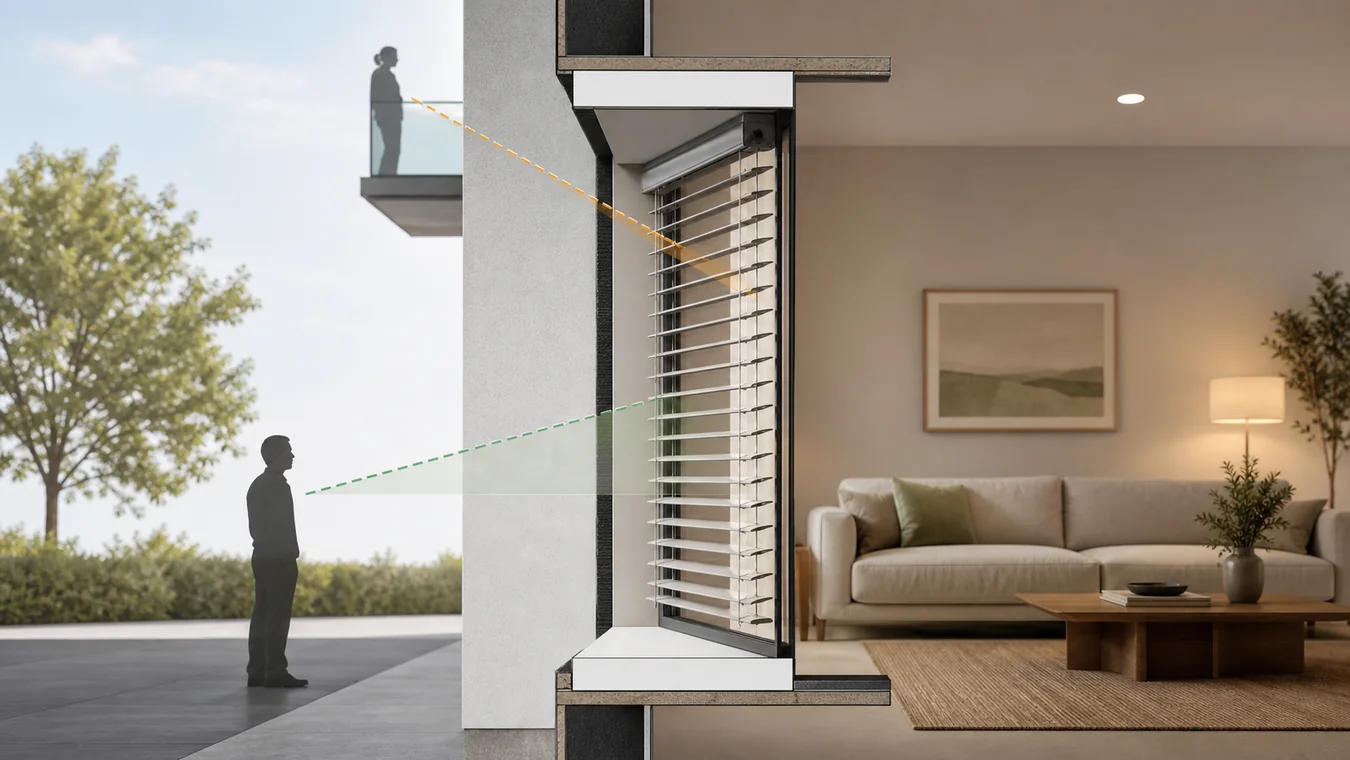
See which way to tilt horizontal blinds from street, same-level, or upper-floor sightlines—and catch route holes and night gaps before relying on them.
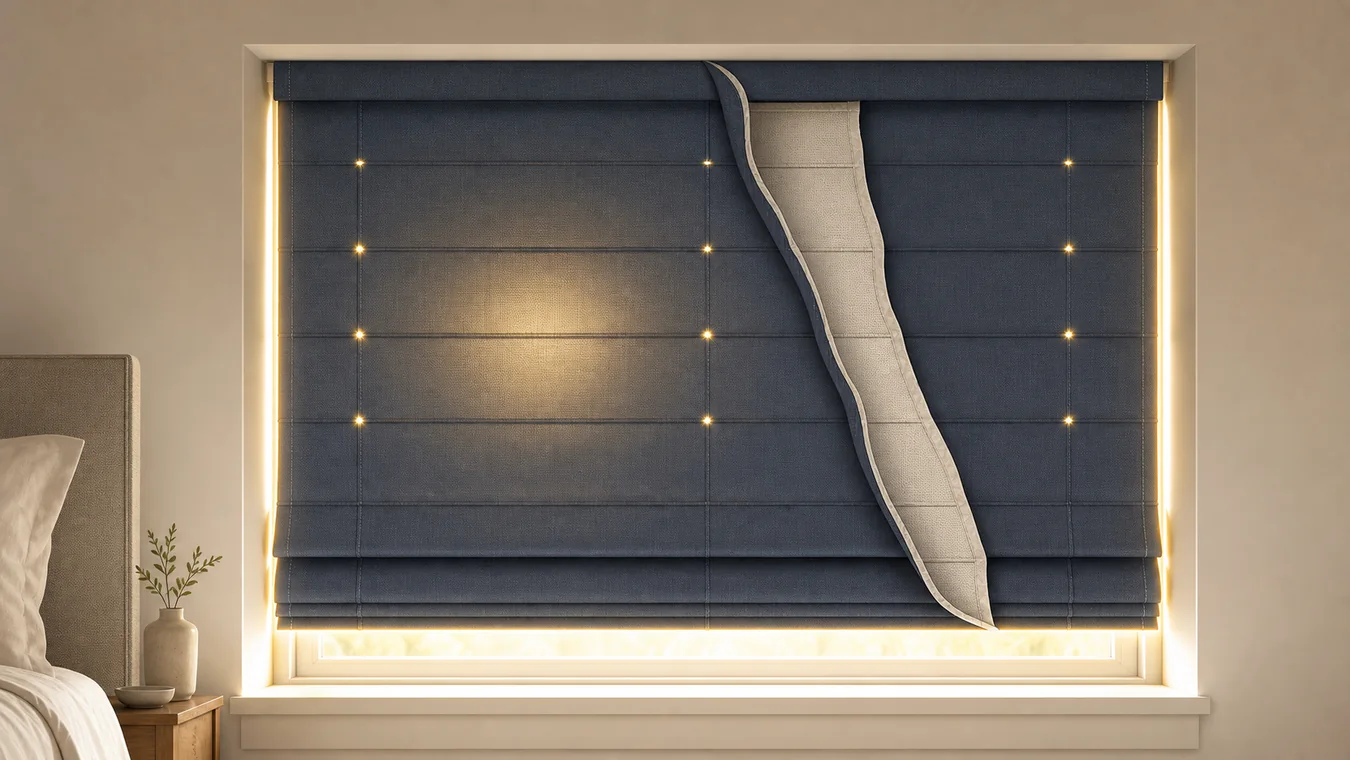
See why a blackout liner is only one part of a Roman shade. Audit fabric transmission, stitch points, edge coverage and controls before ordering.
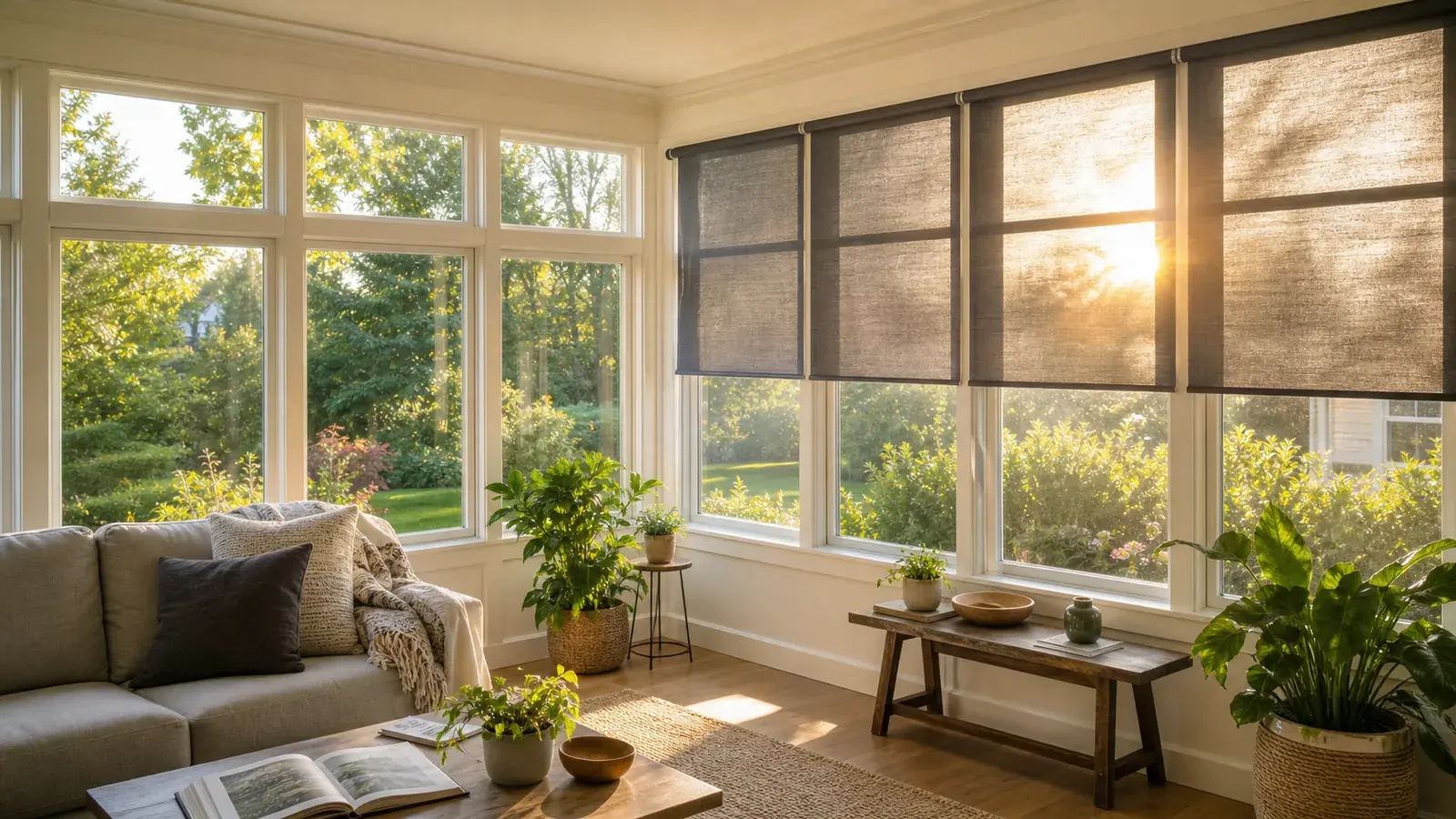
Map sunroom blinds by the hour and window group, then choose where solar, light-filtering or motorized shades solve glare without closing the view.
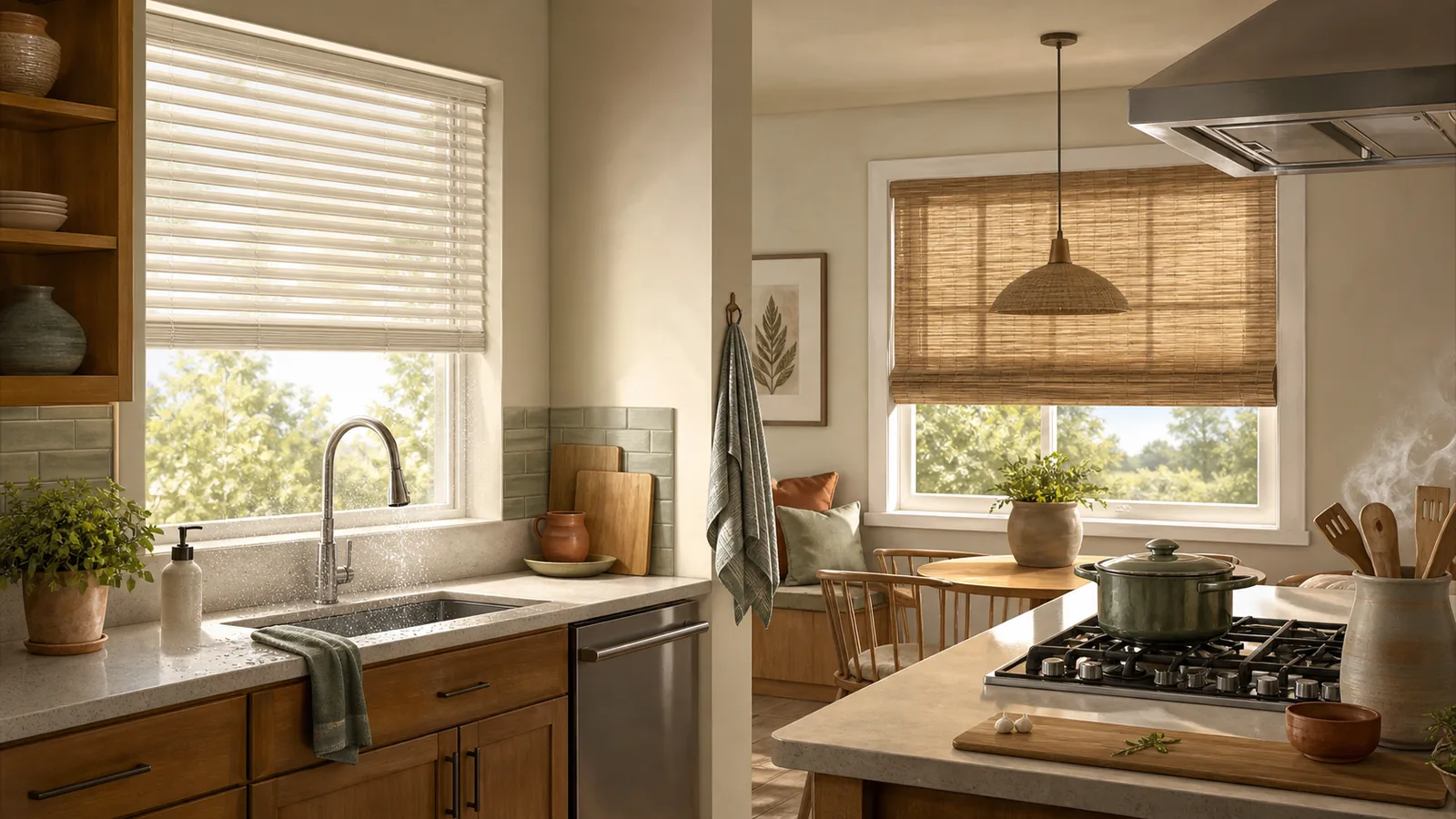
Match each kitchen window to splash, cooking residue, condensation and privacy, then verify the exact care method, fit, controls and service access.
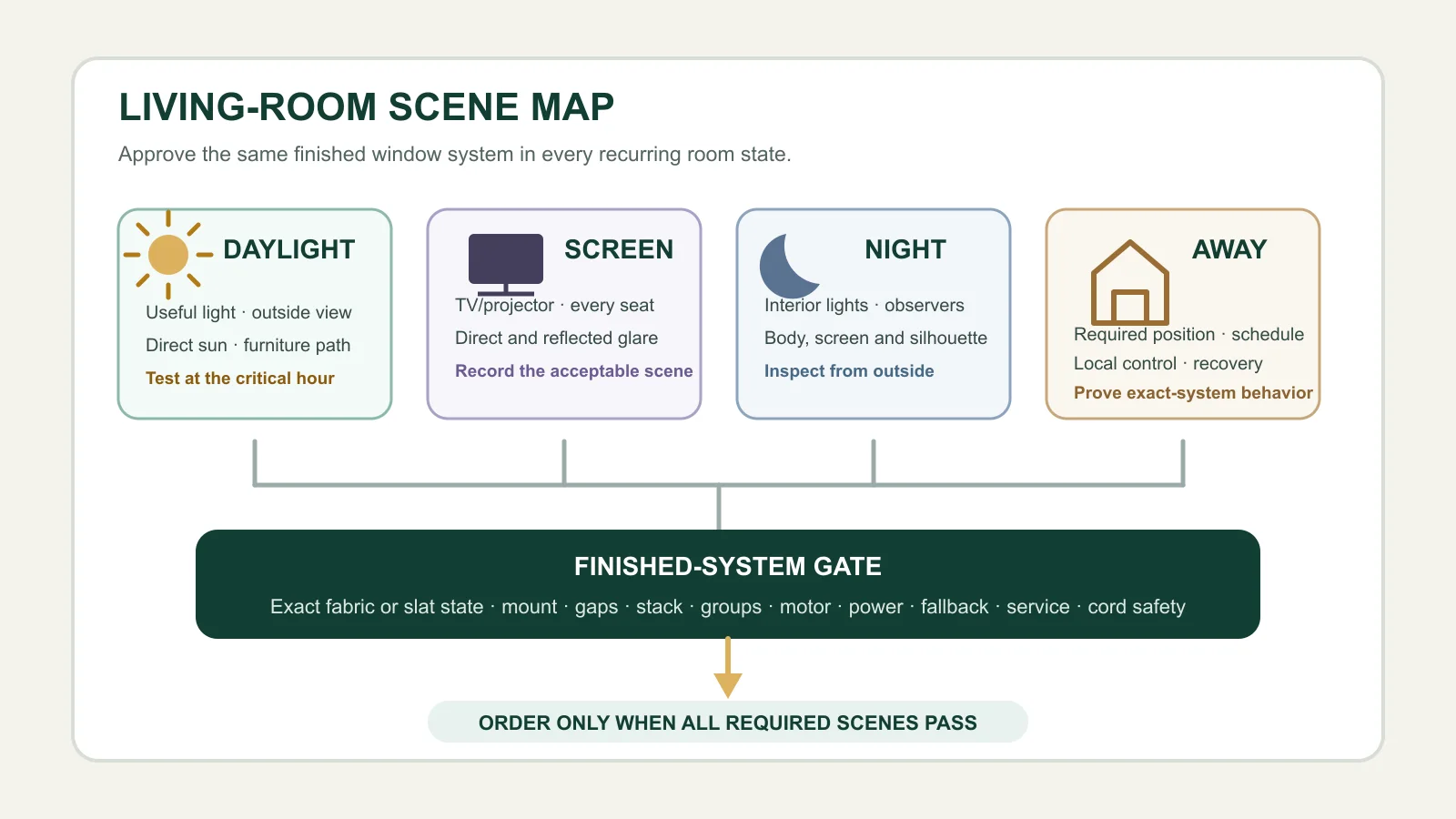
Plan living room blinds around daylight, TV glare, night privacy and away scenes, then resolve coverage, controls, groups and safety.
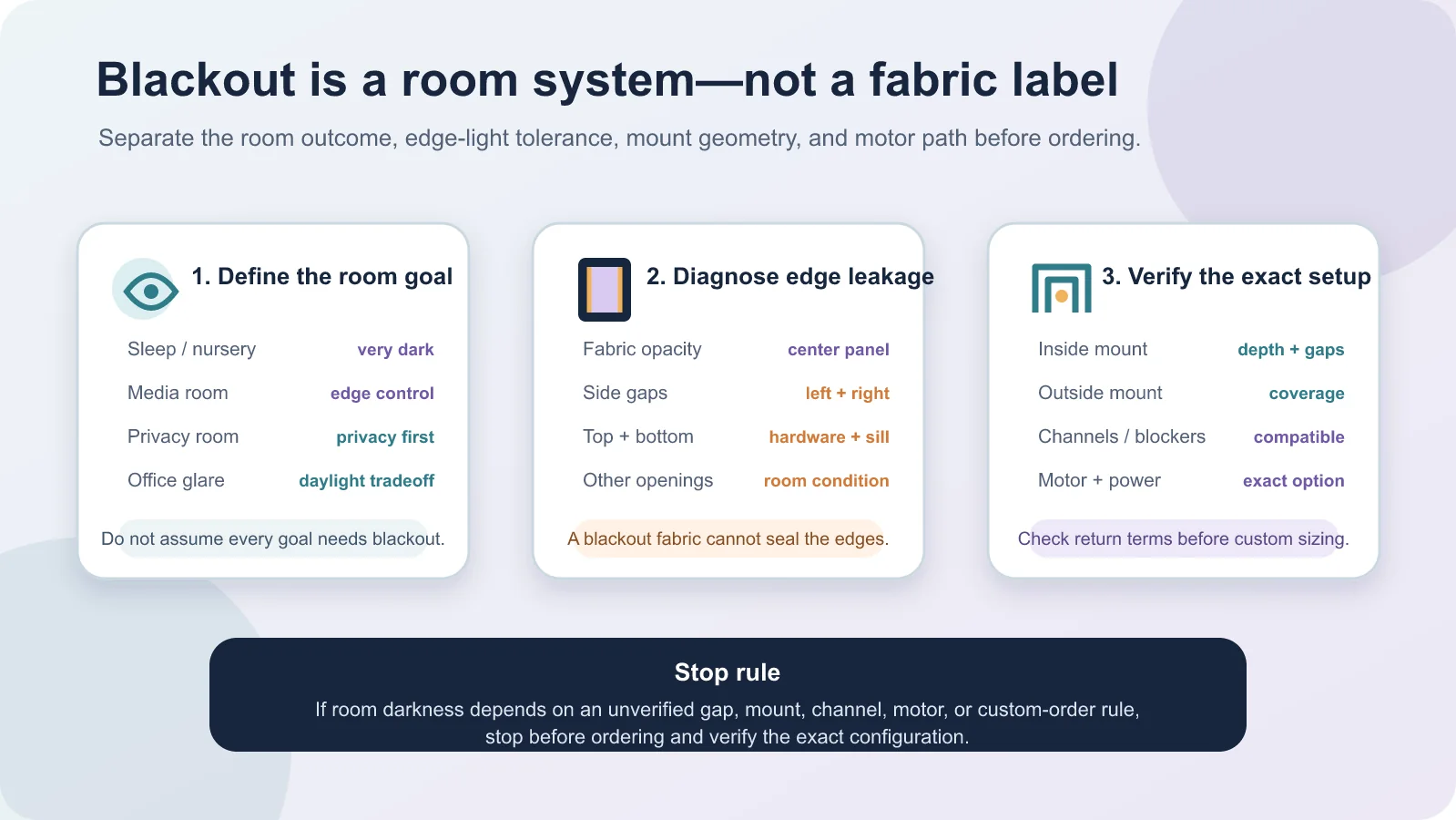
Choose motorized blackout shades by room outcome, edge-light tolerance, mount depth, side gaps, motor path, and custom-order risk—not fabric labels alone.