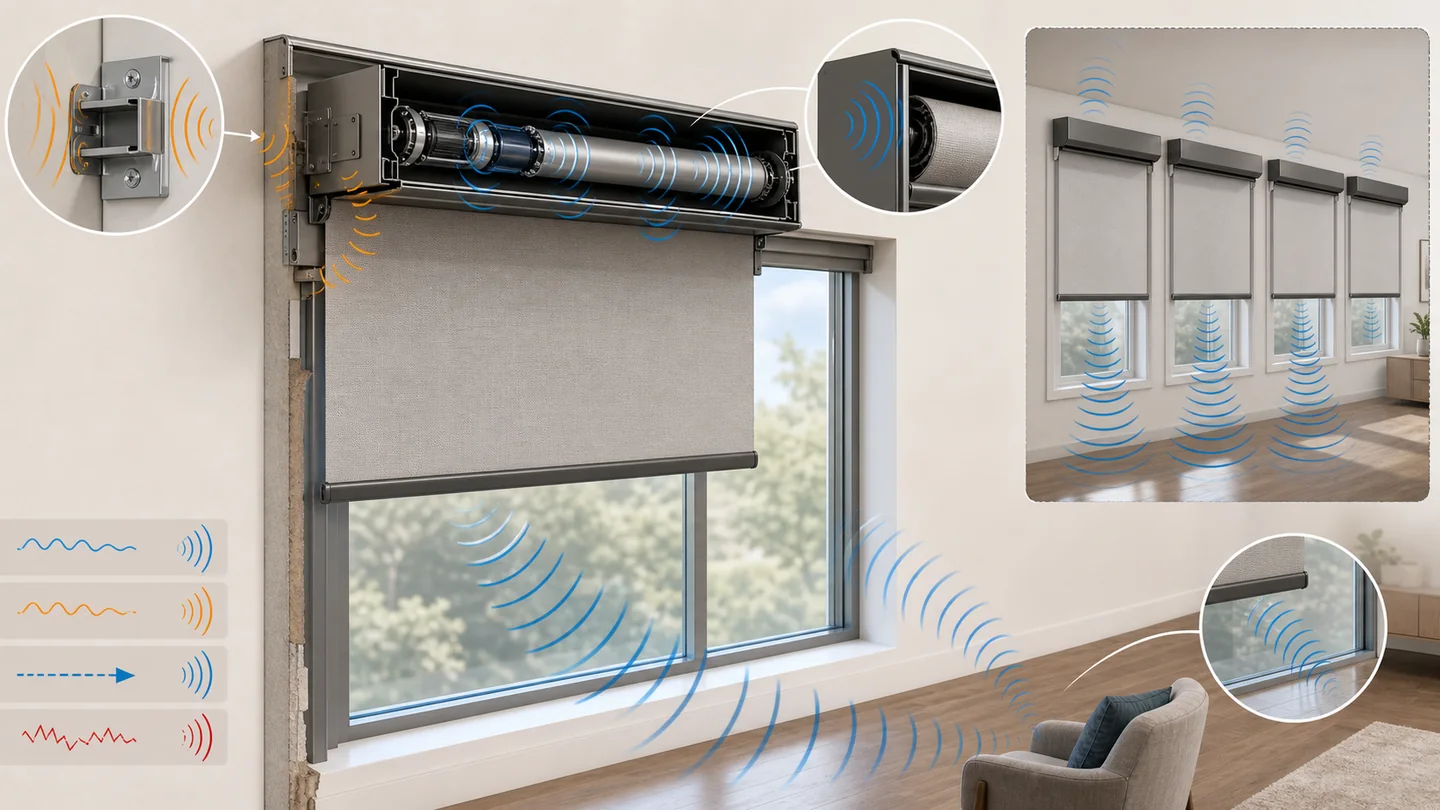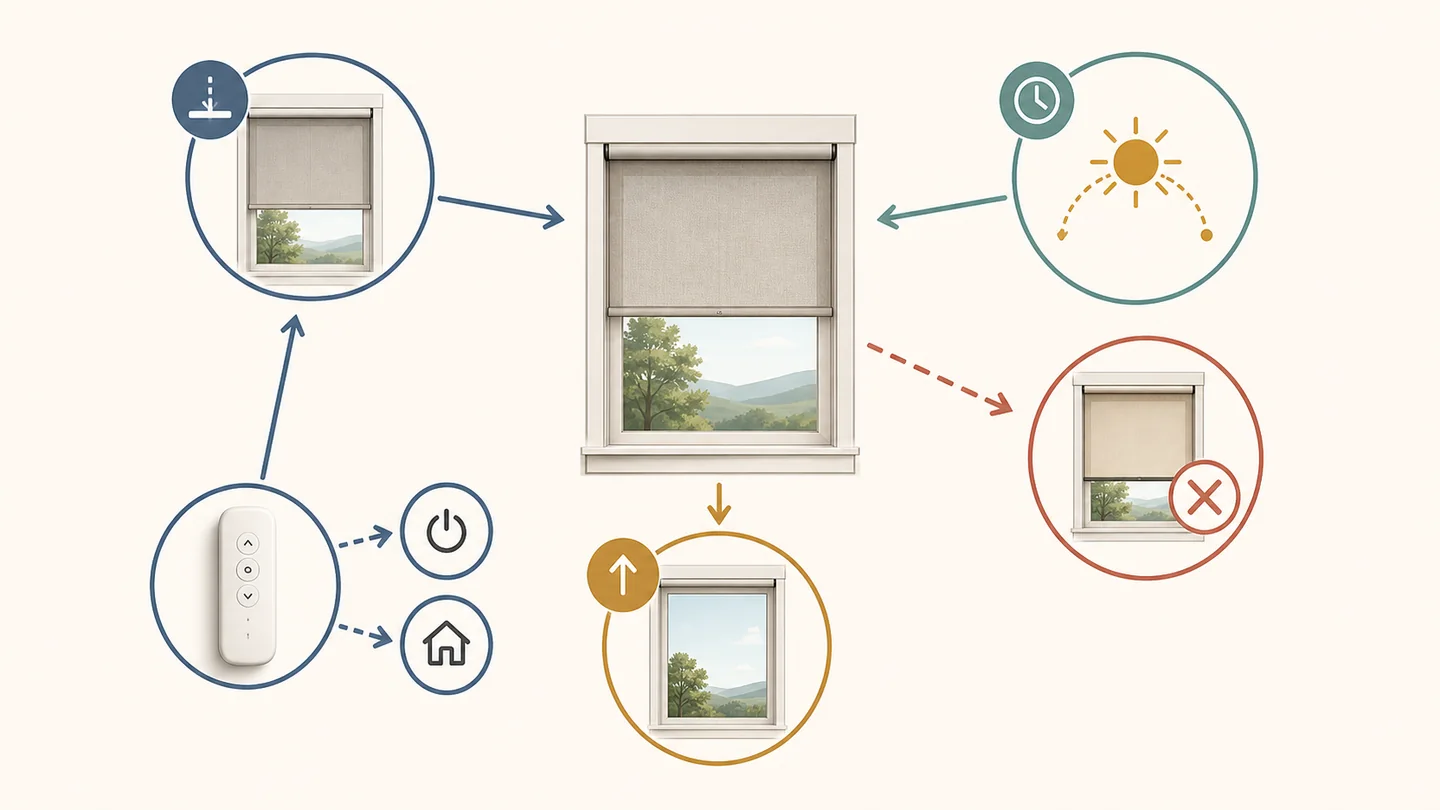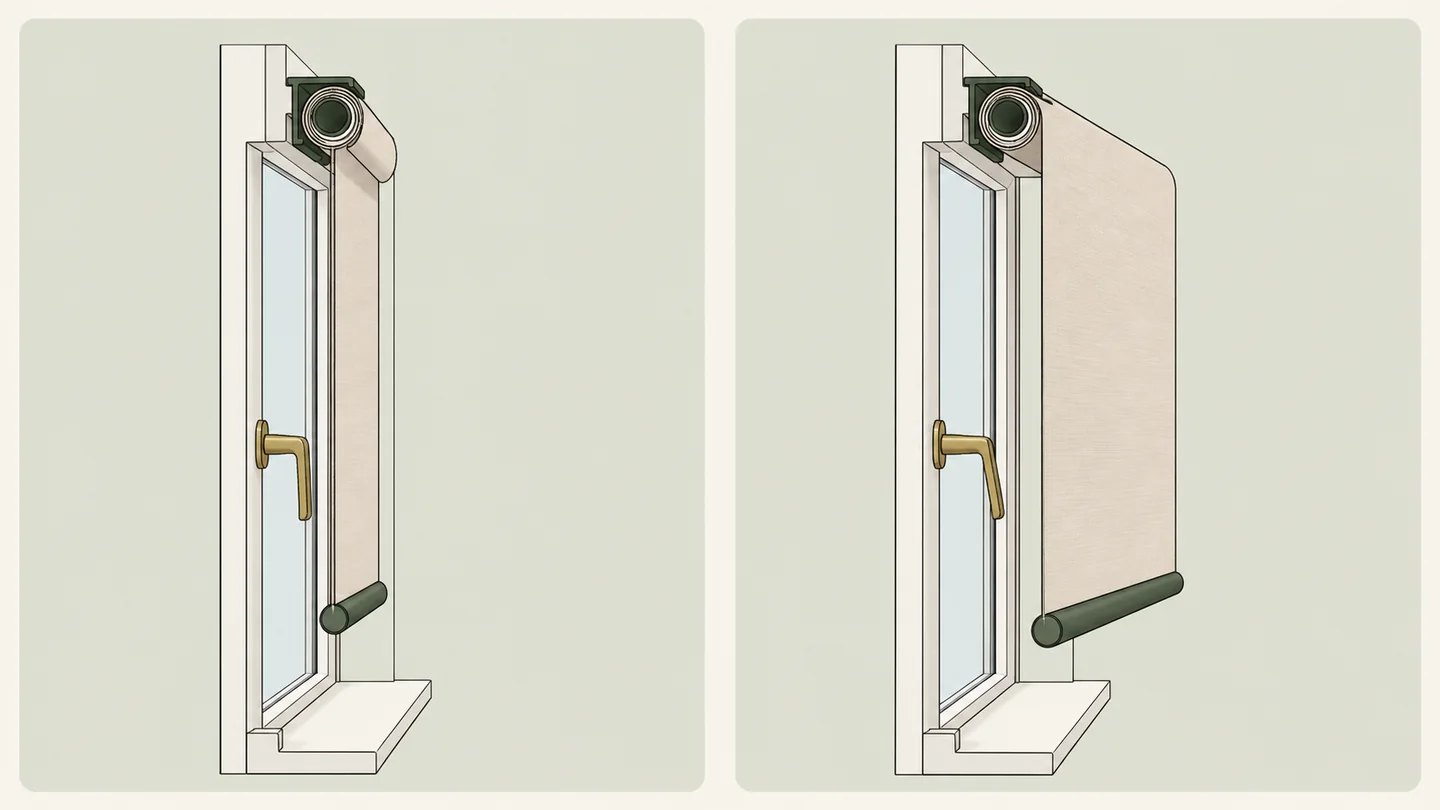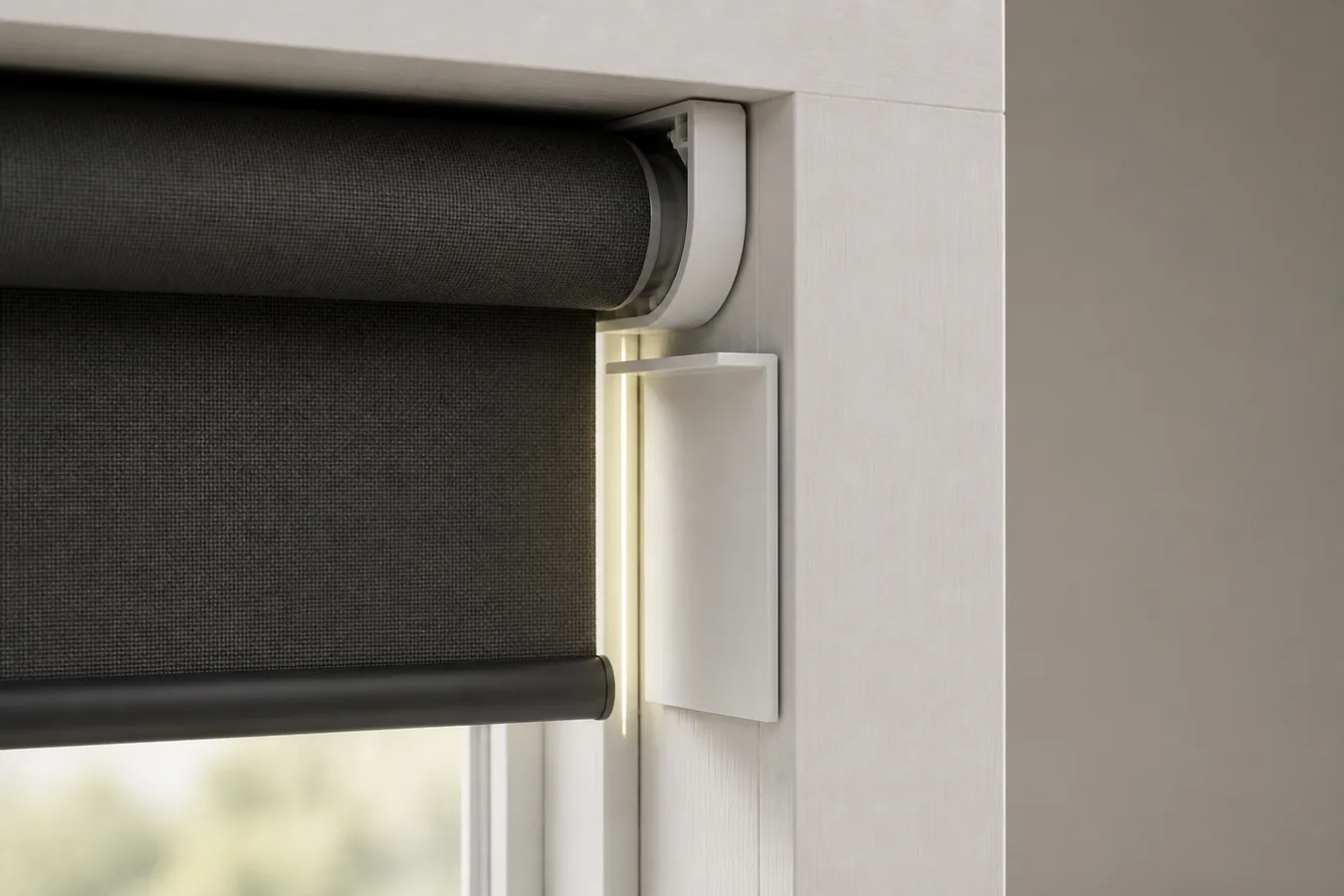
Light blocking strips can help when the problem is a narrow vertical beam beside an otherwise opaque blind or shade. The strip works by putting an opaque lip in that beam’s line of sight. It should overlap the gap visually while staying out of the moving fabric and bottom bar.
That condition is more demanding than buying two pieces long enough for the window. A side strip will not fix light passing through the fabric, spilling over the headrail, entering below the bottom bar, or shining through slats. It can also turn a working shade into a rubbing or binding one if its profile is placed in the travel path.
The first useful distinction is between a passive L-shaped blocker and a U-shaped side track. An L-profile sits beside the shade and hides a gap without guiding the cloth. A U-track is part of a more specific moving system; it may contact the fabric or bottom bar and therefore needs documented compatibility. The two products should not share one unchecked shopping decision.
Name the light path before the accessory
Judge the window under the condition that causes the problem. A bedroom may show its worst side stripe shortly after sunrise. A media room may reveal a smaller but distracting beam only when the projector is on. What matters is not whether the room looks dark at another time, but where the unwanted light travels when it defeats the room’s job.
A straight vertical stripe beside a fully lowered shade is the strongest case for a light blocker. A glow across the face points to the fabric, not the edge. A bright band above the roll, below the bottom rail, between two shades, or through horizontal slats needs a different detail. The light-filtering, room-darkening, and blackout comparison separates fabric transmission from installed edge leakage.
Write the required result in room terms before selecting a component. Reducing one sunrise beam is a smaller job than supporting daytime sleep or a dark projection screen. The room-by-room shade planner helps set that result without turning every visible glow into a demand for an engineered blackout system.
Put the strip and shade in the same cross-section
The strip has to occupy a very specific band: between the viewer’s line of sight and the open glass, but outside the space used by the shade. The relevant width is therefore not the window opening alone. It is the relationship among the jamb, finished fabric edge, bottom bar, strip projection, and the depth at which each one sits.
Manufacturer geometry shows why order width is a poor shortcut. In Lutron’s shade-measuring guidance, bracket-to-bracket width is separated from fabric width, and the documented side gap changes with the selected system. Those dimensions belong to Lutron products, but the larger lesson travels: get the finished cloth edge and hardware profile for the shade actually installed.
| Observed condition | Geometry that must be proved | What must remain clear | Sensible path |
|---|---|---|---|
| Narrow side stripe beside an inside-mounted roller or cellular shade | An opaque lip overlaps the stripe from the room’s sightline | Fabric edge and bottom bar through the full drop | Passive L-shaped blocker may fit |
| Shade or bottom bar is meant to run inside a channel | Track section, contact surface, bottom-bar shape, alignment and friction are specified together | Fabric must enter, travel and exit without buckling | Use only a product-matched U-shaped track |
| Shade sits in front of the wall with no usable jamb plane | A documented wall-mounted profile reaches the light path without creating excessive projection | Roll, brackets, trim, handles and service access | Compare a supported outside-mount blocker with wider overlap or layering |
| Light appears above, below, through the face, between slats, or at a center joint | The missing top, bottom, fabric, slat or meeting-rail detail is identified | Existing operation and required access | Do not expect two side strips to solve it |
| Jamb is bowed, the shade wanders, or the bottom bar already touches trim | A straight attachment plane and changing clearance are measured | No point may pinch or deflect the shade | Correct the geometry or use a designed system before adding a strip |
Do not hide an unknown behind a generous overlap. A deeper lip blocks more sightline only if the fabric and bottom bar never enter that space. A very shallow lip may clear everything and still leave the beam visible from the bed or seating position. The chosen profile needs both views.
L-shaped blockers and U-shaped tracks are different purchases
A passive blocker is essentially a small visual barrier. It can sit in front of or behind the fabric plane, depending on its documented design, and it should not steer the shade. Blinds.com’s overview of side-light solutions shows this familiar L-shaped approach and also points to wider outside mounts and layered treatments when a simple strip is not the right geometry.
A U-shaped track has another job. Its channel may contain brushes or another retention surface, and the shade’s edge or bottom bar moves in relation to it. SmartWave’s product-specific comparison illustrates the distinction: its L-shaped blocker is a passive inside-mount accessory, while its U-shaped track uses brushes and requires a square bottom bar. That rule proves the need for product matching; it is not a promise that every track uses the same bar.
| Decision point | Passive L-shaped blocker | Product-matched U-shaped track |
|---|---|---|
| Main job | Hide a side sightline | Block a side path while guiding or retaining part of the shade system |
| Intended contact | Normally no contact with moving fabric | Contact or close guidance may be part of the design |
| Compatibility evidence | Profile, projection, attachment plane and travel clearance | Track, fabric, bottom bar, alignment, friction and operating system |
| Likely installation scope | Small retrofit when a straight supported plane exists | More integrated installation with exact shade-system rules |
| Wrong-choice symptom | Light remains or the lip catches the shade | Binding, drag, fabric pull-out, uneven travel or an incompatible bottom bar |
If the project needs the second column’s guided behavior, treat it as a system purchase. The blackout-shade side-track guide covers the cassette, both sides, lower closure, moving hembar and service path as one perimeter. A peel-and-stick L-profile cannot inherit that system’s result just because both products use the word blocker.
Follow the fabric from the roll to the sill
A static photo can prove overlap at one height and miss a collision everywhere else. Roller fabric does not occupy only one ideal plane. Front roll versus reverse roll changes its distance from the glass. The roll diameter changes as fabric moves on or off the tube. A bottom bar can project farther than the cloth, and an uneven frame can narrow clearance near the sill.
Engineered-channel guidance makes the consequence visible. Lutron’s light-blockage application note warns, within its own systems, that channel alignment, fabric movement, obstacles and friction can affect travel. A passive strip may avoid contact entirely, but it still needs to respect the same moving envelope.
Mark the proposed blocker edge without attaching it permanently. Move the shade from fully raised to partly lowered and then to its normal closed position while watching both the cloth and bottom bar. Repeat the observation from the side, because a lip can look clear from the front while sitting directly in the bottom bar’s path. Check the narrowest point, not the neatest one.
An outside-mounted roller changes the whole cross-section. The outside-mount roller-shade guide explains why cloth width, hardware width, projection and trim clearance need separate treatment. If wider fabric overlap can cover the glass cleanly, it may be a better long-term decision than building a narrow blocker around a poorly placed shade.
Adhesive claims begin with the surface
Peel-and-stick is an attachment method, not a compatibility result. Painted wood, vinyl, powder-coated metal, stained trim and textured walls do not automatically accept the same tape or removal method. Moisture, dust, cleaning products and an out-of-square surface can also change the bond line.
Use the adhesive named by the light-blocker maker and follow its exact preparation, application, cure and removal instructions. For context, 3M’s VHB surface-preparation guidance calls for a clean, dry bonding surface. That principle does not prove that an unnamed kit uses VHB, bonds to every finish, or removes without lifting paint. If the seller promises renter-friendly removal, ask which surfaces, coatings, dwell time and removal steps the promise covers.
Attachment also consumes access. A strip along a jamb may block a tilt-in sash, screen removal, lock, crank or cleaning route. A profile close to a cassette can make bracket or motor service harder. Removable magnetic or clip-on designs may preserve access, but only their current instructions can establish how they attach and whether extra fasteners are required. The no-drill fit guide owns the broader decision about supported surfaces, loads and renter constraints.
Treat finish protection as a field on the order, not a reassuring adjective. The record should name the substrate, coating, adhesive or fastener, preparation, cure, removal method and replacement path. If any one of those is missing and the finish matters, pause before sticking a long profile to the frame.
A side fix can still leave a bright room
Long vertical blockers end at two difficult joints. At the top, the strip must meet the headrail, cassette or another light barrier without entering the roll or bracket space. At the bottom, it may stop above a sill or continue beside a projecting bottom bar. A useful side improvement can still leave two bright corner points.
The correct outcome depends on what the room actually needs. For a small sunrise stripe, a passive blocker that preserves smooth operation may be enough even if a soft glow remains at the top. If the fabric itself is too translucent, choose a different fabric or layer before engineering the edge. If the existing inside mount has no safe attachment plane, a wider outside mount or drapery layer may cover the path with fewer moving interfaces.
Daytime sleep, projection, or another strict darkness target can justify a matched channel, top treatment and lower closure. That is no longer a two-strip repair; it is the complete system owned by the shade maker or installer. Slatted blinds also need realistic expectations: covering the outer edges cannot seal light between slats or through route holes.
Keep the solution as small as the evidence allows. Choose an L-shaped strip when its profile overlaps the measured side path and clears every moving part. Choose a U-shaped track only when the shade, bottom bar and operating system are documented for it. Change the mount or add a layer when that removes the path more cleanly. If the section, surface or full-cycle clearance is still unknown, the light blocker is not ready to install.