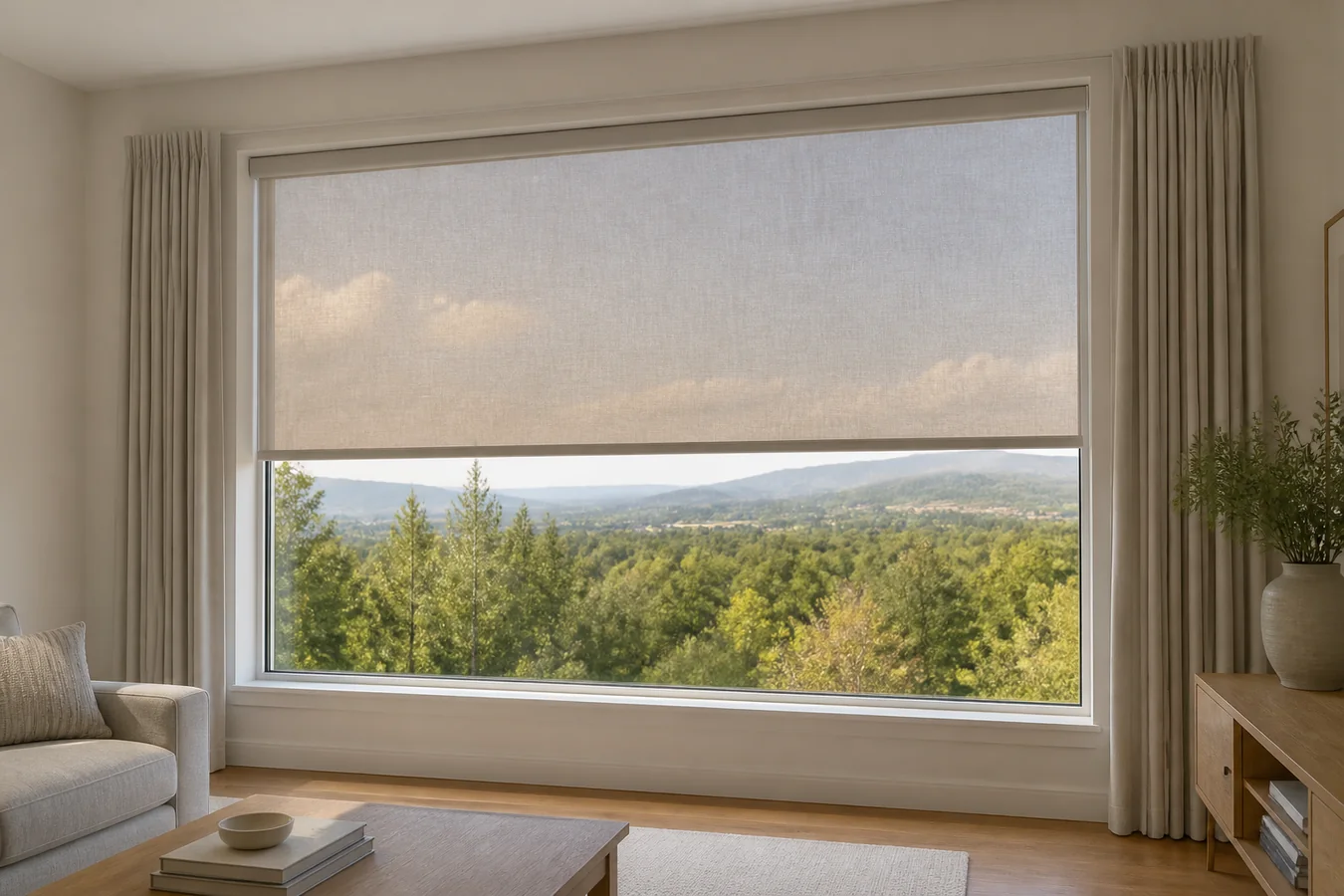
A picture window earns its wall space by showing something. Covering it well means deciding which part of that view may disappear at which time—not simply choosing a blind large enough to reach both sides.
Before comparing roller, cellular, Roman, vertical, shutter or drapery options, draw the whole window and mark the view you would miss. Add the recurring glare path and the area that becomes exposed after dark. The right treatment is the one whose exact open and closed geometry fits those marks with the least valuable view lost.
The view has a height, not just a width
Stand and sit where the window is actually used. A distant horizon may matter from the sofa but disappear when you stand. A lower garden view may be valuable from a dining chair. A television or work screen may suffer from a bright patch in only one corner. Trace those sightlines on a room-side photo or simple elevation instead of labeling the entire glass “view.”
Now mark the privacy exposure. Include the sidewalk, neighboring windows and any elevated approach that can see into the room. Daytime exposure and nighttime exposure are separate observations: interior lighting, exterior darkness and the viewer’s direction all change what needs to be blocked. Test the real room rather than relying on a fabric name.
Picture windows are commonly larger, non-operable units intended to frame an open view. Both Blinds.com’s picture-window guide and Hunter Douglas’s buyer guide connect that open view with the need for glare and privacy control. Their product lists are useful possibilities; your marked view determines how much coverage each possibility can spend.
Put five window states on one elevation
Do not approve the treatment from one attractive daytime rendering. Ask the drawing or quotation to show the same window in the states the room will actually use.
| Window state | View to preserve | Coverage allowed | Evidence to approve |
|---|---|---|---|
| Fully open | The complete marked sightline from the main seated and standing positions | Only the accepted roll, folded stack, side stack, headrail, valance or permanent frame | Exact raised or traversed dimensions on the whole-window elevation |
| Glare control | Everything outside the recurring sun or screen-washout path | The smallest position that removes the observed glare to the room’s accepted level | Exact fabric or slat orientation tested at the troublesome time and viewing position |
| Daylight and daytime privacy | The landscape or sky band the household still wants while the room is occupied | A tested light-filtering, solar, sheer, louvered or partial-coverage state | A real-window sample or demonstration from both sides under relevant daylight |
| Night privacy | Only what the household deliberately accepts after interior lights are on | Full opaque coverage, a second layer or another documented privacy state | Room-side and exterior-side observation after dark, including edge and split gaps |
| Service and cleaning | Not applicable during service; restore every approved state afterward | Enough movement or removal access for glass, batteries, motor, brackets and fabric | Reachable service points and a stated removal path that does not disturb unrelated trim |
This state map is also a restraint. If glare affects only the upper sky, a full blackout position may solve more than the room asked for while erasing the view. If night exposure covers the complete pane, a translucent daytime solution needs a second privacy answer rather than a stronger marketing adjective.
Verify the window before you call it fixed
Most picture windows are treated as non-operable, but the label is not enough authority for the actual unit. Marvin currently sells an Ultimate Venting Picture Window that looks stationary while opening around its perimeter. That exact product is an exception, not a rule, and it exposes the risk of assumption.
Identify the window manufacturer and model if possible. Operate every latch, screen, vent or concealed mechanism. Record the interior trim, glass edge and flat mounting surfaces. A treatment that is safe for fixed glass may obstruct perimeter movement, airflow, a screen or service access on a venting unit.
Preserve field dimensions in the Smart Shade Measurement and Compatibility Checker, but do not convert them into custom-product deductions yourself. Finished order size, bracket spacing and allowances remain with the selected manufacturer’s current instructions or an authorized measurer.
Spend stack where the view matters least
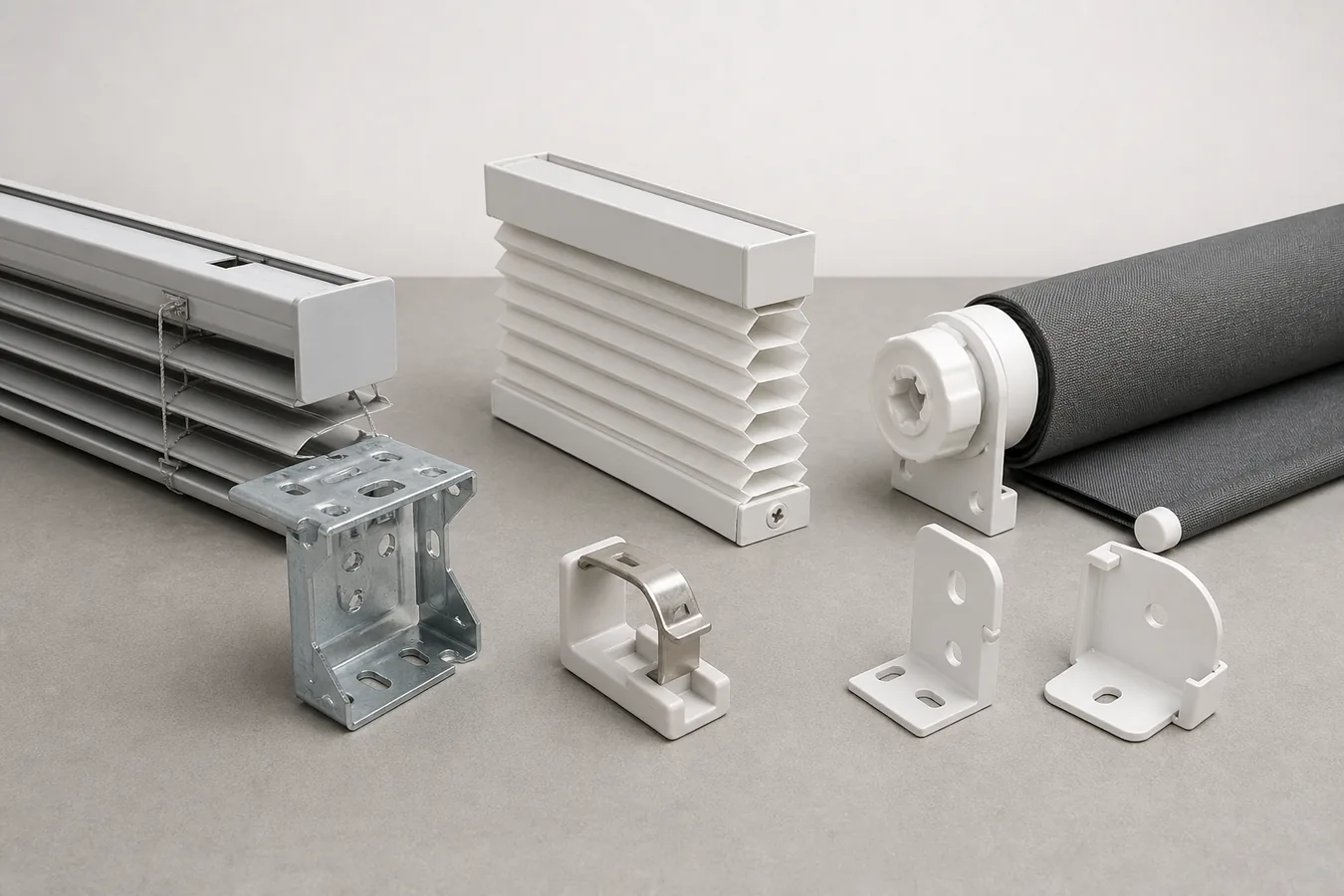
Every treatment remains visible somewhere when it is “open.” A roller or cellular shade leaves a roll, cassette, headrail or folded stack at the top. Roman folds can occupy more of the upper glass. Drapery moves the cost to the sides. Hunter Douglas notes that drapery stack-back changes with opening direction and fabric volume, so wall space beyond the glass is part of the proposal, not decorative spare room.
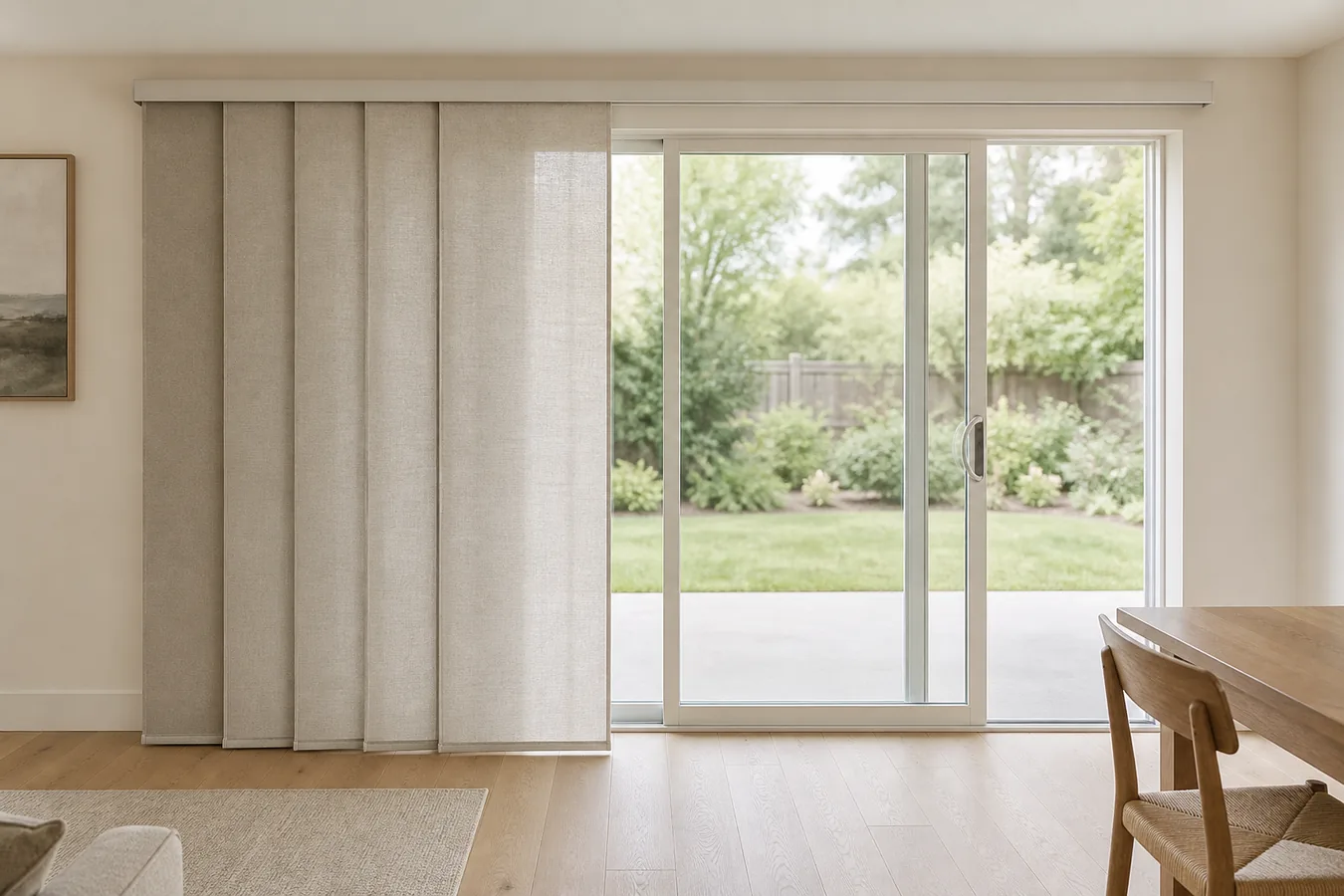
Vertical blinds, vertical cellular products and panel systems also traverse sideways. They can suit a window that is much wider than tall, but their parked vanes or panels need an accepted side and their tracks remain above the opening. Shutters keep frames and louvers in the view even when open, and operable panels need room to swing. None of these movement directions is automatically best.
Choose the direction that spends the least valuable marked area. If the horizon is the key feature, an upper roll may be less intrusive than a wide side stack. If the window reaches close to the ceiling but has generous wall returns, side-stacking drapery may preserve more glass when open. Put the exact open stack on the same elevation before comparing aesthetics.
Let the exact product veto a one-piece drawing
A clean one-piece rendering is only a preference until the exact product accepts the width, height, fabric, lift, control and mount. Blinds.com describes multiple treatments on one headrail as an option when some picture-window products cannot be made at the needed size. That arrangement can reduce operating load, but it also introduces fabric edges, light gaps and multiple moving units.
If a split is required, place it where the architecture or the marked view can tolerate it. A real mullion is often easier to accept than a seam floating across an uninterrupted focal point. When there is no mullion, compare candidate split lines from the primary seated position, after dark and with the treatment fully open. The very-large-window split guide handles the exact product, tube, drive, gap and load questions once a possible line has been chosen.
Mounting can change the visible result. An inside mount may protect wall area but requires enough clear depth for the complete hardware. An outside mount can improve overlap or escape a shallow recess while projecting farther into the room. Use the inside-versus-outside mount guide to eliminate a mount before it becomes an assumed part of the rendering.
Daylight and nighttime are different approvals
The U.S. Department of Energy notes that proper use of interior blinds and shades can reduce unwanted solar heat gain while maximizing useful daylight. Its residential window guidance also separates glare, fading, thermal comfort and ventilation as real selection criteria. That supports a state-based choice; it does not prove an energy result for an unnamed shade.
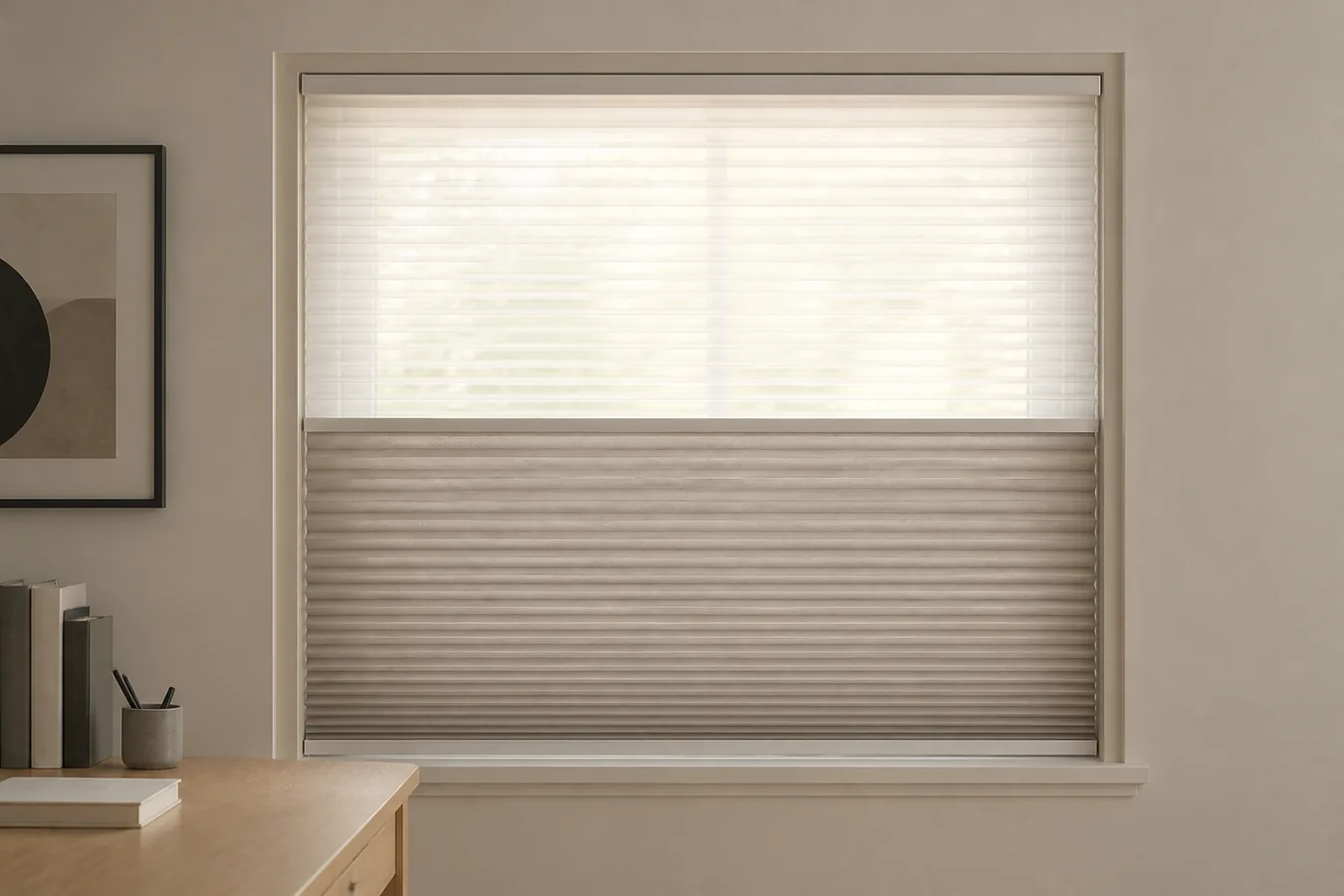
If insulation is a priority, DOE research reports that well-fitted cellular shades can add insulating value while controlling daylight, glare and privacy. Read the cellular-shade fact sheet as evidence for the category and tested configurations, then ask for the exact product’s current rating, fit and size eligibility.
For view-preserving solar fabric, take the exact color and weave to the window at the critical sun time and after dark. The motorized solar-shade guide explains why openness percentage alone cannot settle glare, view or privacy. If the daytime fabric fails the nighttime state, add a documented second layer or choose a different night position instead of pretending one sample does both jobs.
Motorization should remember the states, not hide a bad layout
Motorization is useful when the treatment is wide, high, moved often or expected to return to repeatable glare and privacy positions. Name those positions after the room task—open view, glare control and night privacy—only after the physical coverage has been approved. A preset cannot repair an unacceptable split, an oversized stack or an ineligible product.
Decide what happens locally if the remote, app, hub or automation is unavailable. Keep power, charging and motor service reachable. If a multi-treatment layout is grouped, every unit should still be identifiable and recoverable. The large-opening motorized-shade planner covers stack, power and control ownership without turning a future automation into proof of fit.
Approve five still frames
A complete picture-window proposal should return five views of the same exact system: fully open, glare control, daytime privacy or filtering, night privacy, and service access. Each frame should show the whole window, treatment edges, any split, the parked stack and the control or service position.
Hold the order if the proposal shows only a closed beauty shot, names no exact product, assumes the window is fixed, or hides the split and stack outside the crop. Approve it when the five frames preserve the view you marked, solve the actual glare and privacy states, and remain manufacturable and maintainable as one documented system.