A chain that will not move a roller shade does not prove the clutch is the part to buy. The chain, pulley, clutch body, tube insert or adapter, tube, drive bracket, idler end and fabric can all change what the same visible symptom means.
A replacement roller shade clutch is ready to order only when its system family and size, tube interface, drive bracket, opposite idler, bead chain and tension device all match a current documented part or kit for the installed shade. A similar white housing or the same approximate tube diameter is a search lead, not approval.
If you cannot identify the maker, product generation or connection to the tube, ask the manufacturer or a parts specialist before ordering. Depending on what they find, the job may call for a chain repair, one exact clutch, a matched drive-end set or a complete shade.
The symptom is not the part name
Write down what the shade does before moving it or shopping. Does the chain move freely without turning the tube? Does it stop at one point, jump at the pulley, feel unusually hard to pull, or move the tube while the fabric travels poorly? Is the chain visibly broken, disconnected or missing its wall-mounted restraint? “Clutch broken” discards those distinctions.
These observations do not diagnose the component remotely. They tell a manufacturer or parts specialist which evidence to request. A stiff control can involve a mismatched or failing clutch, but it can also sit beside a bent tube, damaged bracket, obstructed fabric path or a shade whose load is outside the supported system. Do not keep pulling to make the symptom clearer.
First separate this product from two look-alikes. A chain-free shade that will not lift belongs in the cordless mechanism guide. A shade with a motor, remote, app or power lead belongs in motorized blind troubleshooting. The checks below apply to manual roller shades operated by a continuous bead chain.
Follow the force across the drive end
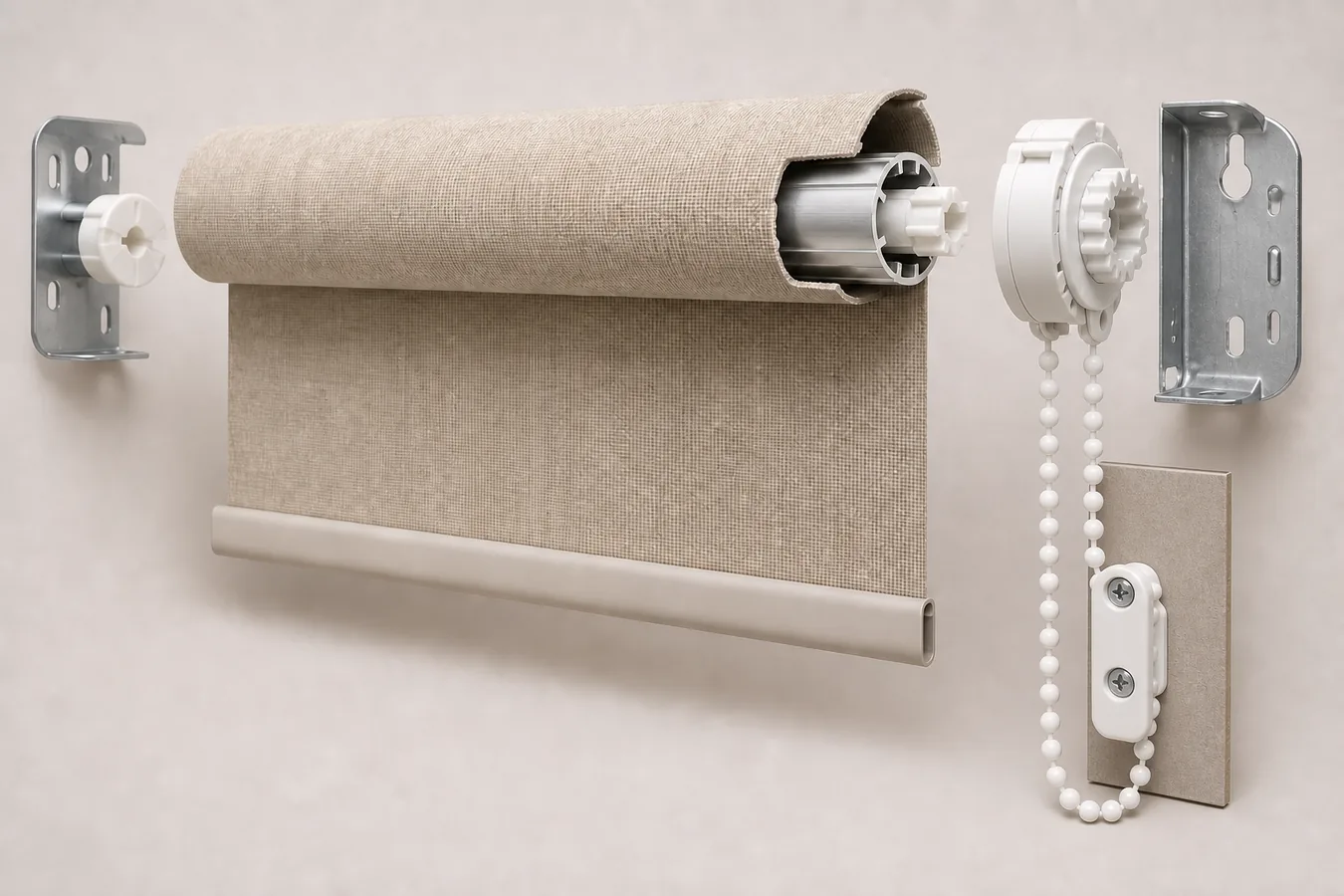
The useful unit is larger than the part held in your hand. On the control side, the chain engages a pulley in the clutch. The clutch interfaces with an adapter or tube profile and turns the roller tube. A product-specific bracket supports that drive end. At the other end, an idler, pin or bearing plug meets a different bracket and lets the tube remain supported while it rotates.
One Hunter Douglas Architectural system drawing names a clutch, tube adapter, clutch bracket, idle bracket, tube bearing plug, chain elements and a chain tensioner in a single RB 500+ assembly. It is not a compatibility drawing for another shade. Its value is anatomical: changing the clutch can affect interfaces on both sides of it.
Need help identifying the supports? The blinds mounting bracket guide explains which views and markings to capture. Keep photos of both roller-end brackets with the clutch details so the supplier can check the connections together.
Turn the old clutch into an identity record
Do not begin with a marketplace category. Begin with a record that can be answered by the original maker, dealer or a qualified replacement-parts specialist. Capture each item without treating a blank as permission to guess:
- Shade identity: brand, product family, order label, approximate manufacture or purchase date, operating side and whether the roll is exposed, under a fascia or inside a cassette.
- Observed behavior: the chain movement, clutch sound or feel, tube response, fabric travel and the last event before the change. Keep symptom words separate from the assumed failed part.
- Clutch identity: every molded or printed mark; housing and pulley views; mounting hooks or tabs; open or covered pulley; exact size/color code when the named system uses one.
- Tube connection: outside diameter, tube profile, slots or ribs, any separate adapter and the depth/orientation of the original insert. A nominal diameter without a profile is incomplete.
- End supports: control-side bracket interface, user-facing left/right position, opposite idler or end plug, its bracket and any handed or interchangeable designation.
- Completed control: bead material and size if documented, connector or ball stops, loop length, the exact tension or hold-down device and its supported mounting instructions.
- Replacement part and service: exact replacement part or kit number, named compatibility scope, load/size limit when the maker publishes it, current availability, installation document and who accepts the service responsibility.
Photograph the installed shade, label, both roller ends and all accessible markings before removal. If the shade must come down to expose the record, use the blind-removal guide only after the exact bracket release has been identified. Do not turn resistance into an improvised release method.
A useful response names what should be replaced together. Ask whether the clutch alone is supported with the existing tube, drive bracket, idler, chain and tension device; whether a complete matched kit is required; and whether age or enclosure type changes the service path. Save that answer with the shade record.
Tube diameter narrows the search; it does not close it
Measure the tube’s outside diameter carefully, but keep it in its proper role. The clutch must also engage the actual internal profile or adapter and meet the correct bracket. Two listings can share a nominal tube size while using different tabs, hooks, pulley styles, gear capacity or end-support geometry.
The official Rollease clutch identification guide first separates its R-Series and Skyline families by mounting features, then distinguishes Standard and Galaxy styles by pulley construction before moving through clutch size, tube and color. Use those fields only for the named family. A visual match to one Rollease example does not identify an unbranded clutch.
System boundaries can be sharper than a diameter filter suggests. In Rollease Acmeda’s clutch-systems overview, the named S45 system requires a 45 mm tube and is explicitly not for the standard 1.25- or 1.5-inch tubes discussed there. That is not a universal sizing chart. For that system, the family name rules out replacements that a diameter-only search might suggest.
Do not solve a bracket mismatch by drilling a new slot, trimming a tab or mixing the new control end with an undocumented old idler. Those changes erase the supported assembly. If the replacement clutch requires different end supports, ask whether a matched assembly is available before considering a complete shade.
Keep the chain loop inside the repair decision
A chain replacement is not complete when the clutch turns. The bead size and connector or stops must follow the supported clutch record, and the continuous loop must finish in the correct restraint. Do not omit the tension device because the old one is inconvenient, or transfer an unidentified device merely because the chain passes through it.
Where a young child can reach the window area, the US Consumer Product Safety Commission directs consumers toward coverings without operating cords. For an existing continuous-loop control, the agency’s current page calls for a floor- or wall-anchored hold-down, fasteners suited to that surface and a loop kept taut while remaining operable. Anchoring reduces the cord hazard; it does not eliminate it. The guidance does not identify a compatible replacement kit, so both the clutch match and the finished chain restraint still need the manufacturer’s instructions.
An enclosure can move the work outside a reasonable owner repair. If the shade is inside a cassette or fascia, preserve its release direction, end clearance and control access through the cassette roller-shade guide. Do not assume an open-roll chain procedure applies behind a cover.
Product age can change the repair unit
Finding the old clutch’s name does not mean you can still buy it. The maker may have stopped supplying it, may require a different replacement assembly, or may offer the part only through a dealer.
Current Hunter Douglas guidance for specified Designer Roller, Screen and Banded shades made before April 2016 illustrates the boundary. It distinguishes open-roll work from cassette cases, reports some clutch parts obsolete or limited, and directs broken-clutch cases toward the original dealer and replacement options. Apply that route only to the named products and period; ask the maker of another shade for its own current disposition.
The manufacturer’s current bracket identification record further divides Roller, Screen and Banded hardware by control, tube size and pre-/post-April-2016 periods, while marking some product/control combinations as discontinued with no parts. A bracket that still exists does not prove the matching clutch exists, and a current clutch does not prove it belongs on an earlier bracket.
Ask the supplier which repair they recommend for your identified shade: service the documented chain and restraint while retaining a supported clutch; install one exact clutch that preserves every existing interface; replace the clutch, brackets and idler as one approved drive-end system; send the identified shade to the maker or dealer; or replace the complete shade when no supported component path remains.
Do not order until the maker or parts specialist can confirm that the clutch, tube, both end supports and chain restraint belong together. Keep their part numbers and instructions with your shade label and purchase record. If repair is no longer supported and you are considering a motorized replacement, the Smart Motorized Blinds Planner can help you compare window fit, room needs and power options.