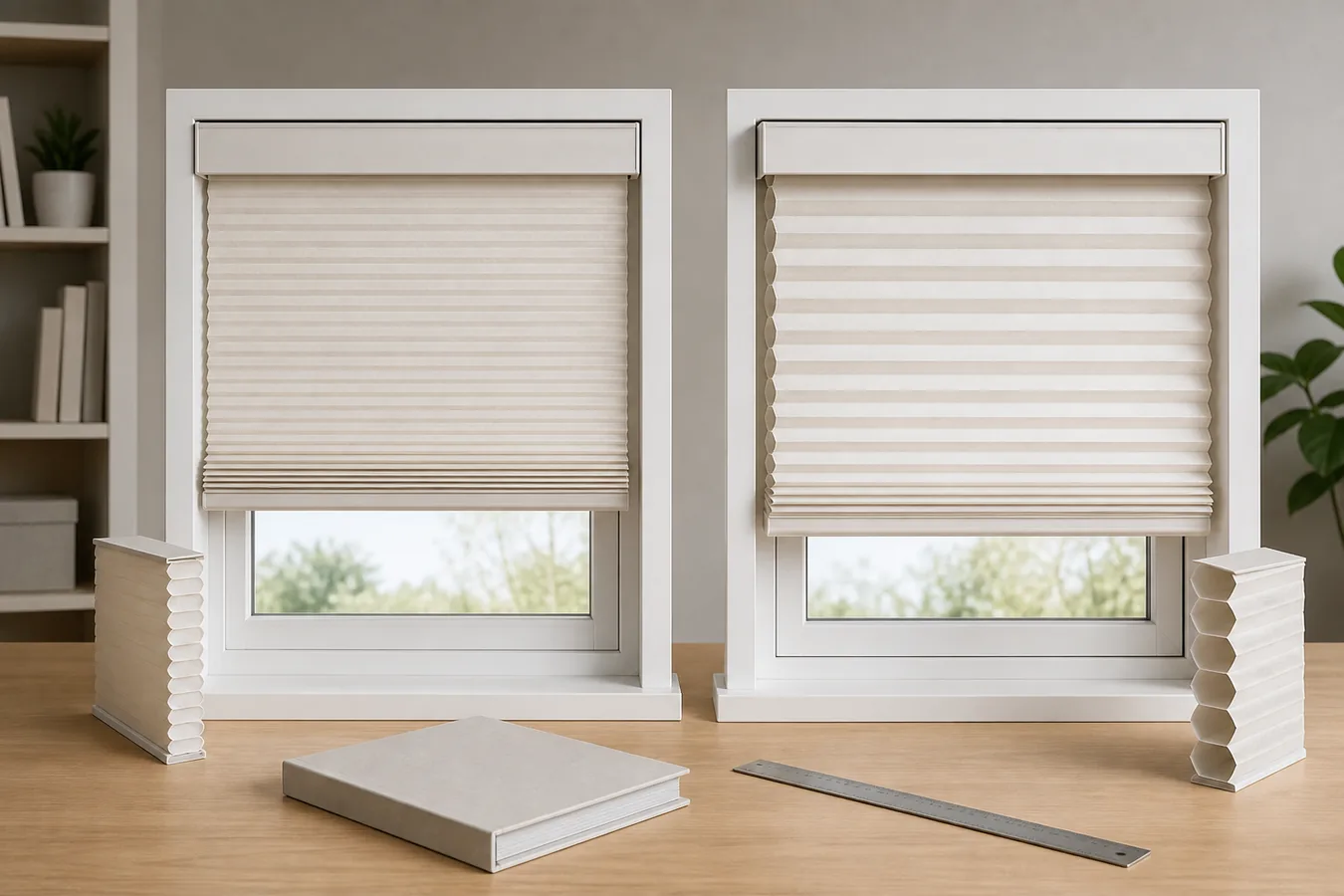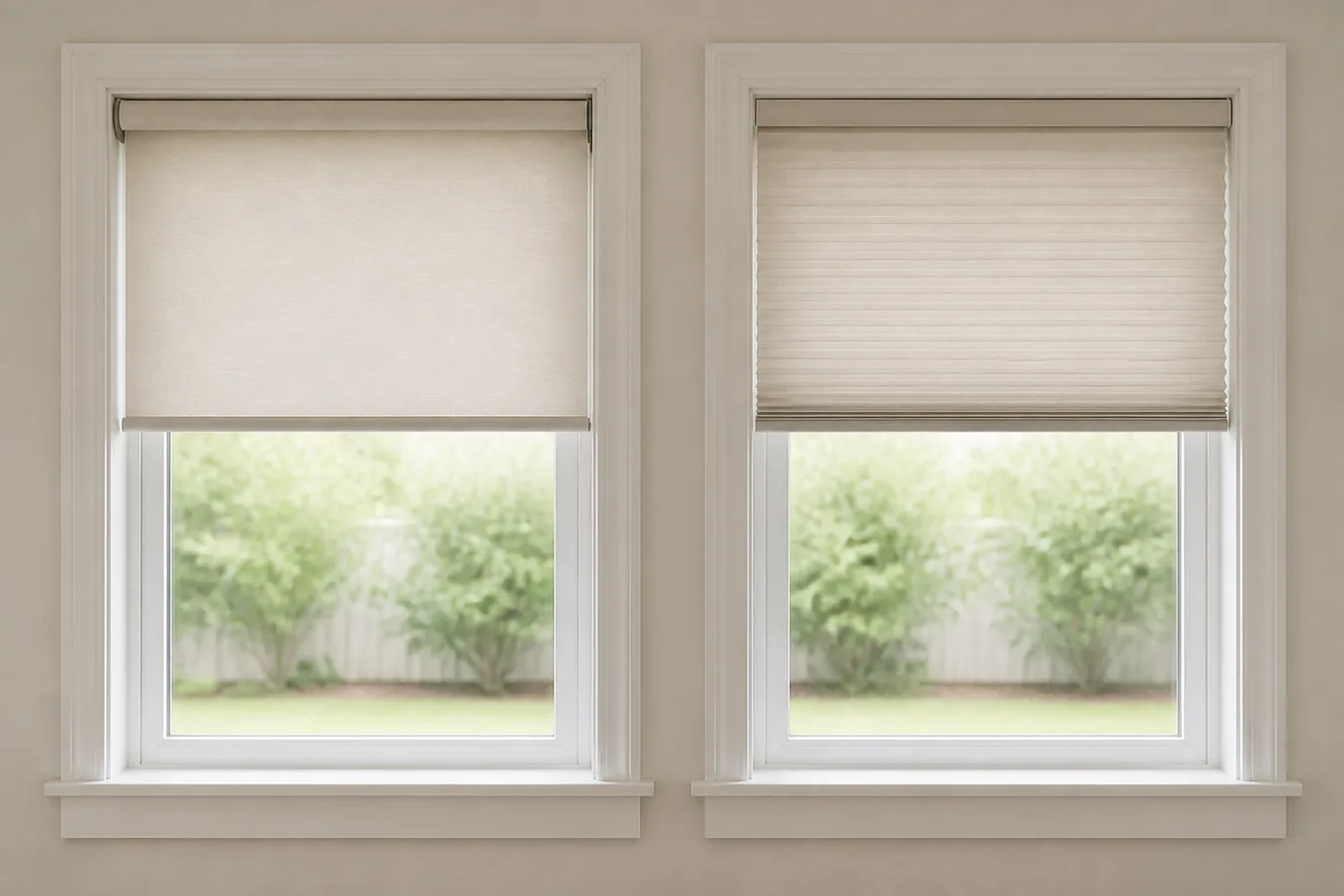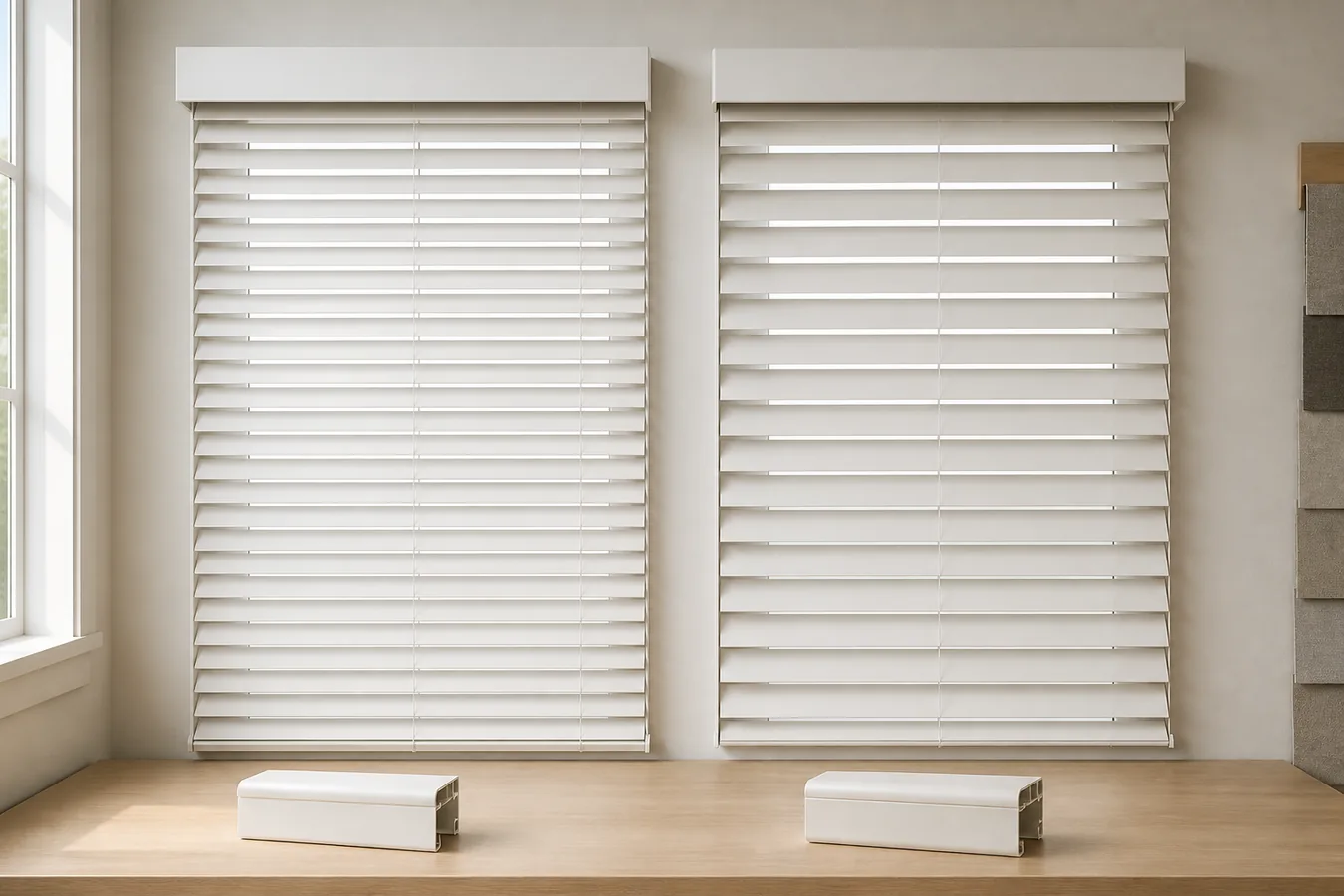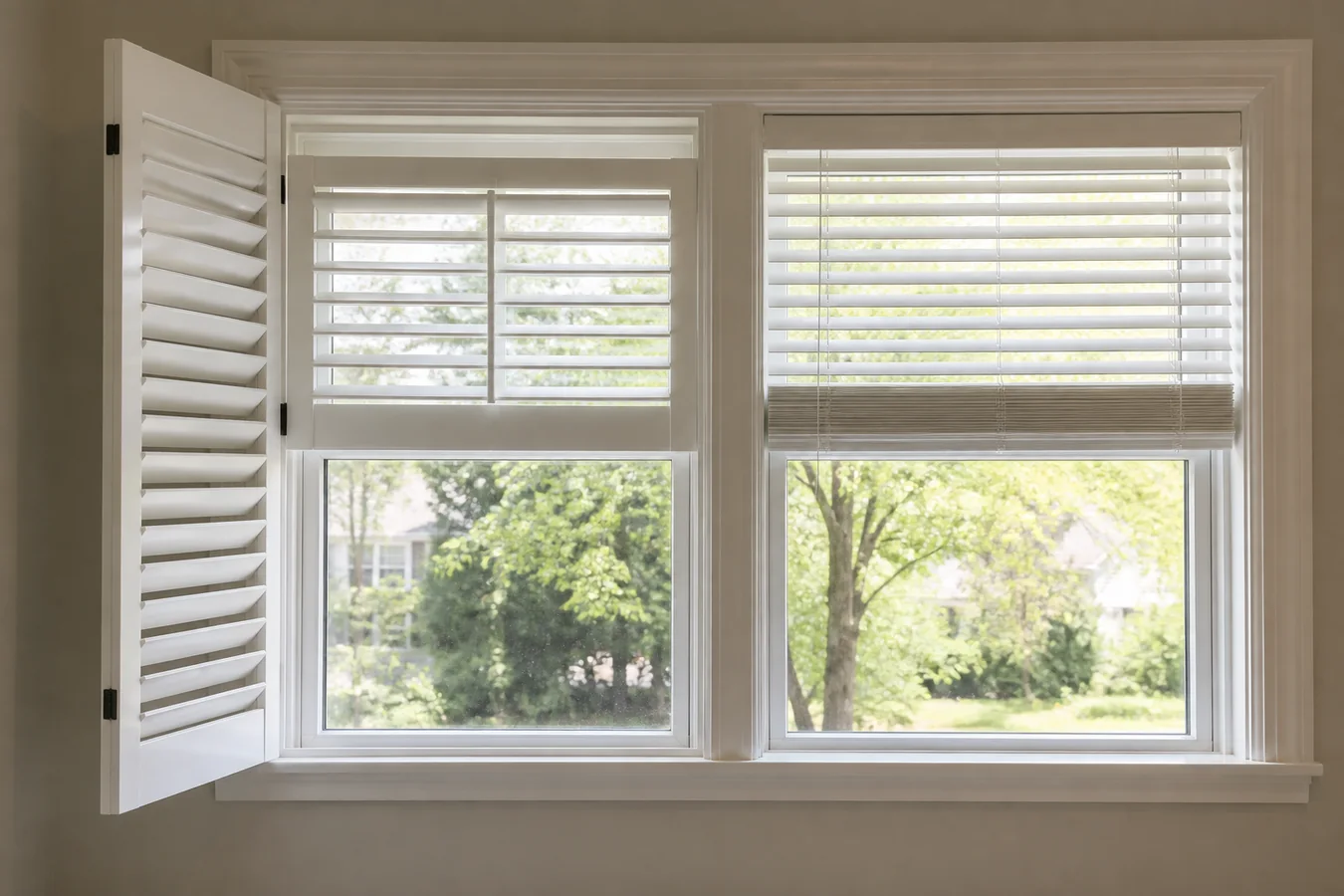
A shutter sample and a blind slat can look surprisingly similar on a desk. The decision changes when you install them. Interior shutters add a frame and hinged panels; blinds add a headrail, suspended slats and a raised or stacked package.
Choose shutters or blinds from the glass, sash and access left in the states you will actually use—not from an isolated slat. Two annotated elevations of the same opening will settle more than a page of generic pros and cons.
Run both designs through five installed states
| Window state | Shutter drawing must show | Blind drawing must show | Decision question |
|---|---|---|---|
| Closed for privacy | Frame, panels, louver closure, divider rails and perimeter. | Headrail, slat overlap, bottom rail, ladders and edges. | Does the completed product meet the actual lights-on sightline? |
| Slats or louvers tilted | Louver sweep and any collision with handles or glass. | Slat angle, control access and light path. | Can the useful angle be reached without interfering with the sash? |
| Privacy band | Supported panel/divider configuration and independently useful zones. | Whether partial lift or another supported feature creates the needed band. | Does either exact product create the state, or is it only imagined? |
| Fully open | Panel swing, folded panel depth and clear glass. | Fully raised bottom position, headrail and remaining stack. | Which leaves the view and access you value? |
| Sash and service access | Panel opening required for locks, cleaning and window movement. | Raised position, bracket release, controls and service access. | Can routine ownership happen without forcing hardware? |
Do not score the rows abstractly. Circle the state that matters most for this room. A street-facing bathroom may prioritize the privacy band. A view window may be decided by the fully open state. A tilt-in sash can make cleaning and window operation the veto.
A shutter spends space around the glass
The shutter frame, stile, rails, louvers, hinges and panel arrangement form one installed object. Measure the depth needed for the specified louver to rotate and note handles, locks, trim and crank hardware. If panels must swing into the room, draw furniture, faucets, curtains and wall projections in that arc.
Panel configuration changes the result. One broad panel, paired panels, bifold panels and a divider rail can divide the view and open differently. Ask for the exact arrangement on a front elevation and a plan view. A named installation guide, such as LEVOLOR’s shutter installer guide, illustrates why frames, panels and installation hardware belong to a specific system; its details should not be copied to another product.
Open the proposed panel path on the room plan. A bedside table, faucet, curtain return, wall light or deep sill can stop the panel before it reaches a useful resting position. If panels will normally remain closed and only the louvers will move, say so; do not pay for a fully open view that the room cannot physically use.
A blind spends space above and across the glass
A blind avoids a hinged panel swing, but the headrail and raised slats remain. Ask for the fully raised bottom position, not only the product height. On a short window, that package can take a meaningful share of the view. On a tall window where the upper glass is not valuable, it may matter less.
Controls also occupy the finished design. Tilt and lift may use wands, cords, cordless mechanisms or motors, subject to the exact current product. If children are present, use CPSC’s cordless guidance and evaluate the entire installed system. A blind should not win merely because its slats are familiar.
For an operable window, repeat the test with the sash moving. A shutter panel may need to open before the sash or lock can be reached; a blind may need to rise above a handle or tilt-in path. Write the required sequence into the quote so daily ventilation and cleaning do not depend on forcing the covering aside.
Record depth, trim and obstructions in the Smart Shade Measurement and Compatibility Checker. Manufacturer and merchant measuring instructions remain authoritative for the order size and deductions of the named product.
Daily interaction can reverse the visual preference
Shutters invite direct interaction with panels and louvers. That can make quick local adjustment intuitive, but every chosen panel must open where the room permits. Blinds centralize more of the mechanism in the headrail and controls; that can simplify the footprint in front of the window while adding lift, alignment and cleaning considerations.
Clean the comparison on the same basis. Count the surfaces and edges you will actually reach, then read each product’s care instructions. Do not declare a universal cleaning winner from the number of slats alone. Finish, room soil, panel access, ladder/tape construction and permitted methods can change the burden.
Permanence is a preference, not an automatic value claim. A shutter frame may read as part of the window architecture. A blind may be easier to visually replace. Neither statement proves lifespan, resale value or total cost. Use two complete quotes and decide whether you want the covering to behave like fitted millwork or replaceable equipment.
Energy claims need the exact rated product
Do not award insulation to shutters or blinds from the category name. Fit, closure, material and configuration matter, and product-level rating programs are the more defensible comparison. Search the AERC product database when energy performance is important, and make sure the rating matches the quoted product and configuration.
The site’s energy-efficient window-covering guide separates winter heat loss from summer solar gain. It also explains why opening schedule and fit can be as important as a material slogan.
Ask for two elevations of the same window
Give both sellers the same opening, mount boundary, handles, sash operation, priority privacy angle and desired clear view. For shutters, require the frame, louver size, panel/divider layout, swing and fully open footprint. For blinds, require the headrail, slat size, controls, fully raised position and finished gaps.
Then compare price, care and warranty on those completed rows—not on entry products. If the broader terminology is still unclear, the blinds-versus-shades guide separates slatted and continuous-material coverings, while the comparison pillar keeps smart and motorized labels in their proper place. Here, the winning drawing is the one that leaves the right glass open without making the window harder to live with.