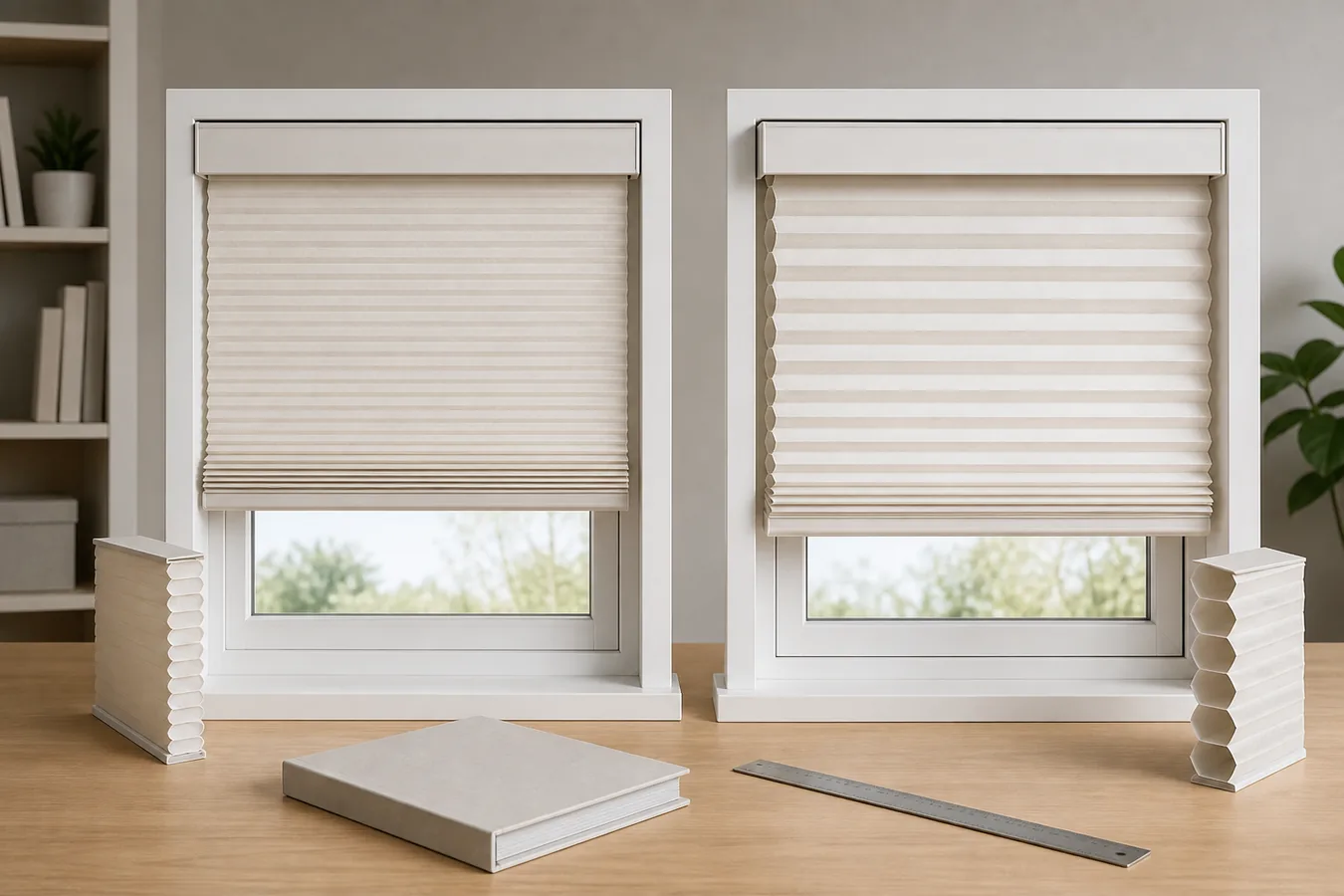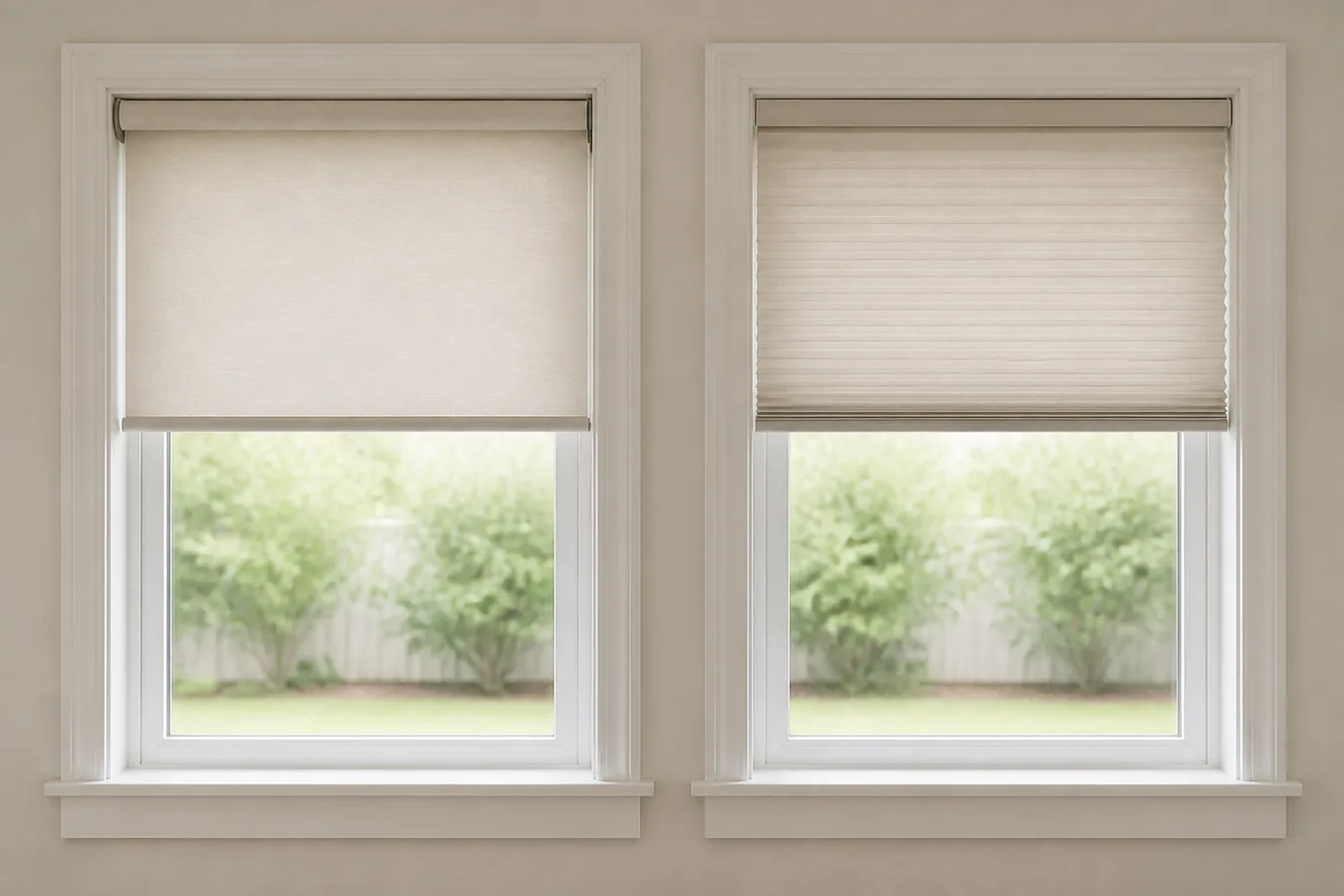
A roller-shade swatch and a cellular-shade sample are not comparable purchase units. One hides its fabric around a tube; the other compresses fabric and rails into a pleated stack. Neither sample shows the finished side edges, the open obstruction, the selected control or the service space you will inherit.
Keep the window, mount and room duties fixed, then compare two completed orders. Reject either one that fails a required open or closed state. If energy performance matters, admit only a current rating for the exact product. If both pass, choose the documented roll-or-stack, care and operating penalties that are easier for this room to absorb.
Bring both bids back to one drawing
Give both sellers the same opening. Record the narrowest width, height, usable depth, trim, handles and critical sightline in the Smart Shade Measurement and Compatibility Checker. Freeze inside or outside mount before requesting prices. A deeper outside-mounted cellular headrail compared with a recessed roller is a mount comparison disguised as a shade comparison.
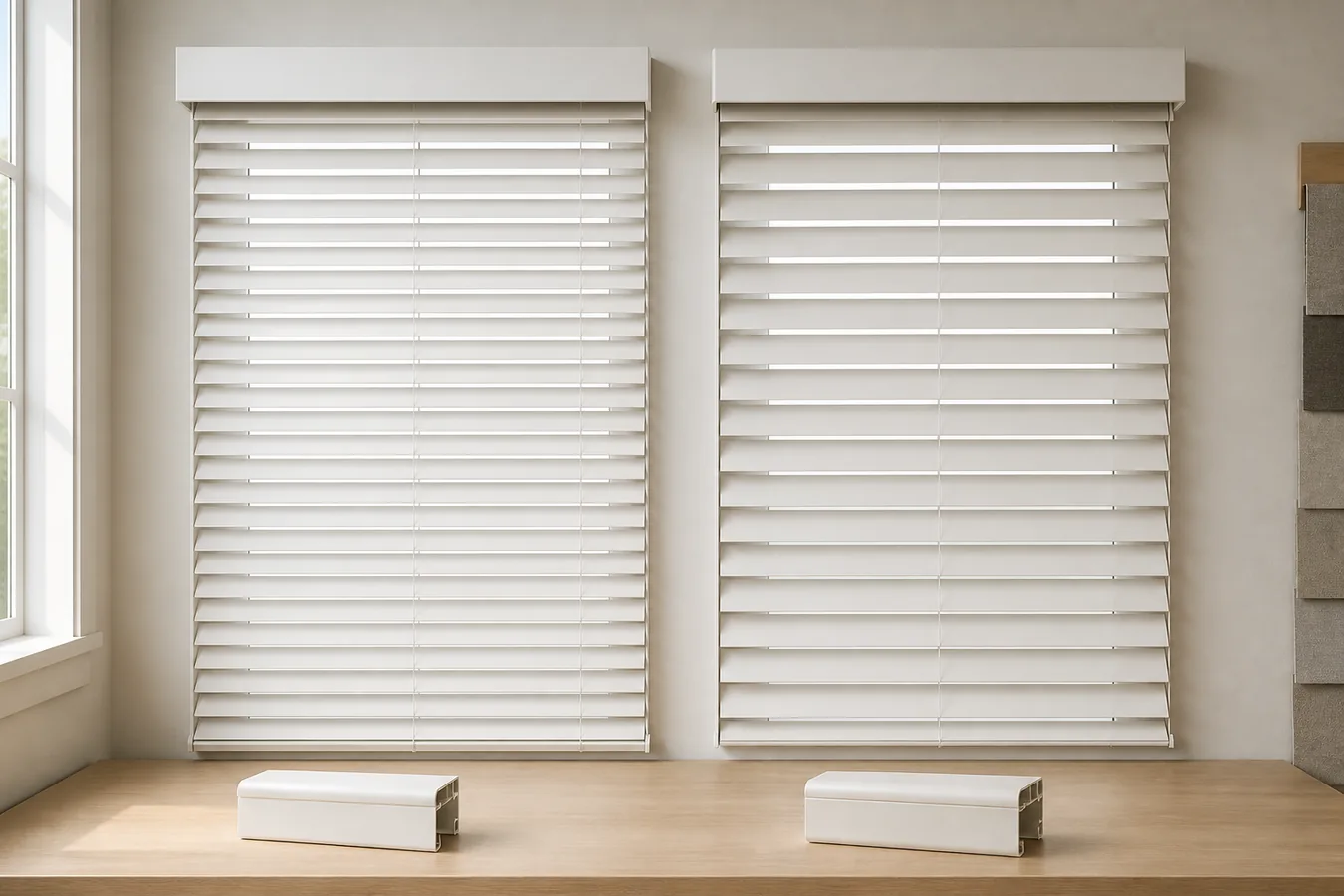
Also freeze the jobs the room needs: exposed glass when open, daytime glare control, lights-on privacy, the desired light state, any comfort evidence, the selected control and access for charging or repair. If you are still deciding between a tilting blind and a fabric shade, settle that broader format question with the smart blinds versus motorized shades guide first.
Ask for these fields as two returned order rows, not as promises on category pages:
| Return for this window | Roller order | Cellular order |
|---|---|---|
| Exact product, fabric, control and source date | Named configuration | Named configuration |
| Ordered and finished dimensions | Headrail/tube, fabric and bottom bar | Headrail, fabric and rails |
| Mount depth and projection | Exact brackets, cassette or fascia | Exact brackets and headrail |
| Fully open obstruction | Completed roll/cassette envelope | Fabric stack plus every rail |
| Closed perimeter | Fabric edges and bottom closure | Fabric edges, rails and bottom closure |
| Required room states | Returned view or sample for each state | Returned view or sample for each state |
| Energy record, when decisive | Exact AERC identity and values, or missing | Exact AERC identity and values, or missing |
| Selected-fabric care | Current care sheet | Current care sheet |
| Control, power and size eligibility | Exact row passes or fails | Exact row passes or fails |
| Service access and installed total | Documented path and dated quote | Documented path and dated quote |
Current technical documents show why the fields cannot be filled from the nouns “roller” and “cellular.” A named Lutron roller specification changes tube capacity, roll orientation, fabric and control details within one product type. LEVOLOR’s January 2025 cellular reference guide separates constructions, opacities, pleat sizes, operating systems, size limits and stack rows. Their values belong to those named systems, but their documentation proves the method: return the entire configured row.
Price the view you lose when the shade opens
“Both disappear at the top” is not an approval. A roller leaves a tube wrapped with the selected fabric, plus any cassette or fascia. A cellular shade leaves compressed fabric and its rail package. The size of either envelope depends on the exact width, drop, fabric and hardware.
Mark a horizontal line at the lowest obstruction the room can accept. It might protect the upper sash, a transom, a view from a desk or the release point of an inward-opening window. Ask each seller to place the fully open envelope on the same elevation drawing. A close-up photograph without the full opening cannot answer this question.
Do not infer the winner from construction alone. The LEVOLOR guide, for example, calculates a complete cellular stack by combining fabric stack with rail stack, and its fabric entries change with construction and drop. The Lutron roller document lists multiple tube capacities. Those product-specific variations are exactly why a category slogan cannot tell you which finished order leaves more useful glass.
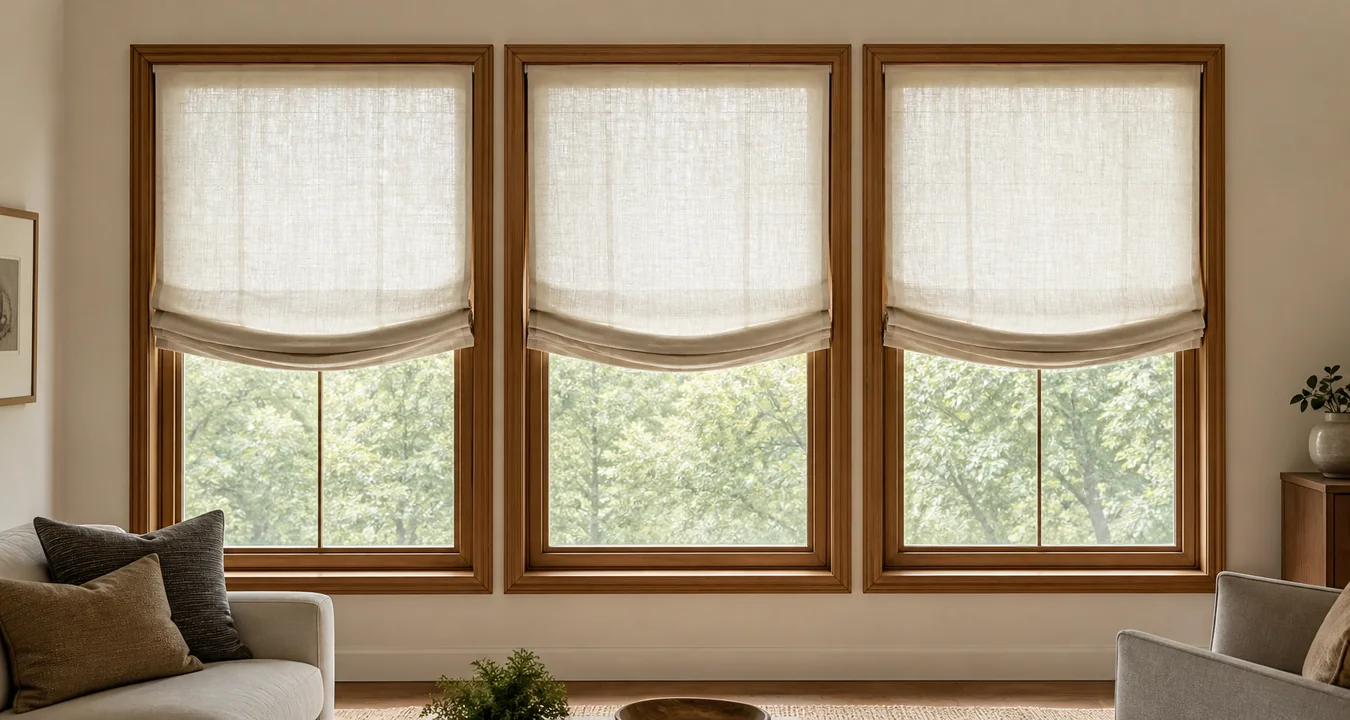
If view-through matters while the shade remains lowered, that is a separate fabric task. Use the light-filtering roller-shade guide to define the daylight job, then return here with an exact fabric. Do not let a solar or sheer roller sample compete against an opaque cellular fabric unless those are genuinely the two room states you want.
Follow the perimeter when the shade closes
Opacity describes the selected material; it does not describe the completed perimeter. For each order, draw the finished fabric edges relative to the jamb, the headrail or tube, the sill and any mullion. Then add handles, tile, casing or an uneven sill that changes where the shade can sit.
Run the drawing through the room’s real states. During direct sun, note whether a bright edge falls on a screen or work surface. At night with the lights on, stand at the outside viewing positions that matter. For sleep, trace every unsealed route rather than asking whether the fabric is called blackout. The light-filtering versus room-darkening guide separates the fabric duty; this comparison decides whether the finished installation can deliver it.
Neither category owns perfect closure. An exact roller may have a fabric width or roll orientation that changes its edge condition. An exact cellular system may have rails, multiple panels or an optional channel arrangement. If edge closure is non-negotiable, compare the resulting hardware as a different completed system with the side-track blackout guide. Do not silently add channels to one row while pricing the other without them.
This perimeter pass can produce a useful early answer: one order may fail the required glare or privacy state even though its fabric sample looked ideal. Remove that row instead of averaging the failure against unrelated strengths.
Admit only named energy evidence
Cellular geometry creates air spaces, which is a valid reason to investigate it for comfort and energy performance. The U.S. Department of Energy’s interior cellular-shade fact sheet explains that research context. It does not turn every honeycomb fabric into a guaranteed winner over every roller shade in every home.
Use a product record instead. The Attachments Energy Rating Council includes both cellular and roller shades among product classes in its certification program. A labeled product is measured under the program and identified by manufacturer, product, model and AERC number. Ask for those exact identifiers and the warm- and cool-climate values relevant to your location.
Keep the limitations attached. AERC’s example cellular automation label states that its ratings use assumed criteria including installation over double-pane clear glass and do not guarantee the savings a consumer will experience. The label supports a controlled product comparison; it is not a utility-bill promise.
If one seller returns an exact current record and the other returns only “energy efficient,” the evidence is unequal. That does not prove the unrated order performs badly. It means you cannot award it an energy win. When cellular construction itself is still undecided, resolve single-cell versus double-cell with exact product evidence. For the broader window-and-attachment system, use the energy-efficient blinds guide.
Let upkeep and operation break the tie
“Rollers wipe clean; cellular shades are hard to clean” is too broad to price into a purchase. Fabric coatings, dyes, pleats, seams and hardware change the permitted method. Current Hunter Douglas care guidance lists different starting methods for named cellular and roller families, then warns that recommendations vary by fabric. Obtain the care sheet for the two selected fabrics. If a kitchen, dusty road or allergy routine makes one permitted method impractical, that is a real penalty—not a category stereotype.
Apply the same discipline to operation. Both categories may appear in a motorized catalog, yet the chosen width, height, fabric, construction and option set can change eligibility. Return the exact motor or lift, power source, charging point, control method, manual fallback if offered, reset access and removal path. The motorized cellular-shade guide can close the cellular row, but it cannot approve a roller motor by analogy.
Operate the drawing, not just the remote. Show where a battery wand, cable, antenna, charging connector or service latch sits after installation. Confirm that a valance, deep recess or furniture layout does not hide it. Ask who removes the fabric or headrail for cleaning and what must be re-paired or recalibrated after service.
Only now compare the dated installed totals. A lower number is meaningful after both quotes include the required mount, fabric, control, power, channels if any, installation and service assumptions. A bare shade price beside a completed installed system is not a savings.
Put each penalty under the room that pays for it
The decision is not which category collects more advantages. It is where each passing order places its unavoidable penalty.
| Room priority | Evidence that earns the decision | Route |
|---|---|---|
| Protect open glass or a sightline | Both open envelopes on one elevation | Choose the passing order below the protected line |
| Control a critical edge | Finished perimeter in the actual glare/privacy state | Choose the passing closure or price another system |
| Compare energy performance | Exact current rating identities on the same climate basis | Choose by comparable values; otherwise leave the claim unresolved |
| Keep a workable care routine | Selected-fabric care sheets | Reject a method the room cannot support |
| Use a required control or power path | Exact size/option pass plus visible service access | Reject an ineligible or unserviceable row |
| Break a tie between two complete passes | Same-scope installed totals and full-window samples | Let price and appearance decide |
If the roller row survives every required state and its roll, edges, care and service fit the room, choose that exact roller configuration. If the cellular row survives and its stack, rails, rating record, care and service fit better, choose that exact cellular configuration. If neither survives, change a requirement or price another system. If a decisive field is missing, hold the order.
Send the seller one bounded request:
Please return one roller-shade configuration and one cellular-shade configuration for this exact opening, mount and control requirement. For each, identify the product, fabric and source date; show finished headrail/fabric/rail dimensions, mount depth, fully open envelope and closed perimeter on the same drawing; state size and control eligibility, power and service access, selected-fabric care, exact AERC identity and warm/cool values if offered, and the dated installed total.
A category cannot absorb the compromise for you. Put both completed orders on the window, locate the penalty, and choose the one that lands where this room can afford it.