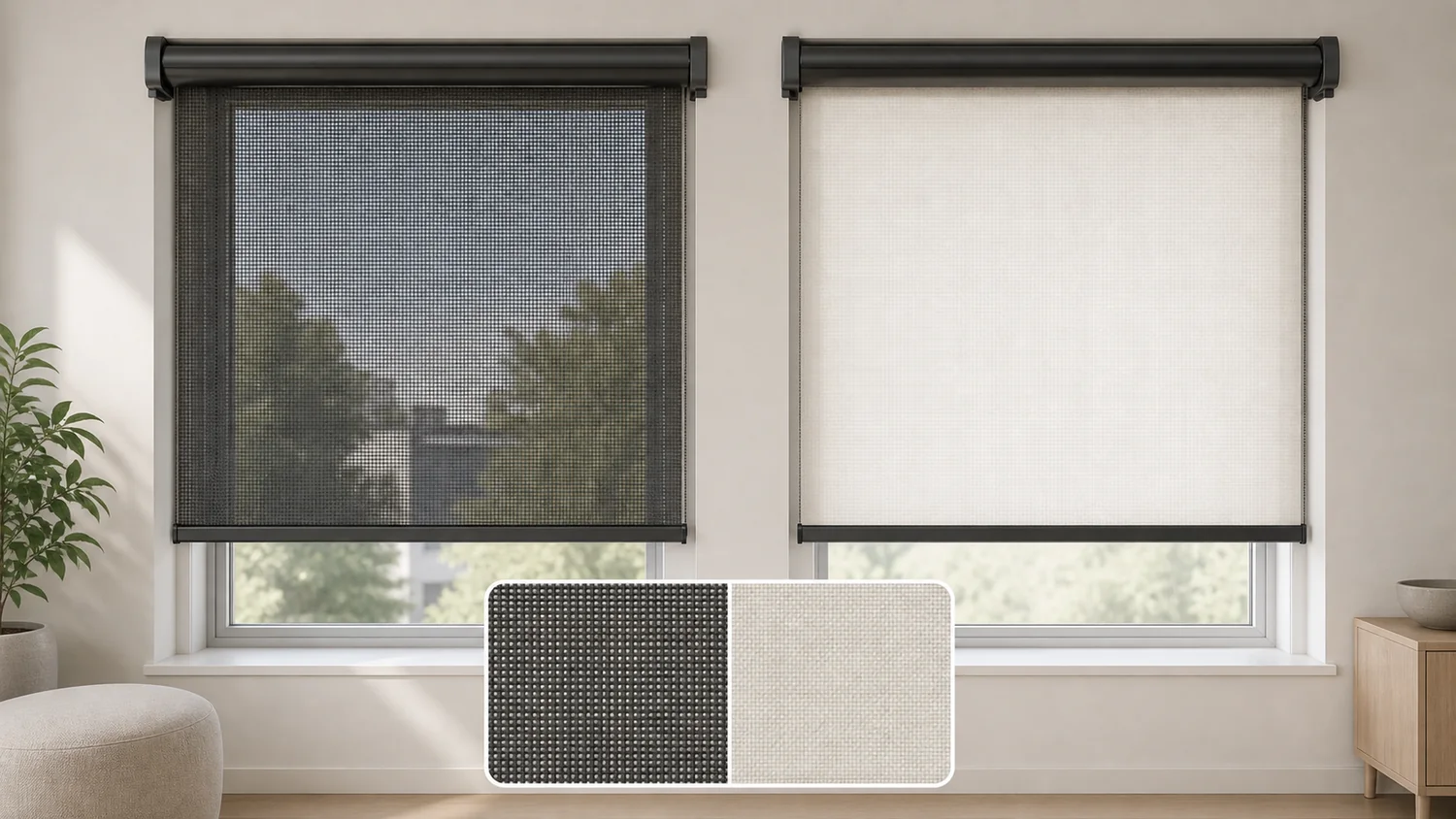
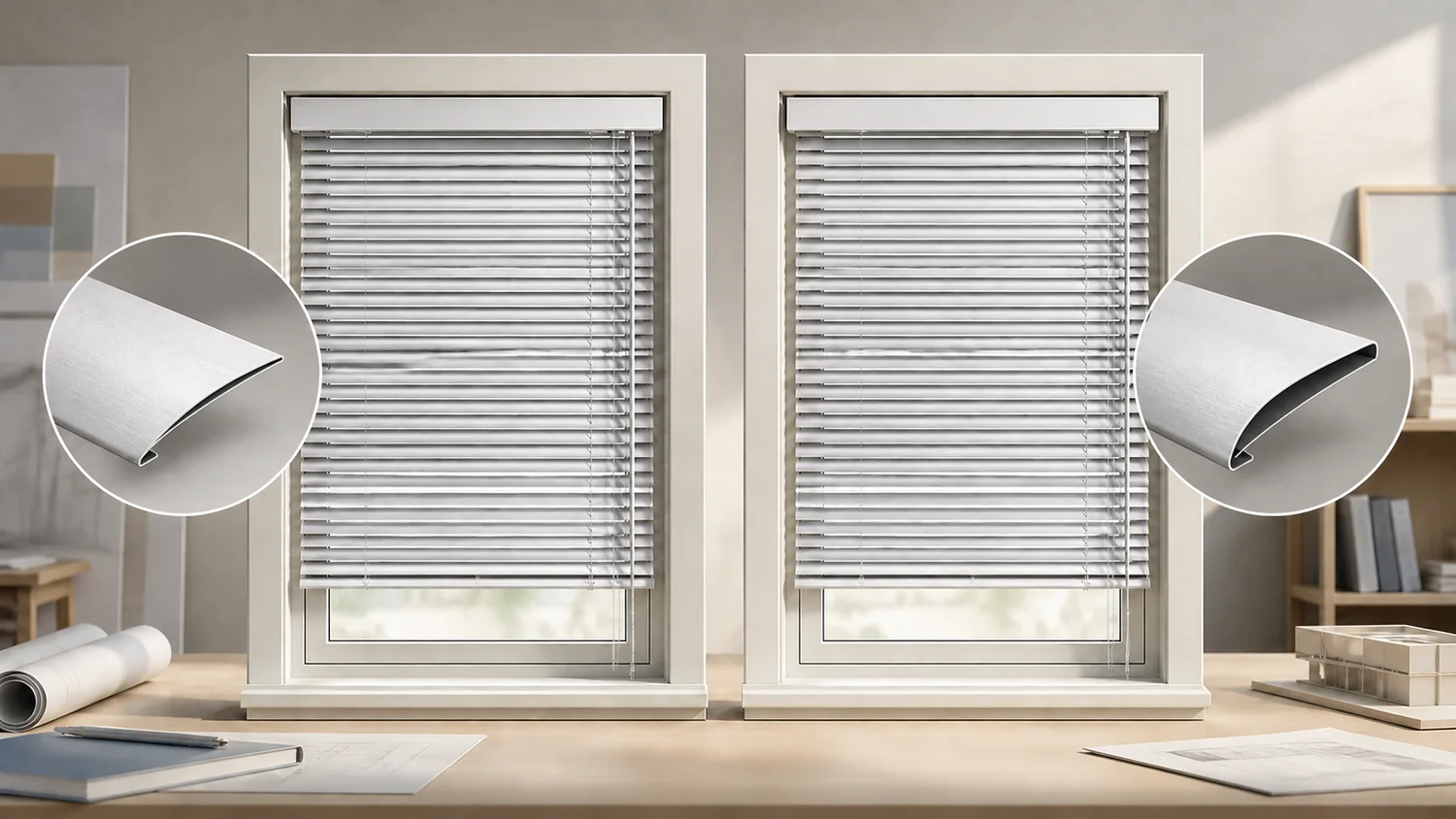
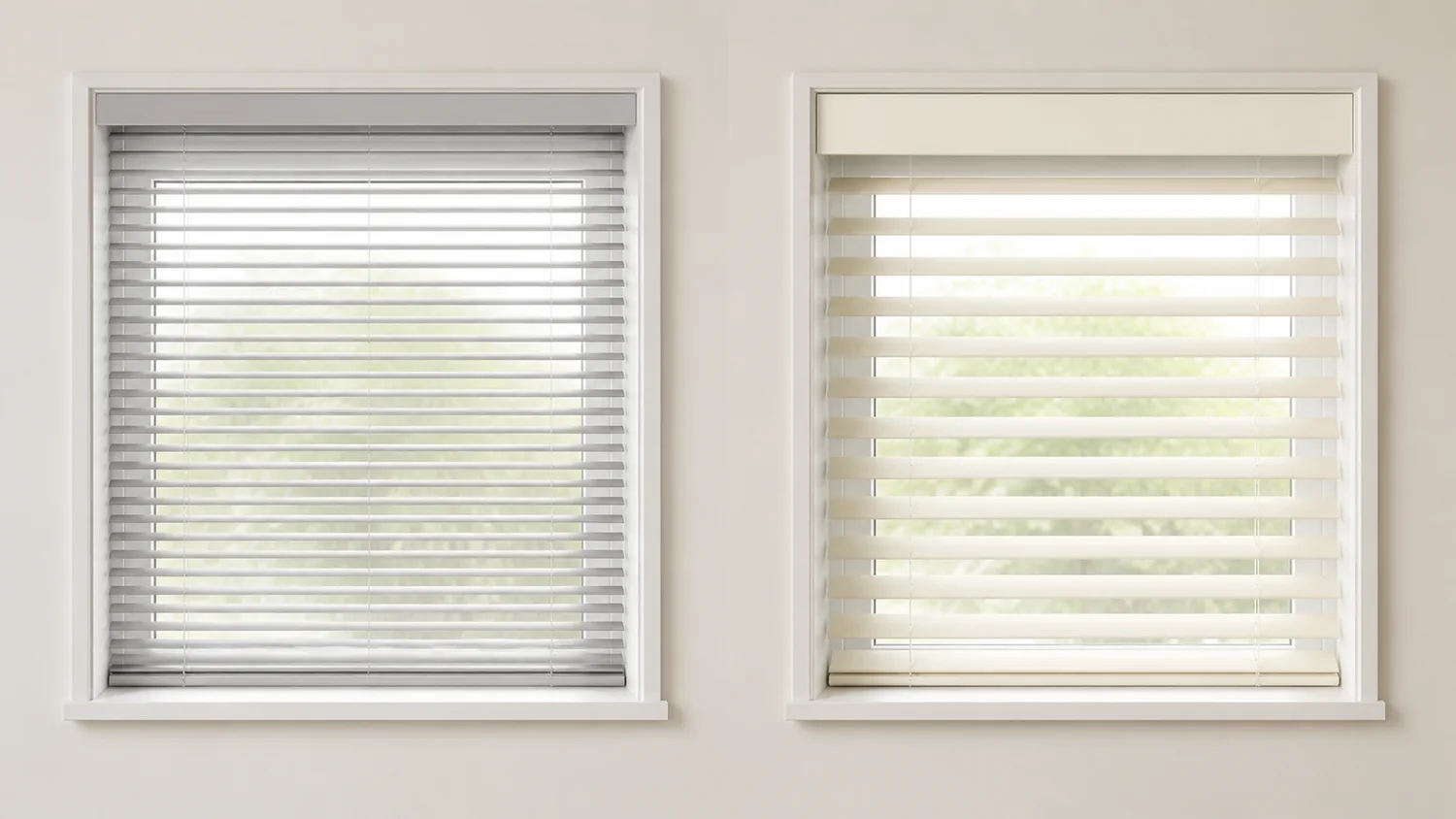
Vertical blinds are often replaced for a visual reason first: the vanes feel dated, one is damaged, or the headrail looks tired. Yet the old blind may still be solving two difficult jobs at once. It can traverse out of the walking path, then rotate its vanes for light and privacy without uncovering the door.
Before choosing an alternative to vertical blinds, use the old blind as the control. Record the active door, draw direction, stack side, useful tilt positions, parked width, clearances and repair condition. A replacement is an upgrade only if it preserves every function you still need—or makes the trade explicit.
If you are still deciding between blinds, shades and motorized systems in general, settle that broader category with the smart blinds versus motorized shades guide. This page starts with a narrower problem: an existing vertical blind is leaving, and the doorway still has to work.
Let the old blind set the minimum
Stand inside the room with the door closed, then open and operate everything in the order you use it: blind, sliding panel, screen and handle. Mark each old-blind function as required, optional or already failing.
| Existing function | What to preserve or change deliberately | Evidence the replacement needs |
|---|---|---|
| Move away from the active door | The everyday passage stays usable when the covering is open | Finished parked position on the same room-side door drawing |
| Adjust light without uncovering the glass | Keep a middle state if vane angle is useful for glare, view or privacy | A real intermediate position for the exact replacement, not a fabric label |
| Cover the full height for privacy | The closed system covers the required sightlines | Finished closed view, edge condition and control position |
| Park on the correct side | The stack stays off the moving panel, handle and walking line | Exact draw direction and parked width |
| Clear the screen, sill and floor | No fabric, rail or panel enters a path that must move | Side view plus the finished bottom condition |
| Repair a smaller failure | A damaged vane or carrier does not automatically condemn the full headrail | Product identity, supported parts and service route |
Do not score these rows and accept the highest total. A required passage cannot be traded for a better fabric color, and a useful privacy state cannot be replaced by an app. If a field is unknown, the candidate is not yet comparable.
Tilt and traverse are different jobs
Traverse changes how much of the doorway is uncovered. Tilt changes what happens while the opening remains covered. A conventional vertical blind may provide both motions; many alternatives provide only one.
LEVOLOR’s current named custom vertical-blind instructions distinguish draw and stack configurations and give an operating sequence for the named system. That does not make its controls universal. It does show why “opens sideways” is incomplete: the quote still needs a draw direction, a parked position and a separate answer for intermediate light control.
A vertical cellular shade can also travel side to side. Hunter Douglas describes Vertiglide that way for its named system. But pleated fabric does not create the same adjustable-vane state. If you regularly angle the old vanes to cut glare while preserving some view, decide whether the replacement offers another acceptable middle position or whether that function is being surrendered.
The opposite mistake is possible too. Interior shutters can offer adjustable louvers, yet their panels still need a bypass lane or a place to fold. Familiar light control does not prove a clear passage.
Every alternative pays for a parking space
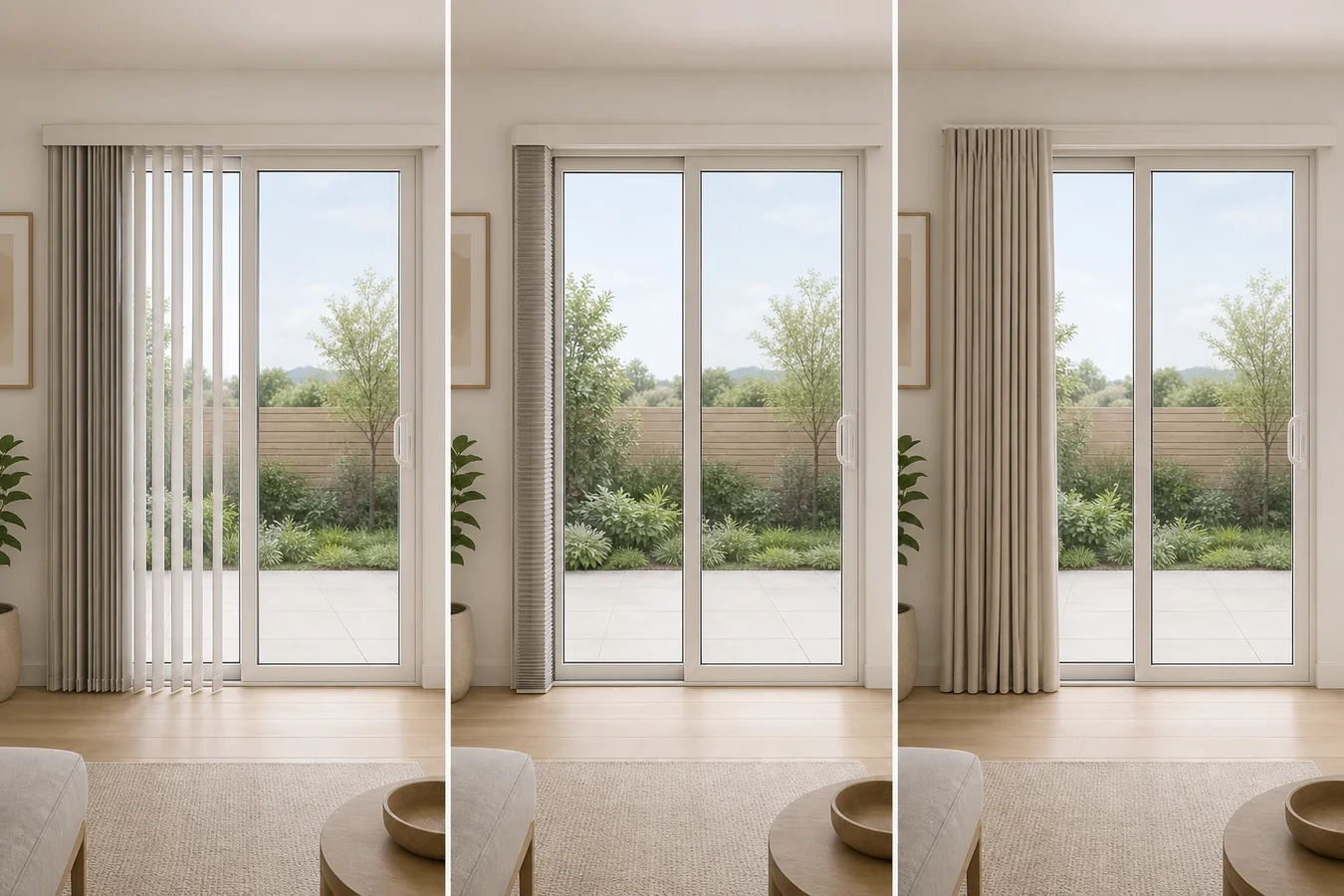
The covering can leave the glass and still occupy part of the wall, opening or room. Compare the fully parked configuration—not an empty sample and not a photo cropped before the stack begins.
| Candidate | What happens when the doorway is uncovered | What must return with the quote |
|---|---|---|
| Retain the vertical headrail | Vanes gather at the existing stack side; tilt remains available if the mechanism is serviceable | Carrier/headrail condition, matching vane record, finished stack and supported parts |
| Vertical cellular shade | Pleated material compresses to one side or follows another documented draw | Exact draw, stack, control, depth and closed-edge condition |
| Panel track | Broad overlapping panels nest across track lanes and park at one or both sides | Panel count, channel plan, overlap, finished open stack and remaining passage |
| Traverse drapery | Fabric gathers at a wall-side or door-side return | Finished fullness, hardware span, draw hand and a stack that stays off the active glass |
| Tracked shutters | Panels pass on separate lanes or fold into the room or wall return | Room-side movement plan, open projection, louver clearance, floor/header details and service access |
| Separate overhead shades | Each unit raises or rolls above part of the opening | Unit split, center gaps, open roll or stack, controls and a plan for the active door |
A merchant panel-track buying guide can introduce left, right and split stack choices, but the final plan has to belong to the selected headrail. Use the panel blind planning guide when that family reaches the shortlist; it closes panel count, track lanes, overlap and the parked passage rather than treating “panel track” as a complete configuration.
Shutters need a different drawing. The sliding-door shutter guide separates bypass travel from bi-fold parking and keeps the screen and handle on their own paths. Do not borrow a panel-track stack width or drapery return to fill an unanswered shutter field.
Mark the door people actually use
A symmetrical patio door is not necessarily used symmetrically. One glass panel moves most often. The screen may travel on another plane. The handle and lock sweep into room-side space. Furniture or a wall return may make the visually obvious stack side unusable.
Start with the active panel instead of the centerline. Draw its opening direction, the screen path and the minimum passage that must remain after the covering is fully parked. Then add the handle, floor transition, sill and anything close enough to catch fabric or a bottom rail.
The large-window and sliding-door treatment guide helps choose a treatment family when the whole opening is still undecided. Once the family is serious, preserve the raw opening and obstructions in the Smart Shade Measurement and Compatibility Checker. If the project returns to a new vertical blind, use the vertical-blind measurement record for the headrail plane, stack, vane clearance and supplier-owned deductions.
Ask the seller to mark the stack or fold on that same drawing. A mirrored product photo is not enough. If the requested hand is unavailable, change the configuration or choose another family before measuring is converted into an order.
Do not replace a repairable headrail by accident
Separate appearance damage from mechanism failure. Missing, bent or discolored vanes point to a different service unit than carriers that will not rotate, a headrail that will not traverse, or a control that binds.
Operate the blind only according to its own instructions. If the headrail completes its documented traverse and tilt sequence, build a match record from one intact vane before replacing anything. The replacement-vane guide keeps attachment, profile, face direction, overlap and finished length tied to the existing track.
If the mechanism is failing, identify the product and supported repair route before assuming a new treatment is cheaper or simpler. Hunter Douglas’s current Skyline repair guidance routes different tasks differently for that named panel system. The lesson is narrow but useful: service permission and parts belong to an exact system, not to the general appearance of a side-moving covering.
Repair can still lose. A discontinued track, unavailable matching parts or a room requirement the old system never met may justify full replacement. The point is to make that decision before a style gallery hides the smaller option.
Write the replacement as one sentence
A family name is not an order result. Finish the comparison with one sentence that names the opening, active door, treatment, draw or stack, intermediate light state, closed privacy state, control and service path.
For example: “On the room-side patio door, use the documented left-stack configuration on the fixed-glass side; preserve the right active passage, accept a fully open or fully closed light state, keep the handle and screen clear, and retain seller-supported access to the track.” That is a hypothetical record, not a universal layout. Its value is that every blank becomes visible.
Return one outcome:
- Retain and repair when the headrail still performs the required motions and supported parts close the defect.
- Approve vertical cellular when the exact side stack, control and closed privacy state fit the same doorway.
- Approve panel track or drapery when the finished parked mass stays outside the required passage.
- Approve tracked shutters when the panel and louver movement drawing closes the room, floor and service conflicts.
- Approve separate overhead shades when the split, gaps, raised obstruction and controls are documented.
- Hold the replacement when a candidate cannot show where it parks, which light states it creates or who services the finished system.
The old vertical blind does not have to win. It only has to expose the jobs that the new covering must inherit.