The best blind for a small window is the one that leaves enough useful glass after the hardware is installed. Start with the visible opening, then subtract the exact headrail or cassette, brackets, raised roll or stack, finished fabric or slat width, side gaps and control envelope.
Do that subtraction for both working and fully raised states. A product can fit the order width and still turn a small window into mostly hardware.
Start with the glass you want to keep
Photograph the opening straight on. Mark the visible glass, operable sash, handle, lock, screen, deep trim, tile edge and the part of the view or daylight that matters. Keep glass dimensions separate from frame and opening dimensions.
| Budget item | Ask for the finished value | Subtract or mark | Hold when |
|---|---|---|---|
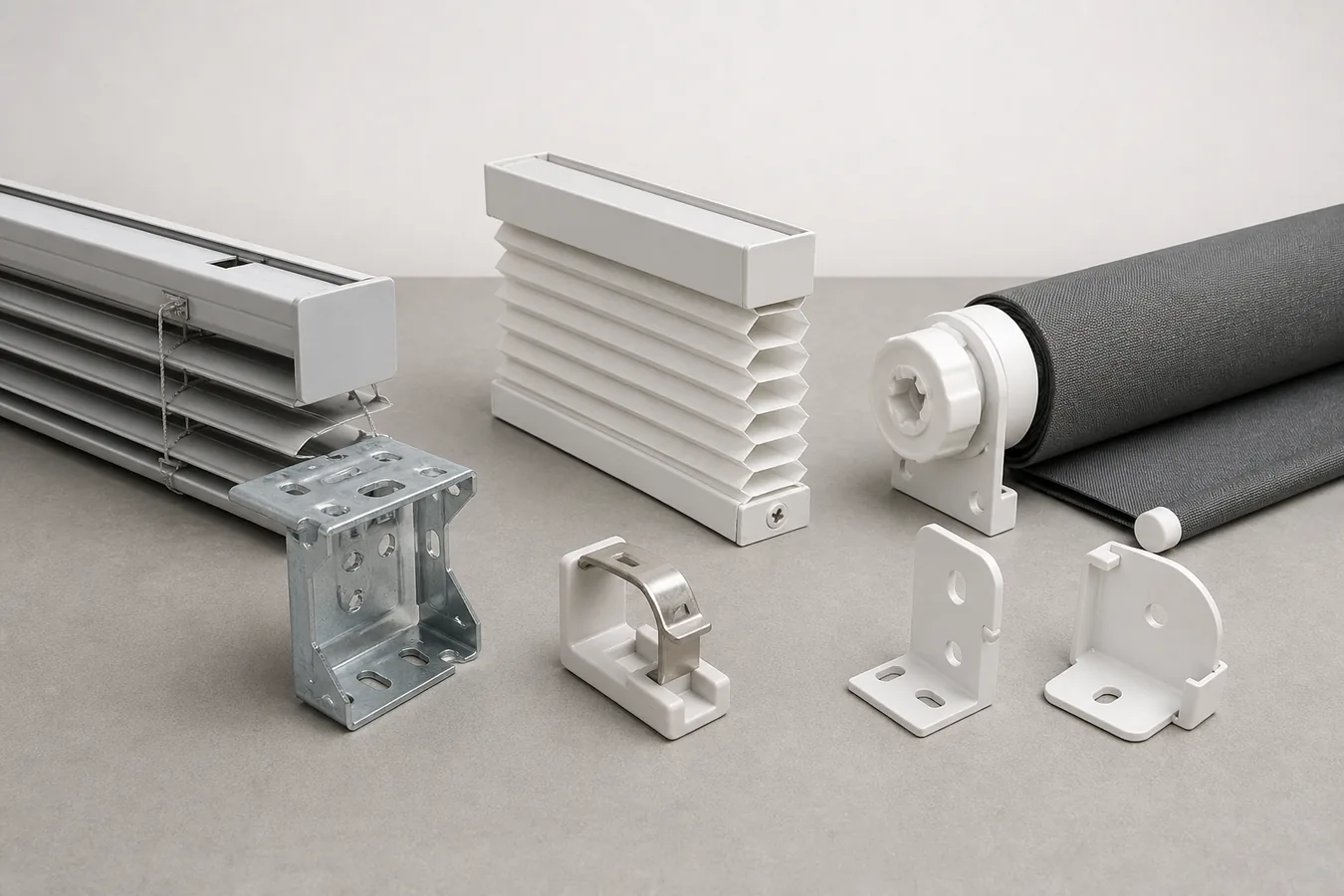
| Hardware | Installed headrail or cassette width and height, end caps and brackets | Top glass, depth and side envelope | Only order width is quoted |
| Working material | Finished fabric, slat or shade-face width | Left and right uncovered glass and privacy gaps | A generic deduction is assumed |
| Raised state | Roll diameter, folded stack or gathered height | Permanent loss of upper glass and view | The catalog image hides the stack |
| Control | Wand, rail, cord-free handle, motor or battery and charge access | Hand and hardware space | The chosen control is unavailable at this width |
| Window operation | Crank, latch, sash travel, ventilation and cleaning path | Collision and no-cover zones | The window cannot open or be serviced |
| Outside overlap | Finished wall and trim envelope | Wall space, trim and nearby conflicts | Fabric width is confused with hardware coverage |
Turn the result into two simple fractions: visible glass while the treatment is working, and visible glass when it is fully open. The arithmetic is not a performance score. It makes the physical cost of each configuration comparable.
Do not derive the numbers from category averages. Minimum widths, fabric deductions and stack change by exact product, material, control and height. Mark unknown values as unknown and send the table to the supplier.
A compact inside mount can still consume the window
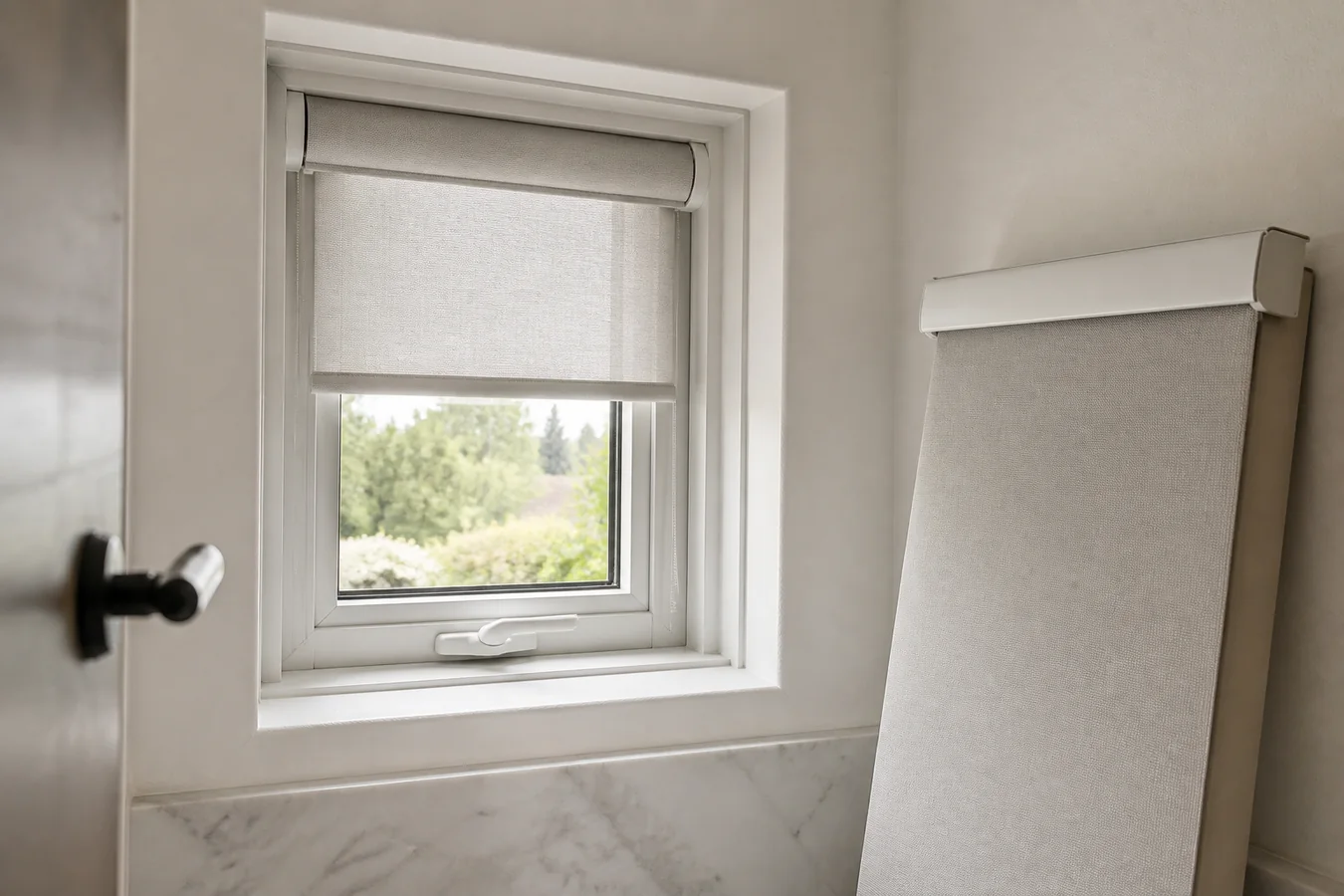
Inside mounting can keep the treatment within the frame and preserve the surrounding wall. On a small opening, its hardware may occupy a large share of the height. Depth can force the cassette forward, and a latch or crank may use the only free plane.
Ask for a side-section drawing. It should show bracket depth, front projection, roll or headrail, fabric plane, handle and glass. A roller shade may sound compact, yet its roll and cassette remain visible at the top. A cellular shade may compress into a stack whose exact height changes with construction and drop. A mini blind has a headrail plus slat stack and a tilt or lift mechanism.
Judge the fully raised state from normal eye level. If the purpose of opening the shade is to gain daylight or a view, the remaining hardware must leave enough of that outcome to justify a moving covering. If privacy is almost always required, a fixed translucent treatment may avoid paying for an open state the room will not use.
Use the site’s inside-versus-outside mount guide when depth, trim and overlap—not merely window size—decide the mount.
An outside mount spends wall and trim instead of glass
An outside mount can move the headrail above the opening and overlap the sides, preserving more glass when raised and reducing some sightline gaps. It needs wall or trim area, suitable structure and a finished width that does not collide with a corner, cabinet, mirror, towel bar or door casing.
Draw the complete outside envelope. Include hardware, end caps, fabric, any fascia and the lowered bottom position. Check whether the treatment covers decorative trim or interferes with a window that tilts, swings or opens inward. The responsible party must approve the attachment surface and fasteners.
Outside mounting does not automatically make a small window look larger or guarantee privacy. It trades glass occupancy for wall occupancy. Compare the two finished elevations, not a close-up product photo.
If the surrounding wall is narrow, a partial film or no covering may preserve more utility. That can be the right answer when the window is already private, uses obscured glass, serves required ventilation or would lose most of its daylight behind any mechanism. Regulatory, egress, safety-glass and wet-location requirements remain project-specific.
Choose the smallest honest mechanism, not the smallest-sounding category
Mini blinds, compact roller shades, cellular shades and small Roman shades can all appear in merchant small-window lists. The category name does not reveal finished hardware.
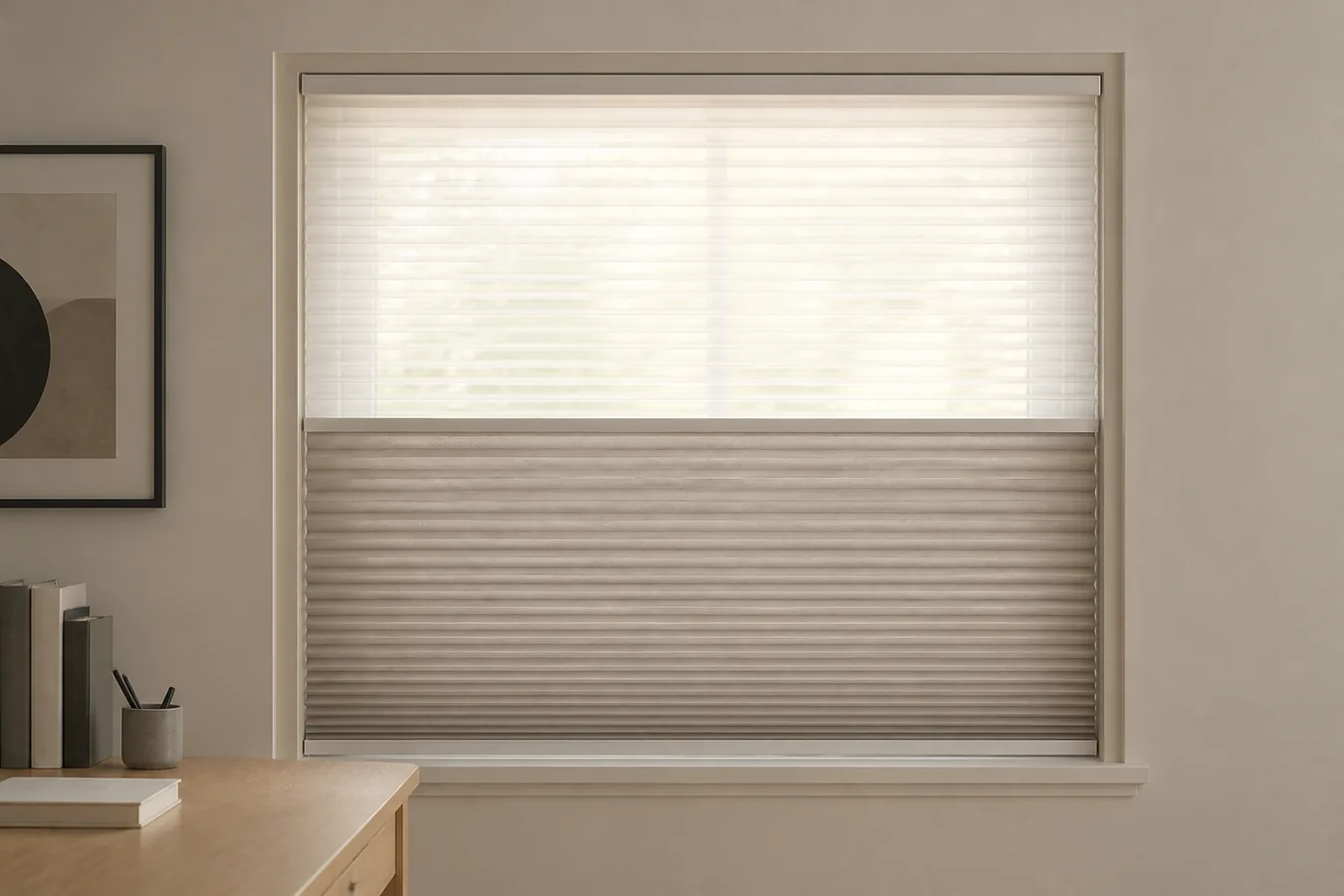
Roller shades can have a visually simple face and continuous position, but fabric is commonly narrower than some hardware and the roll owns top space. Cellular shades may offer a compact horizontal footprint and top-down options in supported products, but stack, rail and minimum control width remain exact facts. Mini blinds provide slat adjustment, yet headrail, slat stack, wand or tilt and lift architecture can crowd a very short opening. Roman shades add a deliberate fabric face; their folds can consume a meaningful raised zone on a small height.
Ask each candidate to return the same values from the budget table. Eliminate any option that cannot state finished hardware, face width, gaps, raised height and control at the exact requested size. Then compare light, privacy, care and appearance among the survivors.
For a deeper cellular configuration decision, the motorized cellular-shade guide owns cell construction, sizing and power. Do not infer that a motor available on a large sample shade is available at a small width.
Controls can be wider than the decision
A control needs a hand, motor, battery, drive end or charging path. On a small window, that component may determine the minimum viable width more than the fabric does. Ask which control systems are supported for the exact dimensions and whether switching control changes the headrail or fabric width.
Cord-free does not mean control-free. A bottom-rail handle requires a reachable rail and hand clearance. A wand needs swing room. A motor may add a drive end and service access. A battery may be compact but still needs removal or charging. Place the control on the elevation and operate the window latch without moving it out of the way.
For current US stock window coverings, the CPSC operating-cord rule requires operating cords to be cordless, short or inaccessible within its stated conditions. Treat the compliant operating architecture as an exact product field, not a retrofit assumption.
If an old covering must be removed before measuring, use the blind-removal guide to identify its hardware rather than prying an unknown bracket. Removal dimensions do not authorize the new product’s fit.
Make the quote show what remains visible
Send one straight-on elevation and one side section. The supplier should return the exact product, control, minimum-size approval, installed hardware width and height, fabric or slat width, side gaps, raised roll or stack, depth and projection, mount, bottom position, obstruction clearances, care and service path.
Draw those finished values over the glass. Calculate the remaining visible rectangle in the working and raised states. If the product uses uneven gaps or projects in front of trim, show the actual outline instead of hiding it inside one percentage.
Use the Smart Shade Measurement and Compatibility Checker to preserve opening, depth and obstruction facts. It does not apply a universal deduction or decide the order size.
Approve the blind when the exact product fits, the control works, the window remains usable and enough glass survives in the states the room values. If the hardware consumes the reason for covering the window, choose the outside envelope, a quieter fixed treatment or no blind at all.