Light filtering, room darkening and blackout are useful shopping labels, but they are not interchangeable measurements of what your finished room will do. Test the exact fabric and color on the glass in daylight, after sunset with the room lights on, during the glare-producing task and in the darkness condition that matters.
The choice is not simply “how much light do I want?” It is which light, at what time, through which part of the opening. Fabric transmission and light around the edges are separate purchases.
The labels describe fabric, not your finished room
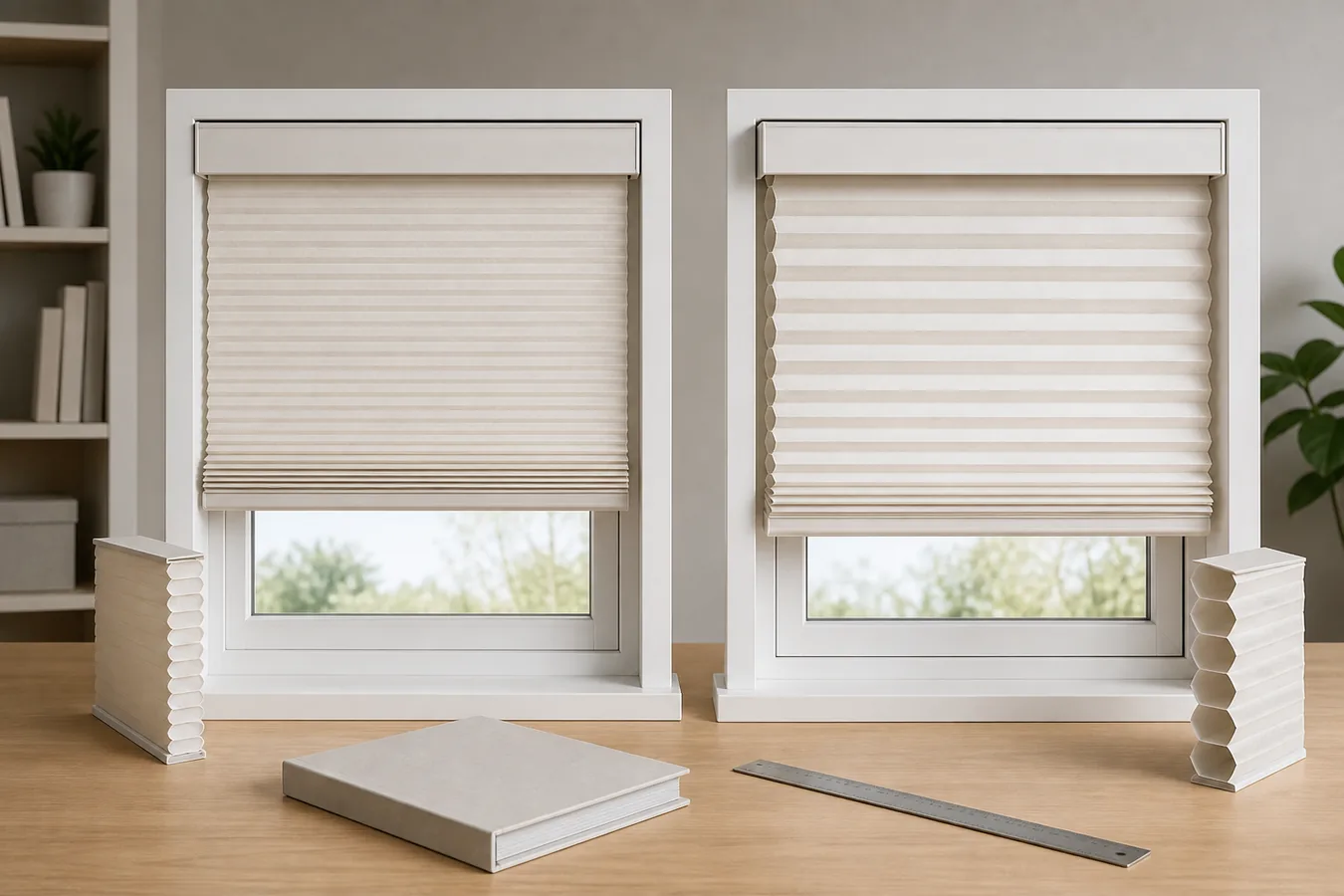
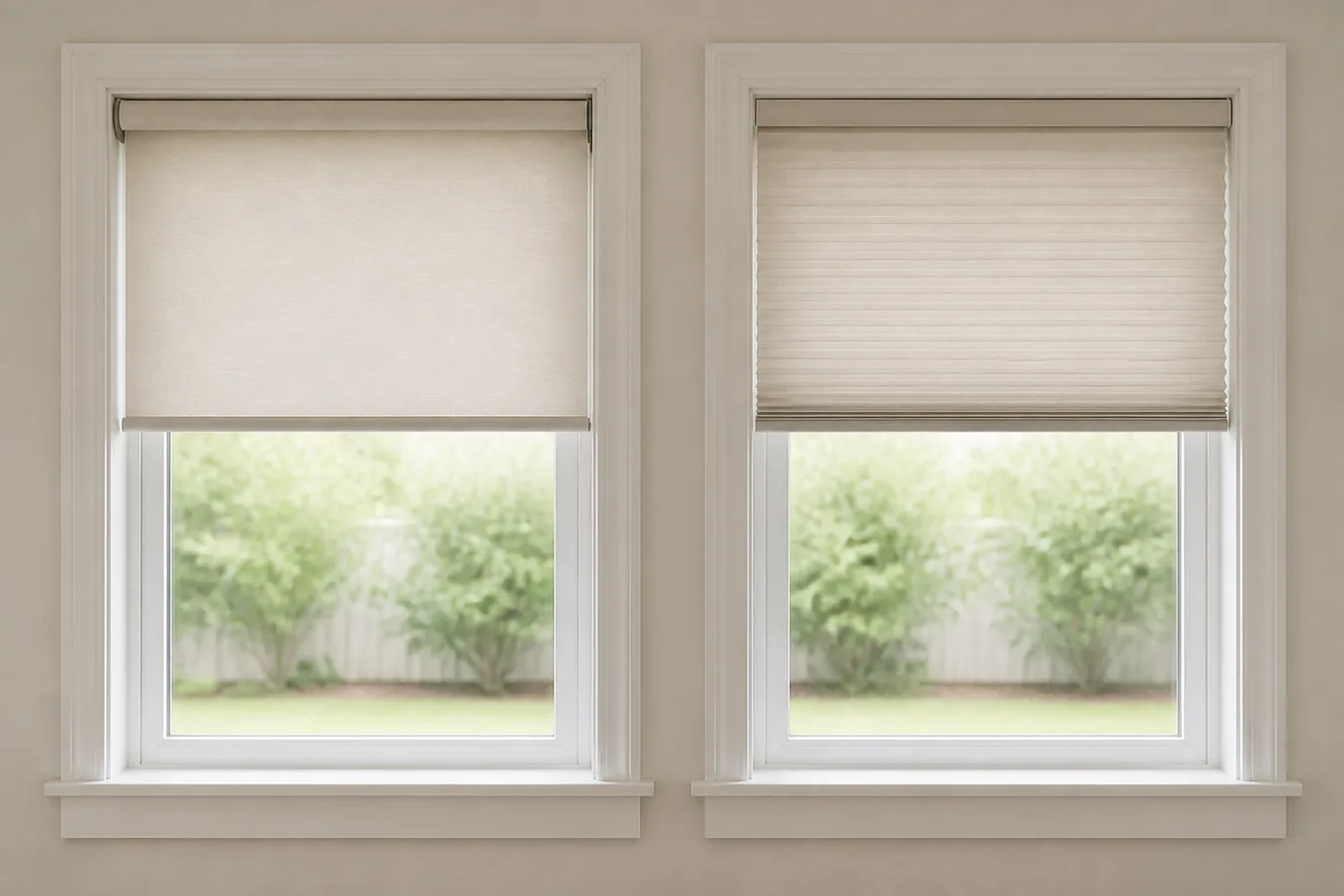
Light-filtering fabrics admit diffuse light and may soften a view. Room-darkening fabrics usually reduce transmitted light more strongly, but the label does not promise a standard percentage or a private lights-on room. Blackout fabric is intended to prevent light through the material; it does not make side, top, bottom or center gaps disappear.
One current manufacturer example makes the boundary visible. Lutron’s roller-shade page distinguishes sheer, translucent and blackout fabric roles, then separately describes channels for stopping light at the sides of its blackout installation. That is evidence for separating cloth and perimeter, not a market-wide definition for every seller’s “room darkening” label.
For the broader distinction between blinds, shades and motorized systems, start with the smart blinds versus motorized shades comparison. This page stays with the opacity labels inside a finished shade configuration.
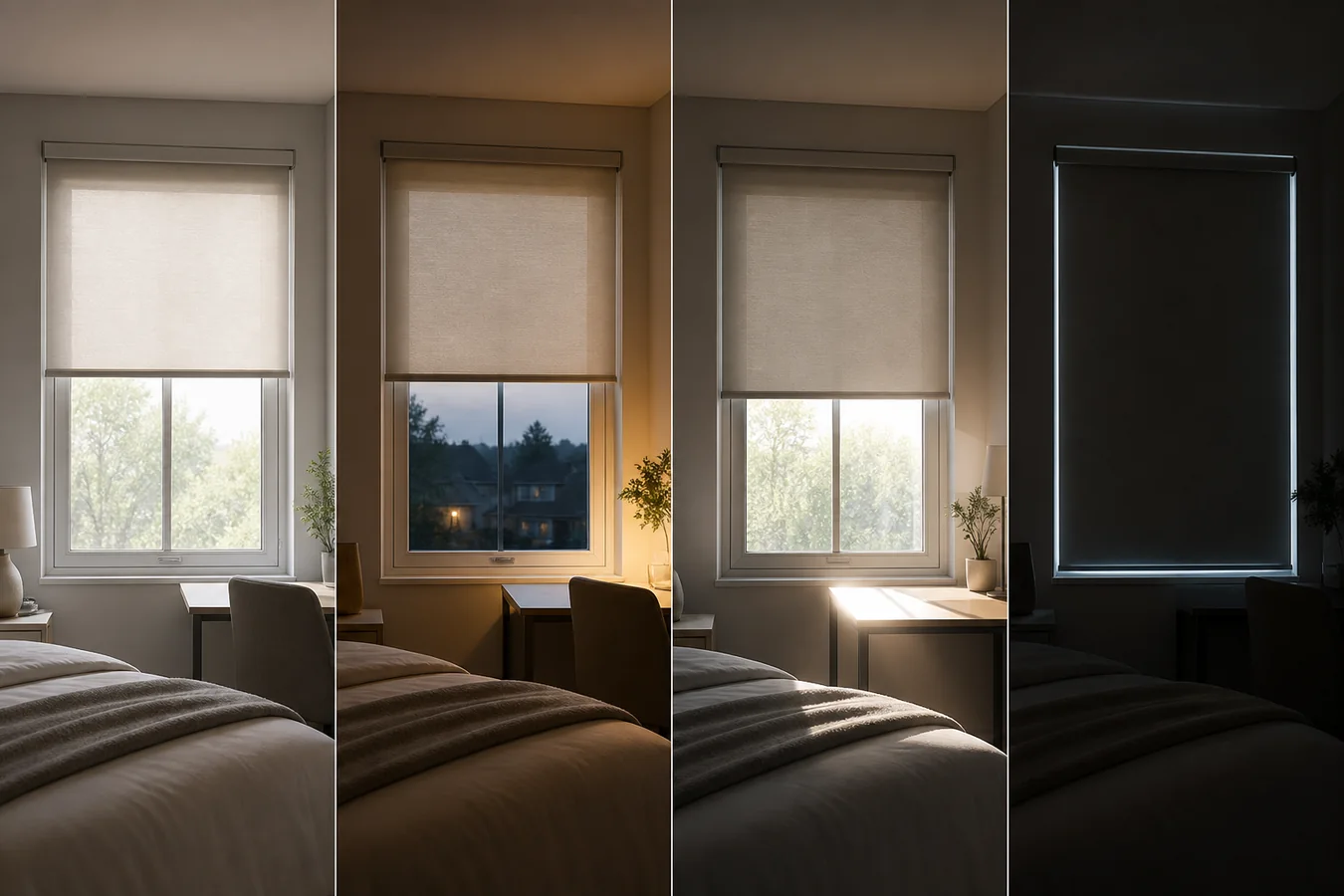
Use one sample in four states
Use the exact color and openness or liner configuration on the quote. A white swatch and a dark swatch from the same collection can behave differently. A phone screen cannot reproduce backlighting, texture or the sightline through a real weave.
| Test state | How to run it | Pass means | A failure points toward |
|---|---|---|---|
| Daylight | Hold the sample flat against the glass and step back to the normal room position | Acceptable daylight, view, contrast and daytime privacy | A more or less open fabric, another color, partial coverage or adjustable position |
| Lights-on evening | Light the room normally and look from the relevant exterior path | People and activity are concealed to the level the room requires | A denser fabric, liner, full coverage or layered privacy |
| Task glare | Place the sample only across the bright source while using the screen, table or television | Glare is controlled without needless loss of the rest of the window | Different movement, coverage zone, fabric color or workstation position |
| Sleep or dark scene | Darken the room, close the proposed configuration and inspect fabric plus perimeter | The real darkness target is met | Blackout fabric, side channels, overlap, outside mount, layering or an honest non-blackout result |
Record pass, fail or not applicable. Do not average the four states into one score. A fabric can pass daytime comfort and fail night privacy; a blackout cloth can pass transmission and fail at the edges.
Daylight decides what you keep
Begin from the open window. Decide which useful quality should survive: sky light, a garden view, visual connection to the room, or enough diffuse light to avoid turning on fixtures. Then introduce the sample only as far as the problem requires.
Look at faces and work surfaces, not just the glowing fabric. A bright translucent shade can become the brightest object in the room even while it removes the direct view. A darker fabric may reduce that luminance but also flatten the view. The correct result depends on the task and the window’s position.
For the deeper fabric-and-view decision, use the light-filtering roller-shade guide. It owns openness, color, view and scene behavior; this page owns the boundary between shopping labels.
After sunset, the bright side moves indoors
Daytime privacy often comes from the exterior being brighter than the room. After sunset, interior lights reverse the contrast. Run the evening test with the lamps, dining pendants or bathroom lights normally used. Stand outside at the path, neighbor or street angle that matters.
Do not press the sample into an unrealistic seal. Mount it at approximately the proposed finished location and include the likely side gaps. Check silhouettes, movement and direct views at the relevant height. If privacy is required only across a lower band, a partial or top-down arrangement may preserve high daylight, but the exact system must support the size and control.
“Room darkening” is not a substitute for this test. Neither is a merchant photograph taken from the bright side of the glass.
Glare is a position problem before it is an opacity problem
Glare can be a direct beam, a bright window in the field of view or a reflection. Identify which one changes when you cover a small part of the opening. If the issue disappears when only a narrow band is shaded, closing a dense fabric across the full window may create a darker room and a new contrast problem.
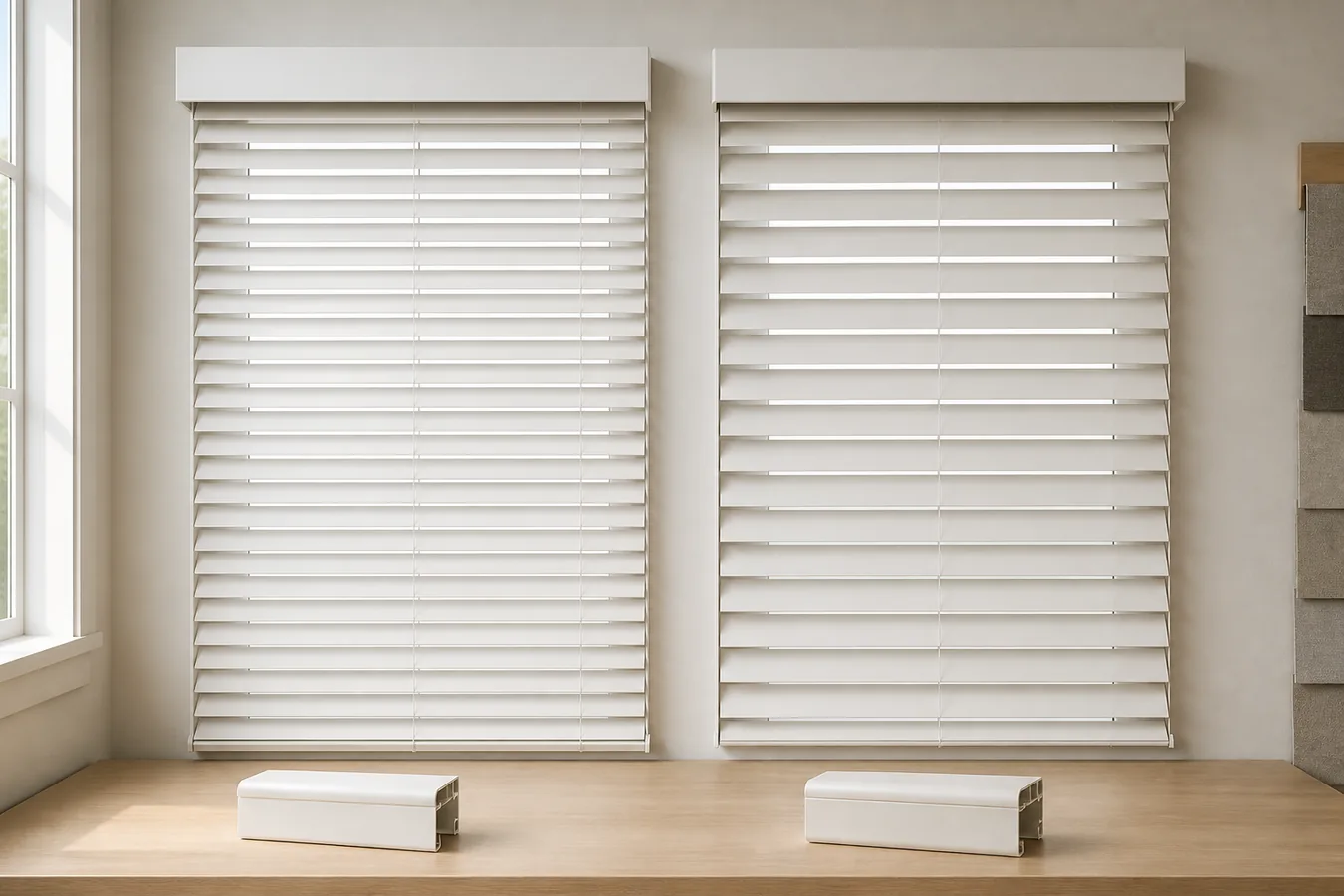
Move the sample through the proposed operating range. A continuously adjustable roller or cellular shade can follow a changing bright band. Slats or a dual-layer treatment can redirect or alternate light, but their exact angles, gaps and controls need their own test. A fixed film cannot move when the sun path changes.
The blackout-and-eye-strain guide separates window glare from non-window discomfort. A shade can own a demonstrated glare source; it cannot diagnose or treat persistent symptoms.
Blackout fabric and a blackout opening are different purchases
Inspect the planned mount before accepting a darkness claim. The fabric is usually narrower than some roller hardware. Inside mounts can leave side light. Outside mounts can improve overlap but may meet trim, handles or an uneven wall. Adjacent shades create center gaps. A pocket or fascia may hide the roll without sealing the sides.
Side channels, tracks, overlapping layers or a carefully designed outside mount can address specific perimeter paths. They also add dimensions, friction, cleaning and service questions. The blackout room guide explains how room use changes the acceptable gap; the blackout Roman-shade guide handles liner, seam and edge evidence for that construction.
Do not promise absolute darkness from a fabric label. Decide whether the room needs true edge control, a darker but not sealed result, or only glare/privacy during defined hours. The honest room-darkening answer can be better than an expensive pseudo-blackout installation whose edges were never drawn.
Put the four results on the quote
The final quote should identify the exact fabric collection, color, opacity or openness designation, liner, finished fabric width, hardware width, mount, side and center gaps, edge-control components, control method and sample identifier. Ask the seller which claim applies to fabric and which applies to the installed opening.
Keep the four-state card with the quote. If a state was not tested, mark it unknown rather than converting a label into a pass. For a current US stock covering, also require the exact operating system to meet the CPSC operating-cord rule within its stated scope.
After the fabric and edge strategy are selected, use the Smart Shade Measurement and Compatibility Checker to record depth, obstructions and mounting facts. Approval comes when the exact sample passes every applicable state and the finished quote owns every edge. Otherwise, hold at the failing state instead of buying a stronger-sounding label.