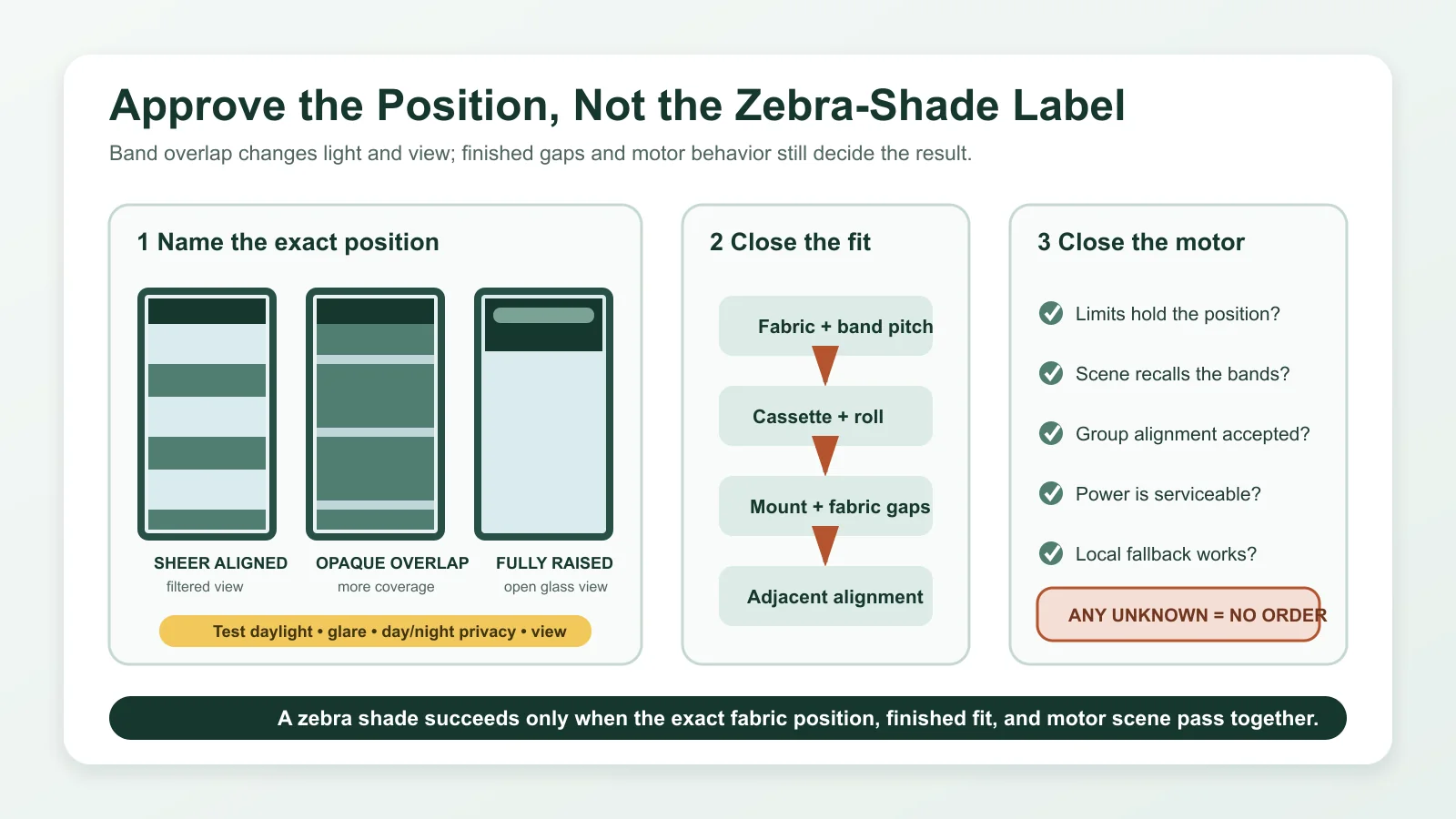
A motorized zebra blind should be chosen as four observable positions, not one product label. Fully raised clears the glass. Sheer alignment offers the most open banded view. Partial overlap changes glare and visibility. Opaque overlap creates the most covered band state. None of those positions proves privacy or darkness until the exact fabric, finished gaps, observer and lighting are tested.
Motorization adds value when it can reproduce the positions the room actually uses. It does not turn an open weave into private fabric, align neighboring shades automatically or seal light around the cassette and sides. If adjustable bands are not essential to the room, compare zebra construction with simpler options in the motorized shade type guide.
One shade behaves like four different window treatments
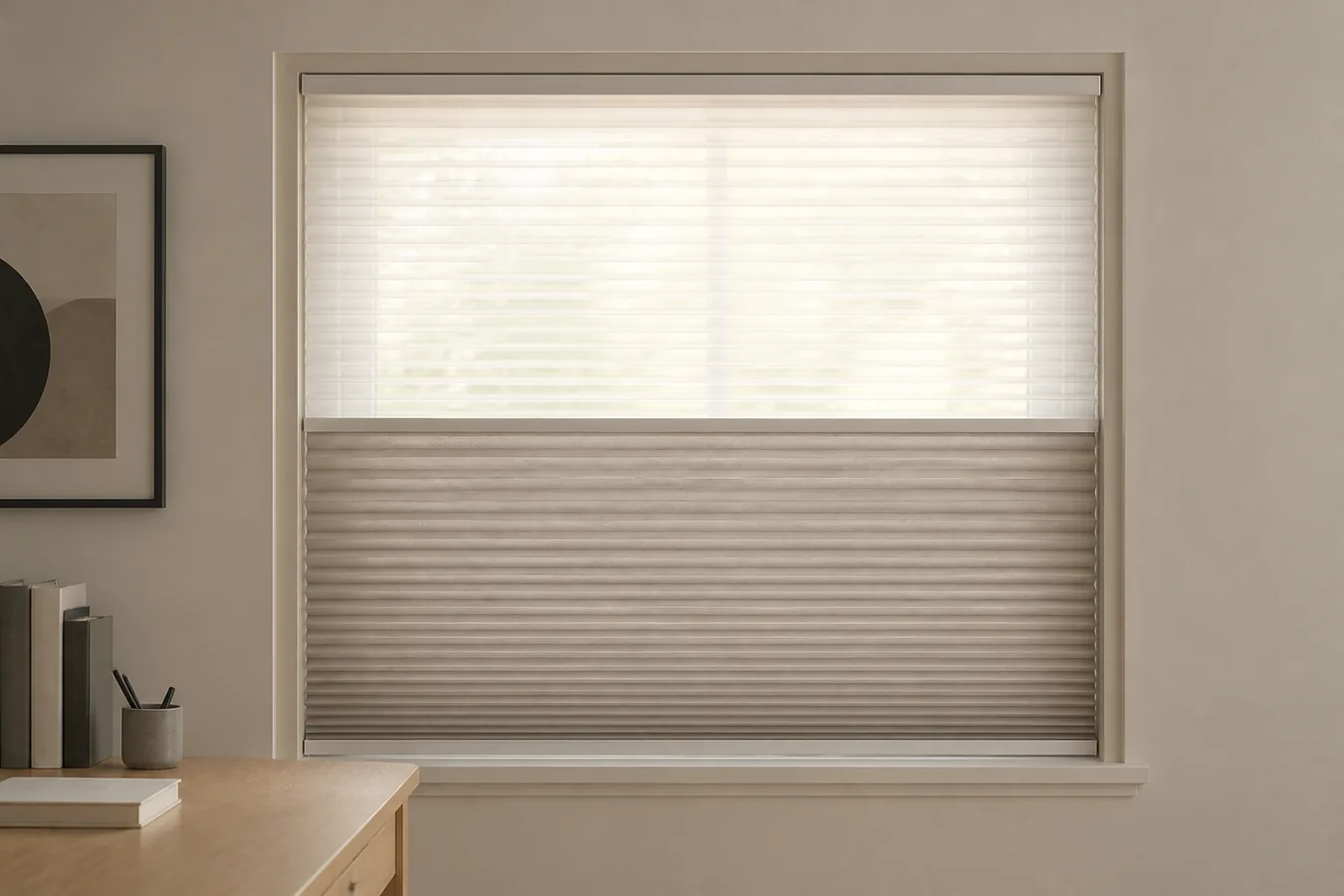
Zebra, layered or banded shades use two fabric layers with alternating sheer and opaque bands. As one layer moves against the other, overlap changes. Raising the whole fabric into the cassette is a different action from aligning sheer bands.
Graber’s current layered-shade page describes alternating bands, overlap positions and a fully raised cassette state, with control options that vary by product. That is a useful mechanism definition for the named product—not a universal privacy or positioning guarantee. Review the current layered-shade mechanism.
Make a position card before choosing a control
For the exact fabric sample, create one card for each useful state. Each card needs a straight-on photo or representative drawing, the room task, the observer/light test and the intended command. If a position has no distinct value, it should not drive extra control complexity.
| Position | What the fabric does | Likely room task | Evidence before approval |
|---|---|---|---|
| Fully raised | Retracts into or near the cassette | Maximum clear view and unfiltered daylight | Actual stack/cassette view, glass clearance and top limit |
| Sheer aligned | Sheer bands face each other between opaque bands | Filtered view or daylight | Day and night visibility from real observer positions |
| Partial overlap | Opaque bands cover part of the sheer openings | Fine adjustment for glare/view balance | A reproducible useful position, not just continuous motion |
| Opaque overlap | Opaque bands cover the sheer openings as far as the construction allows | Greatest coverage and privacy from the fabric | Night privacy, material opacity, side/cassette/bottom gaps and bottom limit |
Sheer alignment is a view state, not a privacy promise
A sheer-aligned position can preserve a filtered outward view in some daylight conditions. It can also allow an outside observer to see through, especially after dark when the room is brighter than outside. Test from every relevant observer location and elevation with the room lit normally.
Use the exact fabric and color. Marketing photography cannot represent every interior/exterior brightness ratio. Graber’s current guide distinguishes view and privacy by fabric and band position and does not make zebra construction synonymous with complete privacy. See the current fabric-position explanation.
Opaque overlap is the darkest band state, not a sealed room
Opaque overlap can reduce view through the alternating bands, but the installed system still has material transmission and light paths at the sides, cassette, bottom and any inter-panel gap. Room-darkening fabric is not the same as a full blackout installation.
If a bedroom or media task depends on darkness, compare the real opaque-overlap card with another shade type or a layered system designed around the perimeter. Do not buy zebra solely because a product photo appears fully dark.
Ordered width is not fabric coverage
The width entered on an order can describe the overall shade, while the fabric is narrower because controls, tubes, brackets or the cassette occupy space. A two-on-one configuration can add an internal gap. Exact deductions depend on the product and control.
Levolor’s current banded-shade technical guide separates single-panel and two-on-one configurations and documents configuration-specific cassette, tube, fabric and light-gap relationships. Use it only for the exact current Levolor configuration; the wider lesson is to request both overall and fabric coverage. Review the current technical distinctions.
Record the opening with the measurement checker, then ask the quote for ordered width, finished cassette width, fabric width and every expected side/inter-panel gap.
The cassette and roll direction frame every position
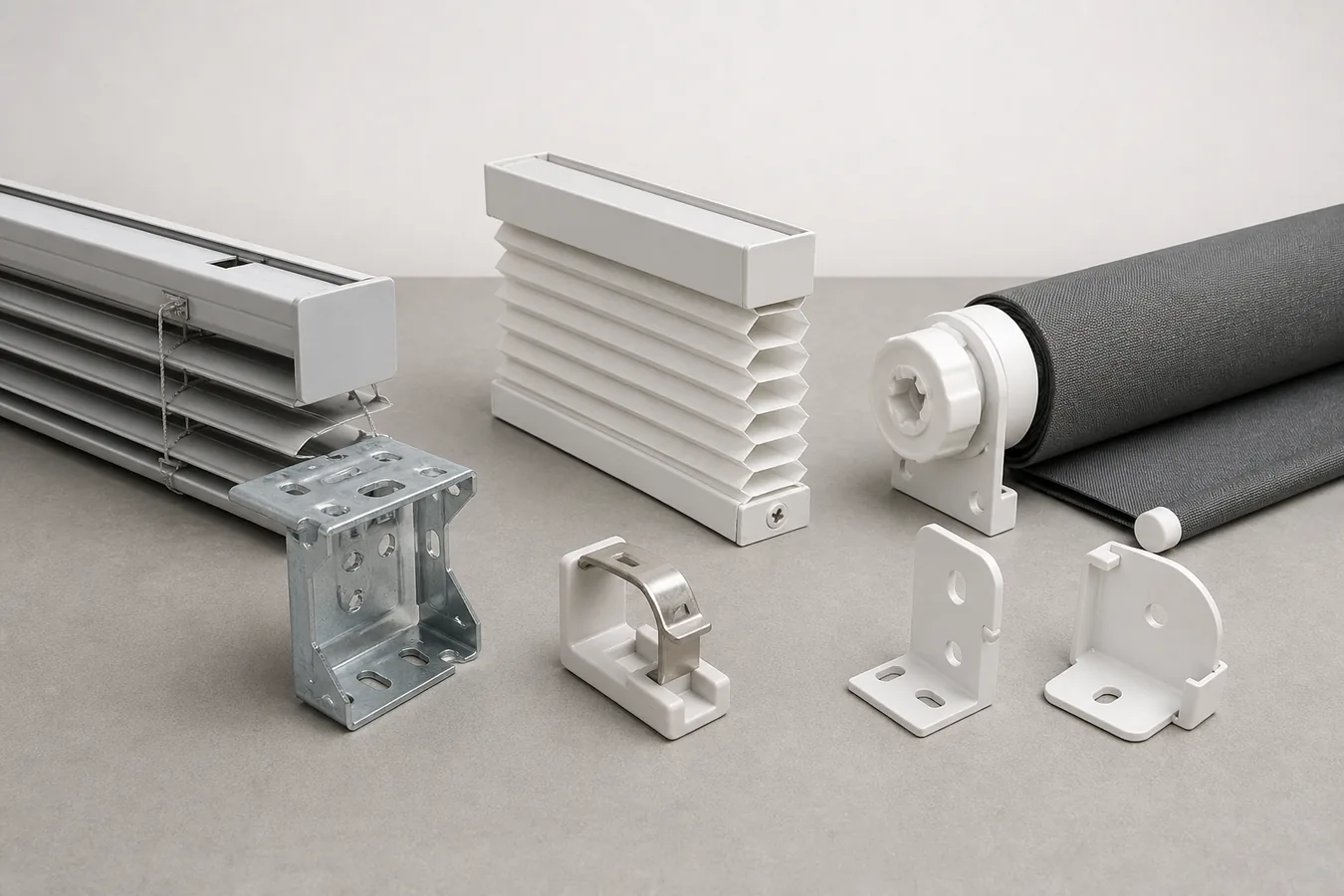
Inside versus outside mount changes overlap, cassette projection and how gaps appear against trim. Roll direction can change which layer sits closer to the glass and how the fabric clears handles or sills. The cassette remains visible even when the fabric is fully raised.
Use the inside-versus-outside mount guide for the base tradeoff, then add the exact cassette depth/projection, roll direction, bottom rail and fully raised view. A clean band position is not useful if the fabric rubs hardware or the cassette will not fit the recess.
Adjacent bands need a reference, not a hope
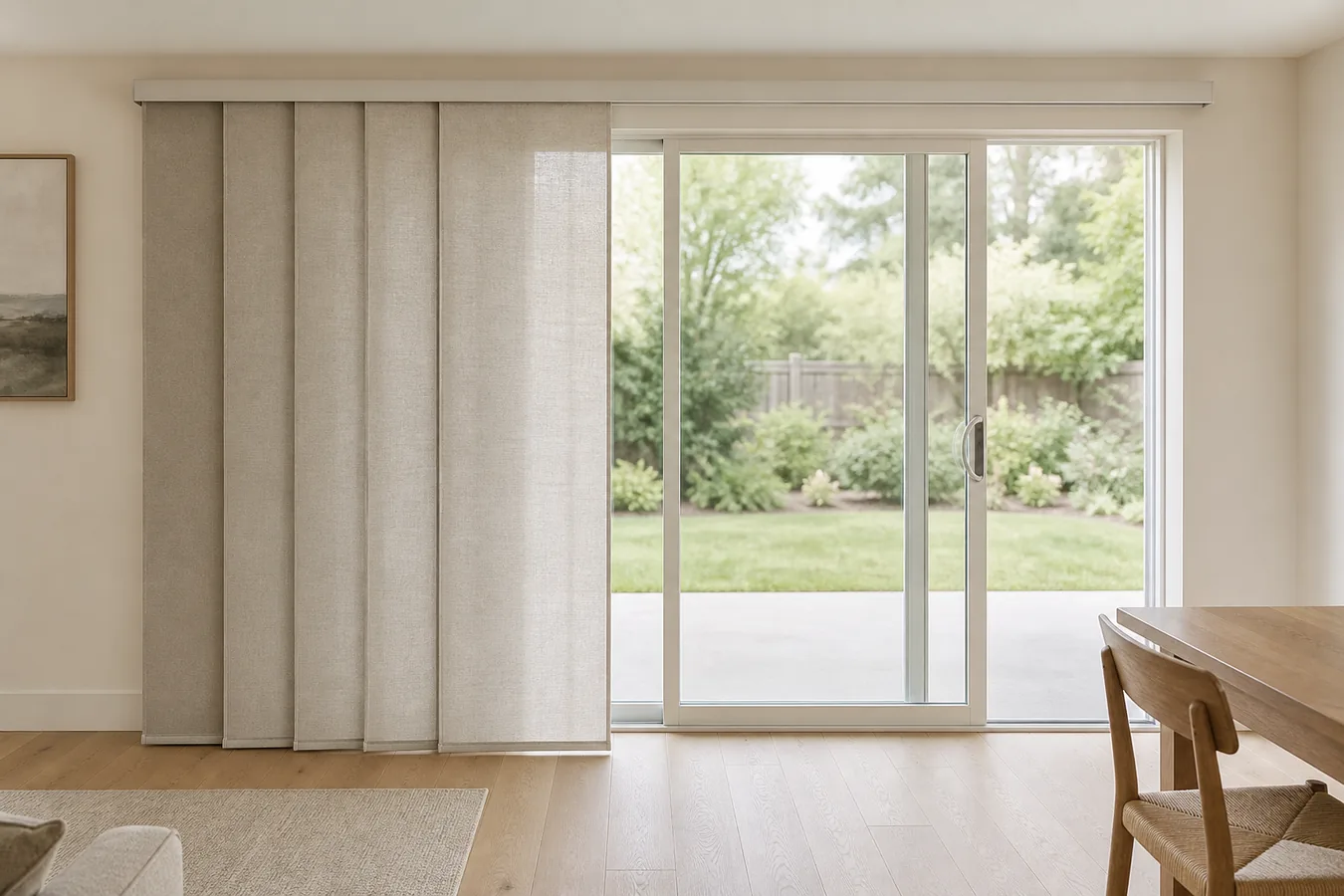
Two shades can share a fabric name yet begin their band repeat at different points, use separate cassettes or reach limits differently. Decide which visual line matters: cassette bottoms, bottom rails at full close, sheer band alignment in a normal scene, or simply completion of the same privacy task.
Ask the fabricator whether band alignment across adjacent units is offered, how the repeat and finished drop affect it, and what tolerance is stated. If exact alignment is not guaranteed, approve the grouping for function rather than relying on a catalog-wide stripe line.
Save an observable band state, not an app percentage
A percentage slider is not a portable description of zebra position. The useful scene is observable: “sheer bands aligned at the desk,” “opaque overlap passes the night test,” or “fully raised clears the view.” Name scenes after those results.
Hunter Douglas currently lists Designer Banded Shades within PowerView and describes remote, app/gateway, scenes and schedules for named products. That proves layered control options exist, while exact compatibility and local behavior remain configuration-specific. Verify the current PowerView path for the quoted banded shade.
Limit behavior belongs to the exact generation
Fine positioning only matters if the motor can reach and repeat the useful band state in the exact installed shade. Ask how top and bottom limits are set, whether an intermediate scene can be stored, and how one adjacent unit is corrected after service.
Hunter Douglas support for named Legacy PowerView Designer Banded/Roller/Screen shades makes limit procedures dependent on product type and manufacturing date and discusses fine positioning and side-by-side alignment. This is evidence that generation matters, not an instruction for other systems. Check the exact named-system support boundary.
Power and local fallback keep the cards usable
Require a local open/stop/close method and a way to reach the approved band states without depending entirely on internet access. Then add schedules, away control or ecosystem integration only if the room needs them.
Record the exact battery, rechargeable or wired path and future access to charge, reset or service components. PowerView currently lists rechargeable and hardwired possibilities for named systems, but that does not establish another shade’s options or battery life. Confirm power for the exact quoted system.
Approve the position deck at the real window
Where practical, mock up or install one representative opening before repeating the configuration. At the real window, capture all four position cards during the day and after dark. Check the actual observer, primary view, glare task, fabric coverage, side gaps and cassette.
Then run the controls: reach each position locally, recall the useful intermediate scene, operate a group, disconnect the network and confirm basic fallback. This test does not prove long-term precision, battery life or reliability; it proves that the quoted position deck serves this window.
Put four accepted cards into the order
| Order layer | Record | Acceptance |
|---|---|---|
| Position deck | Fully raised, sheer, partial and opaque cards with room tasks | Every retained position creates distinct value |
| Fabric and fit | Exact fabric/band, cassette, roll, mount, ordered/fabric width and gaps | Actual coverage supports each card |
| Alignment | Reference line and stated tolerance for adjacent units | Functional or visual expectation is explicit |
| Motor system | Exact motor, limits, saved scenes, group, power, local fallback and service | Useful states can be reproduced and maintained |
Where young children may be present, require an appropriate cordless completed system; CPSC says cordless window coverings are the safest option in that setting. Read the current CPSC guidance.
Save and test the actual band positions the room uses—open view, glare control, daytime screening, and maximum overlap. If the exact shade cannot reproduce those positions consistently and still meet night privacy, another construction is a better fit.