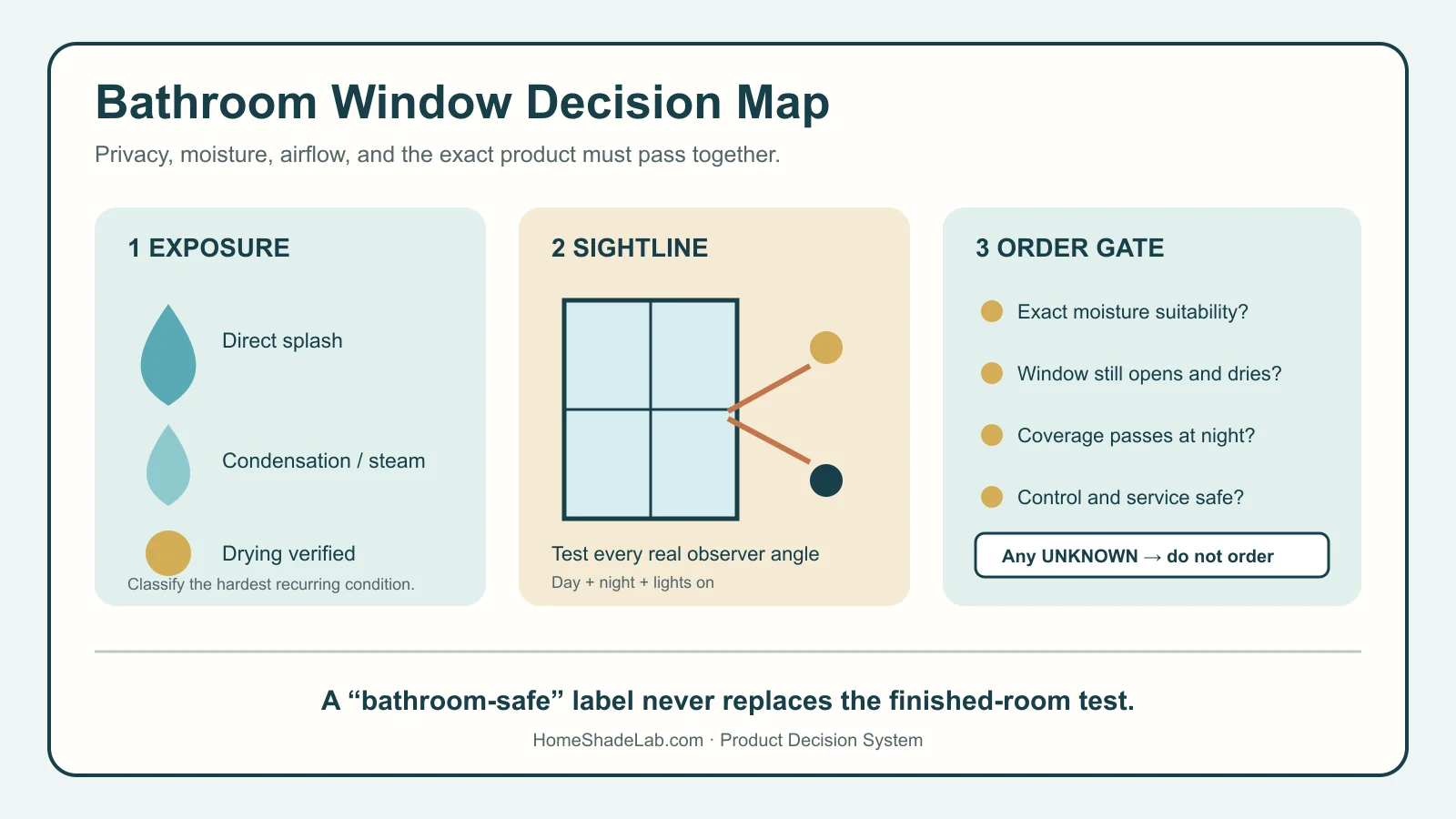
The best bathroom window treatment is the one that passes three maps on the actual window: where liquid water and condensation reach, where a real observer can see from day and night, and what must still move for ventilation, cleaning and normal window operation. A product that passes only one map is not ready.
This approach separates a low-moisture powder room from a shower-adjacent window without pretending that a broad material label guarantees waterproofing, mold resistance or permanent durability. For a whole-home project, keep this wet-room test attached to the bathroom rather than forcing every window into one specification; the room-by-room smart shade guide shows how the other rooms change the priorities.
Put three transparent maps over the same window
Take a straight-on photo of the window and make three copies. On the first, mark splash, steam/condensation and the areas that dry slowly. On the second, draw lines from the actual outside observer positions to the portions of glass that reveal the user. On the third, draw the sash, handle, screen, shade, charge point and cleaning motions.
The useful solution appears where the maps overlap. A lower fixed privacy layer may block a street sightline while leaving the upper sash operable. An adjustable shade may provide better changing daylight, but fail if its hembar enters direct splash or its fabric cannot dry. An inside mount may look tidy while blocking a handle or trapping a treatment close to wet glass.
Map water before choosing material
Classify the exposure at the exact treatment location:
- Direct splash or repeated wet contact: water can physically strike the covering or hardware.
- Persistent condensation: the glass or recess often remains wet after bathing.
- Humid but drying: moisture rises during use, while ventilation and time return surfaces to dry.
- Low-moisture powder room: no bath/shower cycle and little recurring condensation.
Moisture control comes before the covering. EPA says controlling moisture is the key to mold control, recommends drying wet or condensed surfaces promptly, and advises using a bathroom fan or opening a window during showering when feasible. A “moisture-resistant” blind cannot replace ventilation or a drying plan. Read the current EPA moisture guide.
Map the observer, not the word privacy
Privacy depends on a line of sight, not a fabric category. Stand at the likely exterior observation points: sidewalk, neighbor window, shared yard, deck or upper floor. Record the observer’s approximate elevation and which part of the bathroom becomes visible. Repeat from inside with the room lights on after dark and the exterior darker.
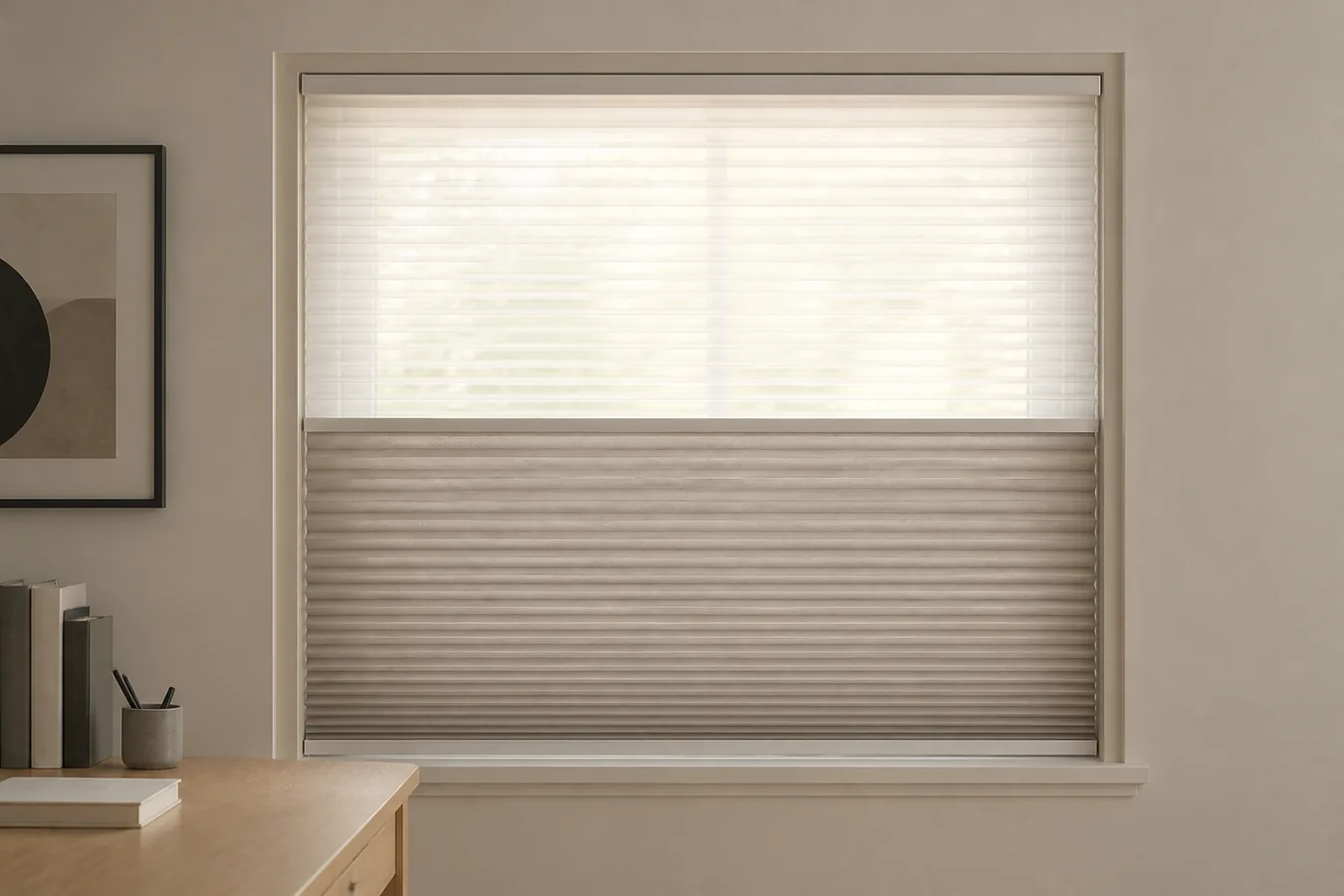
A solar/open fabric that obscures a daytime view may expose silhouettes at night. A top-down/bottom-up position that works against a street-level observer may fail against a higher neighbor. Current Graber and Blinds.com bathroom guidance both warn that daylight behavior and observer height must not be treated as universal nighttime privacy. Review Graber’s current bathroom decision factors and Blinds.com’s current day/night considerations.
Map everything that still has to move
Trace the full path of an operable sash, crank or handle. Add the shade’s lift/tilt path, a top-down rail if used, and access for wiping the glass, frame, hardware and both sides of the covering. If motorized, mark the power component, charging or reset point and local fallback.
Use the measurement checker for depth, handle and obstructions, then compare the intended plane in the inside-versus-outside mount guide. Bathroom fit includes a cleaning envelope: a treatment that cannot be moved away from recurring condensation is not easy to maintain, even if it technically fits.
| Overlap found | Stronger starting path | Evidence still required |
|---|---|---|
| Direct splash crosses the covering | Fixed privacy at the glass or an exact wipeable adjustable product approved for that location | Named material, hardware, care and direct-contact suitability |
| Condensation reaches fabric but room dries | Fabric only with an explicit separation, ventilation, drying and care plan | Exact fabric/liner approval and accessible cleaning |
| Lower sightline creates the privacy failure | Lower fixed privacy or independently adjustable lower coverage | Night test from every relevant observer height |
| Privacy changes by time or user | Adjustable covering or fixed-plus-adjustable layers | Simple local control and the desired daylight state |
| Treatment blocks ventilation or cleaning | Change mount, coverage or treatment type | Full sash/handle and cleaning-motion demonstration |
Fixed privacy and adjustable privacy solve different problems
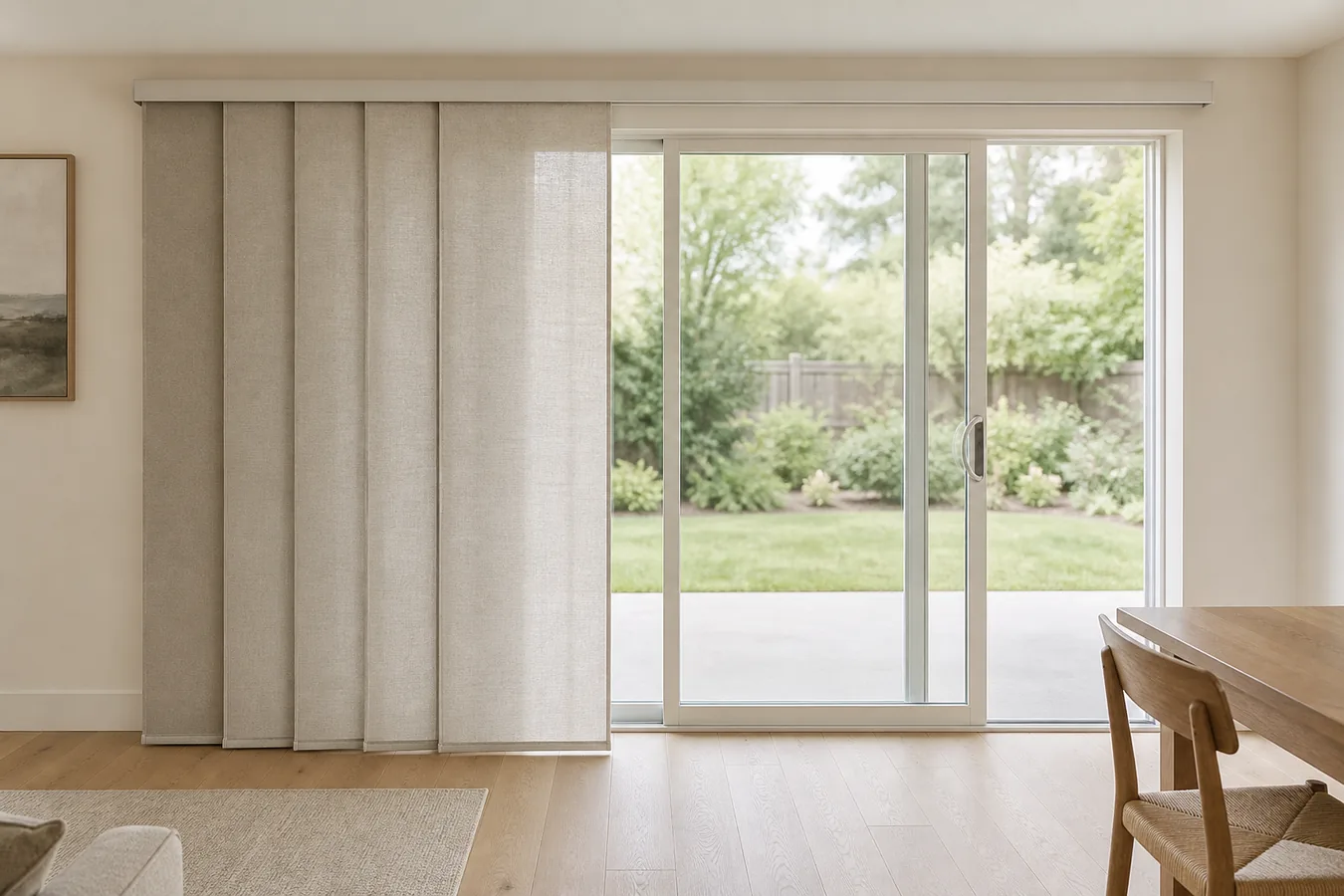
A fixed privacy layer—such as compatible obscuring glass treatment or another product approved for the exact glazing—can continuously block a defined sightline without adding a wet moving fabric. It cannot open for a clear view, and compatibility, edge coverage, appearance and removal still require exact evidence.
An adjustable treatment can change daylight, view and privacy throughout the day. It also adds moving hardware, gaps, cleaning surfaces and a decision about where the treatment rests during bathing. A layered solution is justified when continuous lower privacy and optional full-window control are genuinely separate tasks. It is not justified merely because two products look more complete.
A material name is not wet-area approval
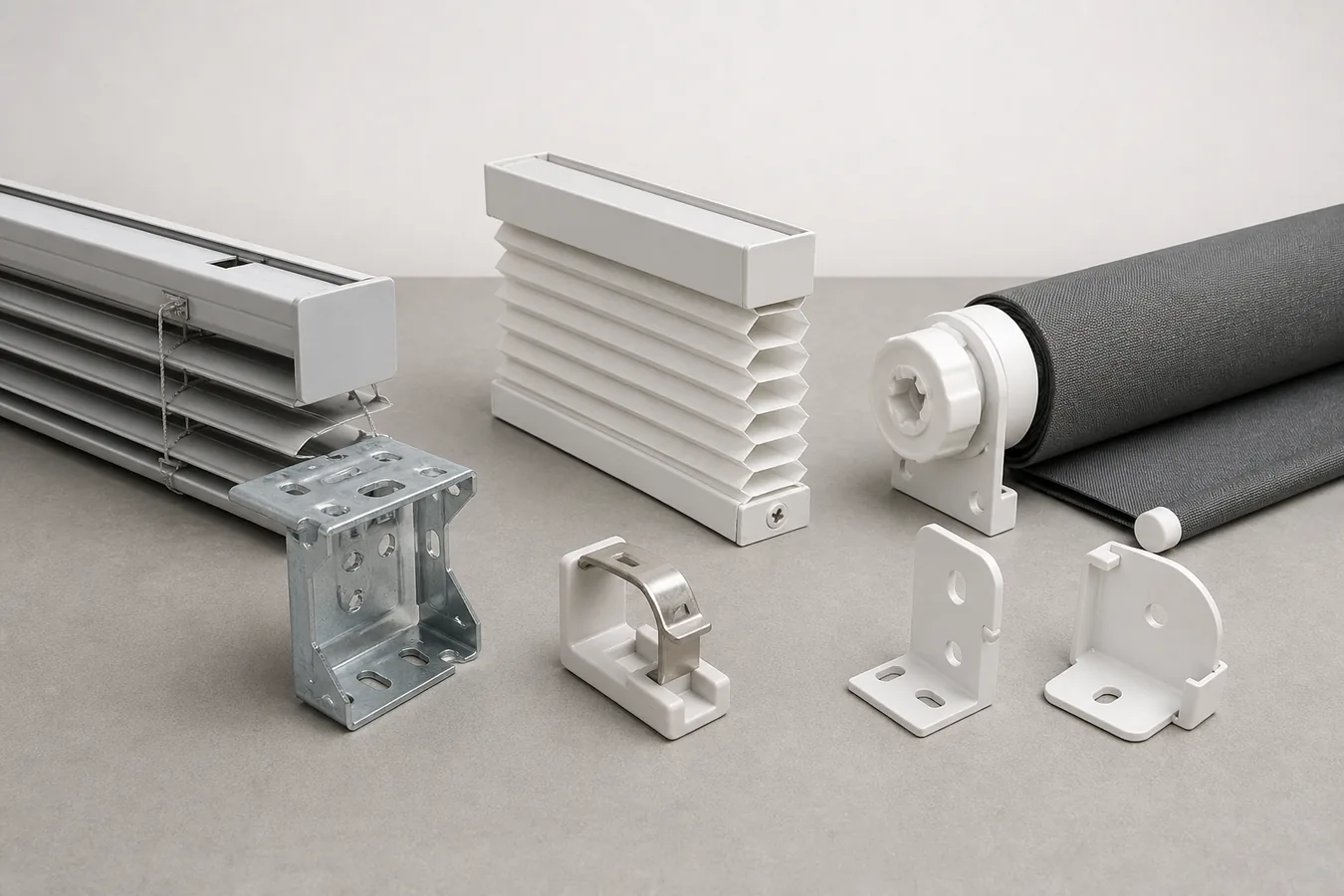
Words such as faux wood, vinyl, aluminum, polysatin, synthetic or treated fabric describe broad material directions—not the exact product’s exposure approval. Hardware, finishes, adhesives, tapes, liners and motors can have different limits from the visible slat or panel.
Hunter Douglas, for example, ties a high-humidity suitability statement to a named polysatin shutter product in its current bathroom guide. That is useful evidence for the named configuration, not permission to apply the claim to every synthetic shutter. Check the current named-product guidance.
Ask the supplier to approve the exact material, finish, hardware, fabric/liner and control for the mapped exposure. Also obtain cleaning instructions. “Moisture resistant” without a defined exposure and care method remains incomplete.
The window may be part of the ventilation system
If the bathroom relies on the window for ventilation, the treatment must allow the window to reach its intended open position and the user to reach the handle without pushing wet fabric aside. Do not cover a ventilation function with a privacy solution that makes the window impractical to use.
Where a fan provides primary ventilation, verify that it actually operates and that damp surfaces dry in a reasonable pattern for the room. This article does not assess ventilation capacity or building-code compliance; unresolved moisture or persistent condensation deserves the appropriate building professional, not a more aggressively marketed blind.
Cleaning access is part of the finished fit
Draw how a person will wipe the glass, sill, frame, treatment and hardware. Can the shade be fully raised away from the wet area? Can both sides of slats or shutters be reached? Does an outside mount trap a damp recess behind it? Can a fabric treatment be removed or serviced using the manufacturer’s method?
Choose care demands that match the room. A powder room may support a fabric-forward treatment that would be burdensome beside a frequently used shower. A wipeable surface may simplify cleaning, but still needs exact material and finish approval. No broad class is guaranteed waterproof, mold-proof, warp-proof or maintenance-free.
Motorization adds a new wet-area question
Motorization can keep hands and operating cords away from an awkward bathroom window. It also adds a motor, battery or power route, charge/reset access and environmental suitability that must be documented for the exact system and location.
Do not infer electrical or wet-area approval from the fact that a shade is battery powered. Ask the manufacturer to confirm the allowed environment, mounting position, power/charging method and service path. Electrical-zone, outlet, wiring and building requirements belong to the relevant qualified professional.
Keep a straightforward local control that works without an app. Where young children may enter, require an appropriate cordless finished covering; CPSC recommends cordless window coverings as the safest option when young children are present. Read the current CPSC notice.
Run one occupied wet-cycle and one dark-outside test
Before a multi-window or high-cost order, test the proposed path on the representative window if practical. During a normal occupied bath/shower cycle, observe where condensation forms, whether splash reaches the treatment, whether the sash and ventilation remain usable, and whether the covering begins drying after the room is ventilated. Do not deliberately expose a product beyond its instructions.
After dark with the bathroom lit normally, place an observer at every relevant outside location and elevation. Test the intended fixed or adjustable position, including top-down/bottom-up if proposed. Record only what is observable for that geometry; do not generalize it into a universal privacy claim.
Issue one bathroom-window order sheet
| Overlay | Order record | Acceptance |
|---|---|---|
| Water and drying | Exposure class, condensation/splash zones, ventilation and exact material/care approval | Treatment stays within its documented exposure and can be dried/cleaned |
| Sightline | Observer locations/elevations, day/night positions and required coverage | Occupied privacy passes from the actual viewpoints |
| Movement | Mount, finished size, gaps, sash/handle, cleaning and shade travel | Window, treatment and cleaning paths do not collide |
| Control | Manual/TDBU/motor path, local fallback, power and service | Operation is simple and the exact system is approved for the location |
Run the final bathroom test after a normal shower or bath and again after dark with the lights on. The treatment is ready only when it dries as planned, protects the real sightline, and still lets the window, fan, and cleaning routine work.