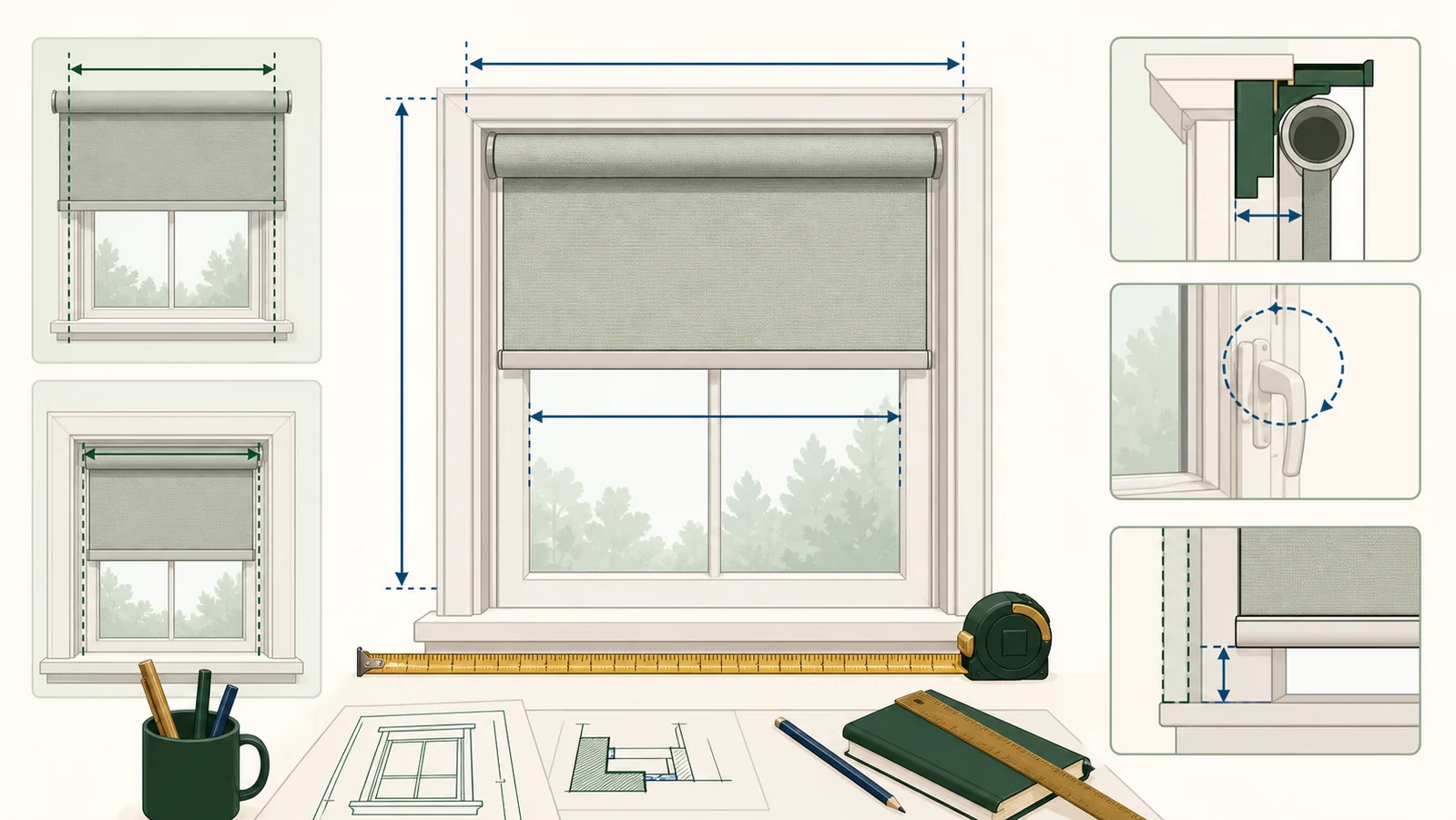
Smart Shade Tools

Smart Shade Tools are designed to turn measurement, power, compatibility, and room requirements into a clearer research path before you compare or order motorized window shades.

What a useful planning tool should do

A decision tool should ask only for inputs that change the result, explain how those inputs are used, keep unknown information visible, and show which facts still need to be verified with a manufacturer, merchant, or qualified professional.

  • Use source-backed rules instead of invented product scores.
  • Separate known facts, conditional results, warnings, and unknowns.
  • Explain why a path may or may not fit the user’s situation.
  • Provide a verification checklist rather than a fit or purchase guarantee.

Measurement and mount checks

Measurement tools can organize opening width, height, usable depth, frame conditions, trim, handles, cranks, and other obstructions. They can help identify questions about inside mount, outside mount, overlap, and hardware clearance.

They cannot calculate a guaranteed final order size because deductions, additions, cassette dimensions, valance requirements, and manufacturing rules vary by exact product and merchant.

Power-path tools

Power tools can compare rechargeable battery, replaceable battery, solar-assisted, plug-in, hardwired, and Power over Ethernet paths using window access, outlet location, charging tolerance, construction stage, and motor requirements.

They do not provide wiring instructions, electrical-code advice, or permission to install building-integrated power without the appropriate product documentation and professional review.

Compatibility tools

Compatibility tools can organize the exact motor, protocol, app, hub, bridge, region, and product generation. Results must distinguish native support, hub-required support, bridge-based support, motor-specific support, and unknown status.

A brand name or general “works with” statement is not enough to prove that every shade, motor, or accessory supports HomeKit, Matter, Alexa, Google Home, SmartThings, Zigbee, Z-Wave, or another ecosystem.

Room and shade-type planning

Room-planning tools can organize privacy, glare, light gaps, blackout goals, moisture, window size, charging access, child-safety concerns, and daily control preferences. These inputs can narrow the research path without pretending to select a universally best product.

What these tools cannot decide

  • They cannot guarantee fit, installation, compatibility, availability, returns, or warranty coverage.
  • They cannot replace the final manufacturer or merchant measuring instructions.
  • They cannot provide electrical, legal, lease, structural, or professional installation advice.
  • They do not create product rankings, current-price guarantees, or purchase recommendations without the required evidence and approval.

Data and privacy boundary

Tool results should use the minimum information required for the calculation or decision path. A tool must disclose any storage, analytics, third-party processing, or account requirement before collecting user information.

Until a specific tool passes formula, source, privacy, accessibility, mobile, and WordPress runtime QA, it remains unavailable as a public destination.